


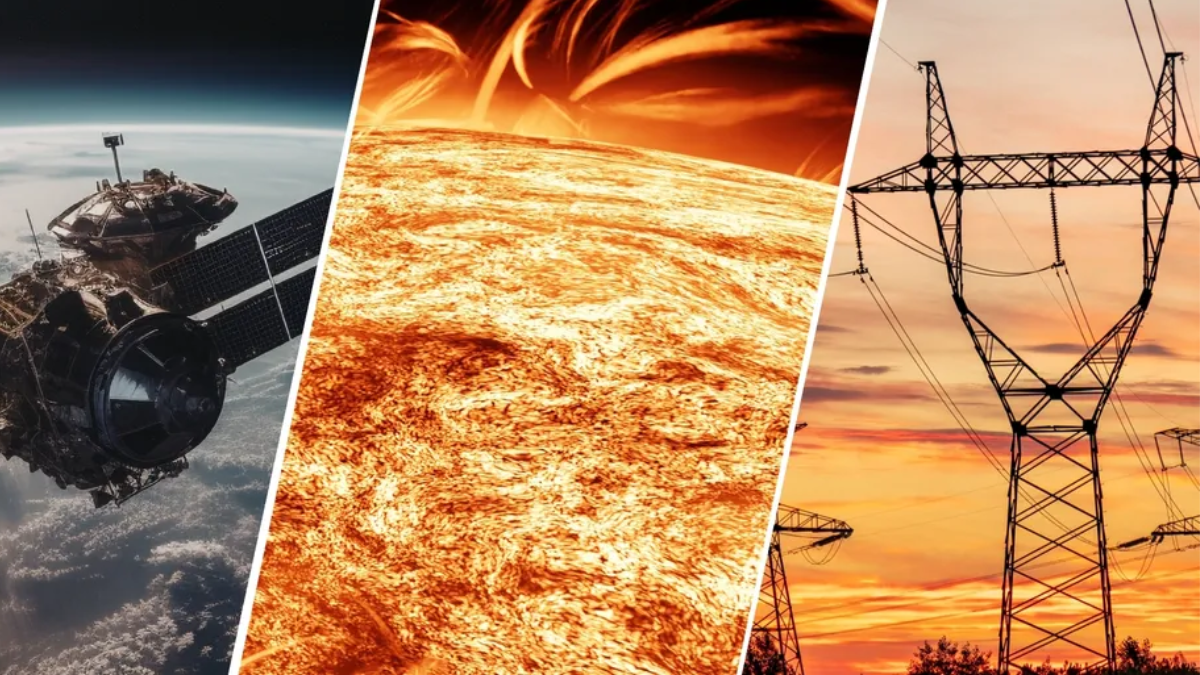
Researchers predict that a powerful solar flare, like that which occurred in 1859, known as the “Carrington Event”, could have catastrophic effects on our technology-reliant society. Solar storms that occur once every 100 years are capable of causing significant problems for satellites, GPS systems, and the power grid. Indeed, a storm that occurred in May 2024 managed to cause a temporary outage of the US satellite system, resulting in $500 billion losses in agriculture alone.
How Solar Storms Disrupt Earth’s Technology
According to space organizations like NOAA, strong solar flares and CMEs can cause disturbances “to satellites, disrupt GPS communication, and potentially disrupt power grids.” The eruptions eject plasma towards Earth, causing geomagnetic storms that affect the magnetic field of Earth. Geomagnetic storms cause increased electric current to be generated on the Earth’s surface, thus overheating transformers and disrupting power supply systems. The storms heat the Earth’s upper atmosphere and increase drag on satellites orbiting the Earth.
Historic Storms and Preparedness
In 1859, a massive solar flare caused telegraph systems to spark and fail; in March 1989, a geomagnetic storm knocked out Quebec’s grid for nine hours. For perspective, experts estimate a Carrington-level storm occurs only about once every 100–200 years. Today, agencies monitor the Sun continuously: satellites (GOES, DSCOVR) provide early warnings of CMEs that could disrupt satellites, GPS, or power systems. With advance notice, operators can switch satellites to safe mode, and utilities can protect transformers. New protocols and hardware upgrades (backup transformers, surge-blocking capacitors) are being implemented to harden power grids and satellites against future solar superstorms.