


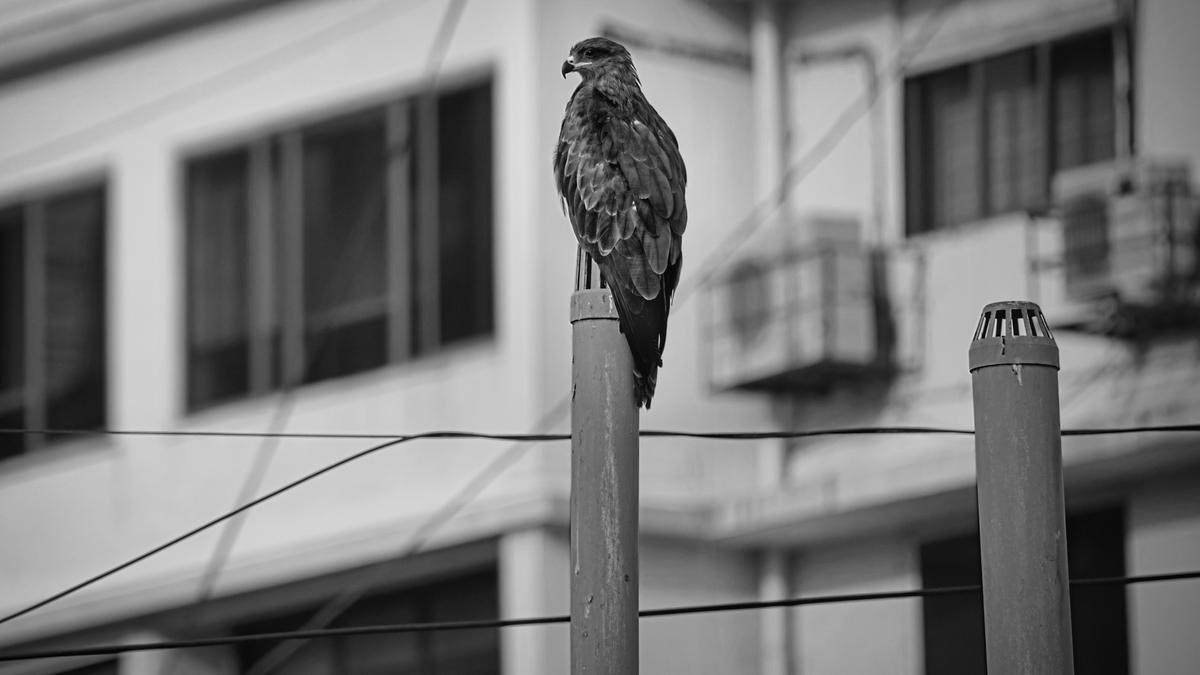

A black kite perches on a pole in Mumbai, August 18, 2026.
| Photo Credit: Rohit Bhusan/Unsplash
India’s cities and towns are seldom designed with their people in mind — and much less their animals. The green spaces within urban areas are also withdrawing as built area expands. And to deter animals from entering public spaces vouchsafed for humans, planners are turning to designs that increasingly have a collective name of their own: hostile architecture.
New York-based architect James Petty defines hostile architecture as one where structures placed in public spaces are rendered “unusable in certain ways or by certain groups”.
Slanting stone surfaces and barricades in 19th-century European cities to prevent public urination is one example. Another is anti-homeless architecture, visible as public benches with grooves and hand-rests in between to prevent people from lying down on them, and sloped seats at bus stops.
For animals and birds in India’s urban areas, hostile architecture takes many other forms.
“From spikes on ledges and nets over balconies to broken glass or spikes on compound walls that prevent animals from entering or perching,” Shilpa Shirish, who specialises in culturally sensitive design at the Indian Institute of Human Settlements, Bengaluru, said. “The issue extends beyond deliberately installed deterrents to changes in construction materials and landscape design.”
Shilpa added that contemporary buildings are also built to not accommodate animals.
Published – November 26, 2026 07:30 am IST