
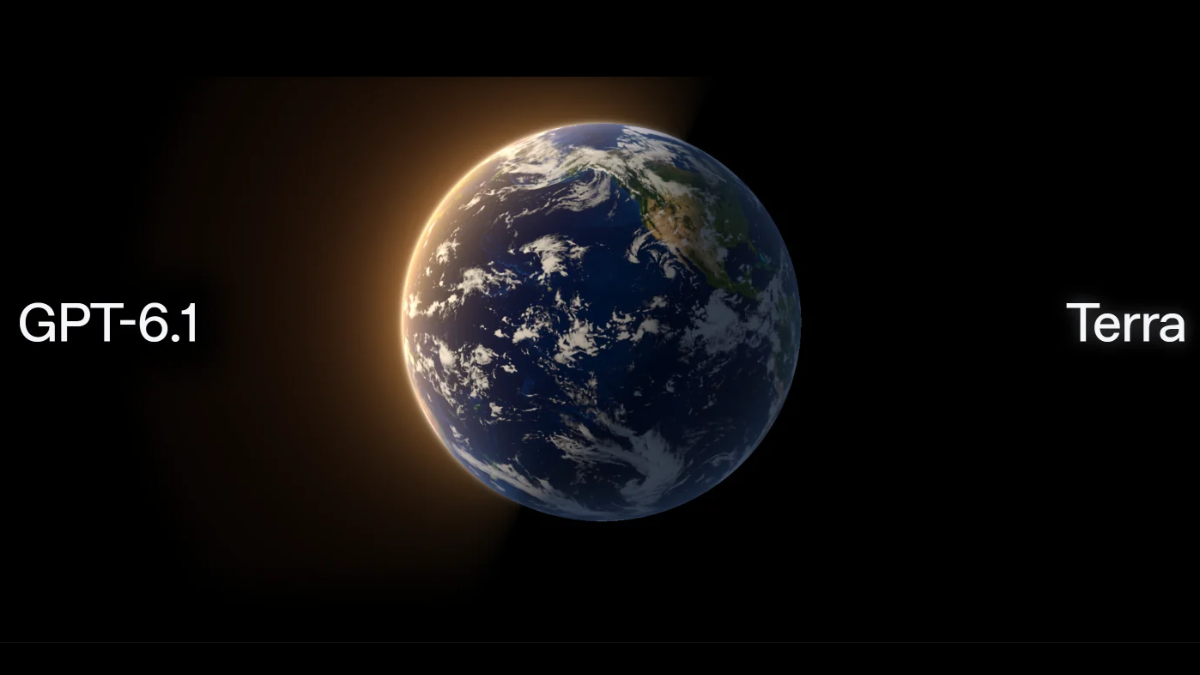
OpenAI introduced its latest AI model, namely GPT-6.1 Terra, on Tuesday. GPT-6.1 Terra is the second AI model in the Sam Altman-led AI giant’s GPT-6.1 series, joining the recently released GPT-6.1 Sol. It succeeds the GPT-5.6 Terra AI model, offering improved communication and computer-based tasks over its predecessor. The AI giant also claims that the AI model is better at drafting proposals, interpreting technical drawings, filling out forms, and editing videos. On top of this, OpenAI says that GPT-6.1 Terra presented stronger resistance to malicious prompts in internal testing compared to the GPT-5.6 Terra model.
OpenAI GPT-6.1 Terra Availability, Standard API Pricing
On Tuesday, the Sam Altman-led AI giant announced that its GPT-6.1 Terra AI model is now available to all Plus, Pro, Enterprise, and Edu users. Subscribers can access the latest AI model in ChatGPT Work and Codex. Apart from this, OpenAI says that developers can access GPT-6.1 Terra via the OpenAI API.
In terms of pricing, OpenAI has set the price of the GPT-6.1 Terra standard API at $1 (roughly Rs. 95) per million input tokens, $0.05 (about Rs. 5) per million cached input tokens, and $5 (roughly Rs. 476) per million output tokens. The standard API pricing of the new AI model is 50 percent lower than the prices of GPT-5.6 Terra and GPT-6.1 Sol, the company highlighted.
OpenAI GPT-6.1 Terra Capabilities
According to OpenAI, the GPT-6.1 Terra AI model brings improvements over GPT-5.6 Terra in terms of communication and computer-based tasks, like drafting proposals, interpreting technical drawings, filling out forms, and editing videos. On the Agents’ Last Exam benchmark test, which tests an AI model’s computer-use capabilities, GPT-6.1 Terra scored 15 percentage points higher than its predecessor at medium reasoning effort, at one-third the cost per million tokens.
Interestingly, GPT-6.1 Terra also managed to outperform GPT-6.1 Sol, scoring 60 percentage points against Sol’s 58.6 percentage points at Max reasoning effort, while also being notably more cost-efficient. On the MMMU-Pro benchmark for visual reasoning, GPT-6.1 Terra outperformed GPT-5.6, while scoring nearly on par with GPT-6.1 Sol at xHigh reasoning effort.
On OSWorld 2.1, which tests an AI agent’s usage of desktop apps to complete multistep tasks, like building a 3D model from a technical drawing, GPT-6.1 Terra scored 53.8 percentage points at low reasoning level, while its predecessor scored lower at max reasoning effort at a higher cost. Further, OpenAI claims that GPT-6.1 Terra also delivered a lower error rate, with reduced hallucinations and factual errors.
At medium reasoning effort, OpenAI’s GPT-6.1 Terra performed nearly on par with Anthropic’s Claude Sonnet 5.5 on Terminal-Bench 4.0, testing the problem-solving capabilities of coding agents. Further, the company says that GPT-6.1 Terra is “more likely to stay within scope and honestly disclose limitations and potential blockers to the user”, in comparison to its predecessor. In OpenAI’s internal testing, the AI model showed stronger resistance to “malicious instructions designed to divert” it