The smartwatch market has experienced a massive boost in the past couple of years. From checking notifications to taking calls, wrist-worn wearables are everywhere. People even wear them in formal settings, especially since their designs have taken big leaps, blending almost perfectly with most outfits. However, they have also sparked a significant, often overlooked, fitness-conscious movement, especially since completing 10,000 steps and tracking burned calories have become easier. But with the popularity of Whoop bands, another form factor of fitness trackers has caught on: screen-less bands.
Designed to reduce distractions from notifications and calls, screen-less fitness trackers fill a gap for people who don’t want a tiny display on their wrist but still want to track their fitness. I tested the Pebble Qore 2 fitness tracker, which serves this exact purpose at an affordable price. Priced under Rs. 4,000, the fitness band comes with fewer strings attached than its more expensive alternatives. But does it do what it is meant to do? Let’s find out.
Pebble Qore 2 Design, Comfort: Put It on and Forget About It
- Colours – Cosmic Black, Lunar Brown, Nebula Blue
- Dimensions and weight – 100 x 58 x 100mm and 200g
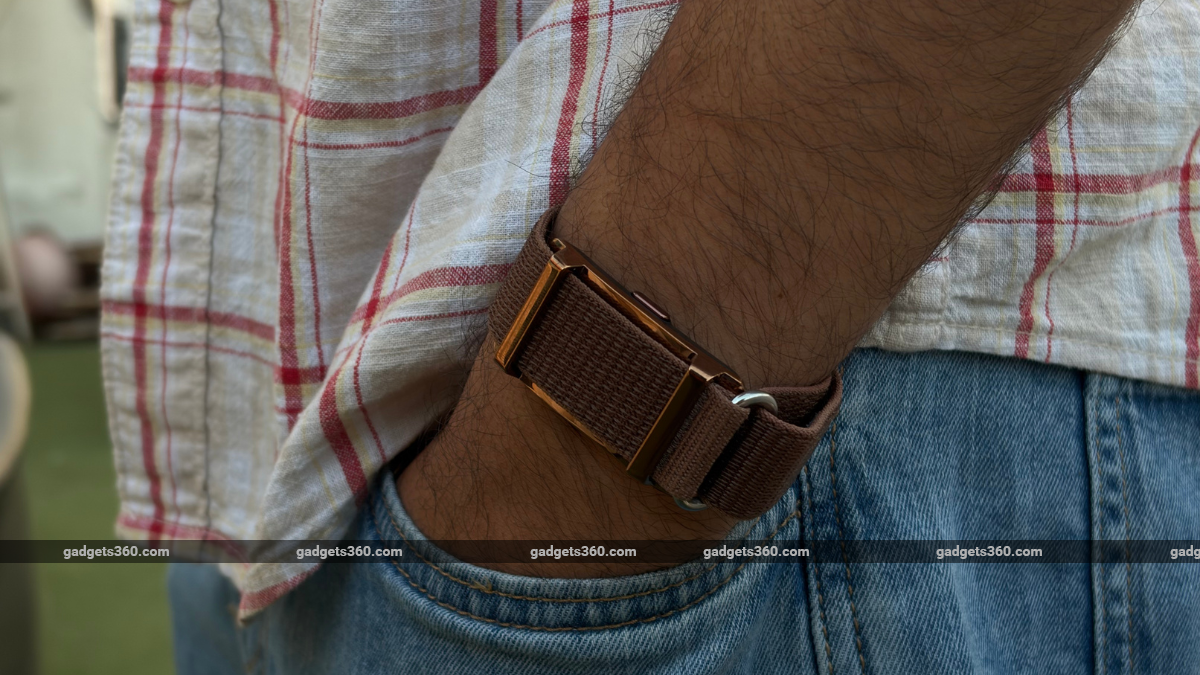
Designed to wrap around your wrist all day, the Pebble Core 2 is compact and easy to wear. You can wear the band on your wrist of choice, and its form factor and lightweight design make it easy to forget you’re wearing it. The device is quite small, measuring 100 x 58 x 100mm and weighing about 200g. It has a single button to pair it with your phone.
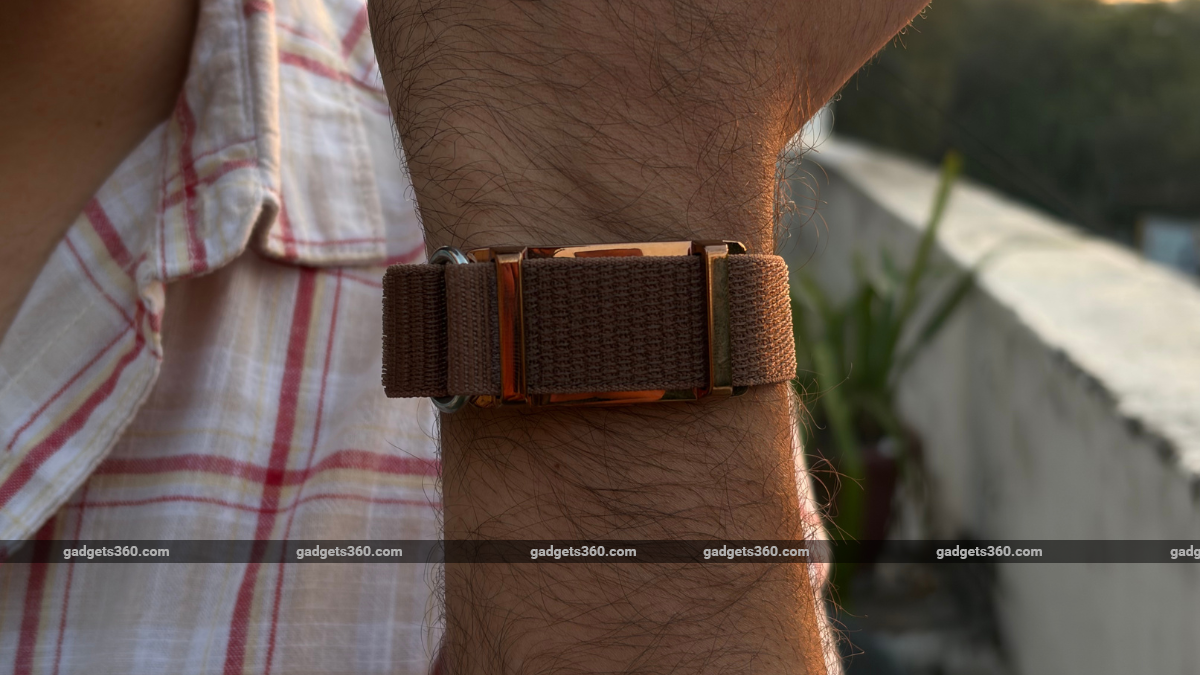

Pebble Qore 2 is comfortable to wear for long hours
The Pebble Qore 2 comes in three colour options: Cosmic Black, Lunar Brown, and Nebula Blue. I got the Lunar Brown shade, which has a bronze hue. Still, I don’t think this colourway matched my everyday aesthetic. Remove the band, and you’ll see the device has the Pebble branding right at the top. Two loops, meant to keep the band in place, are placed on either side.
The top half of the Pebble Qore 2 is made of metal. Meanwhile, the bottom half, the part that is in constant contact with your wrist, is still plastic. However, the metal quality really gives away its price. The glossy chassis is a fingerprint magnet. The smudges are hard to wipe off. But it still feels quite solid. The physical button matches the top half’s finish. It is easy to press, and you won’t have any quality-related complaints, at least on this front.
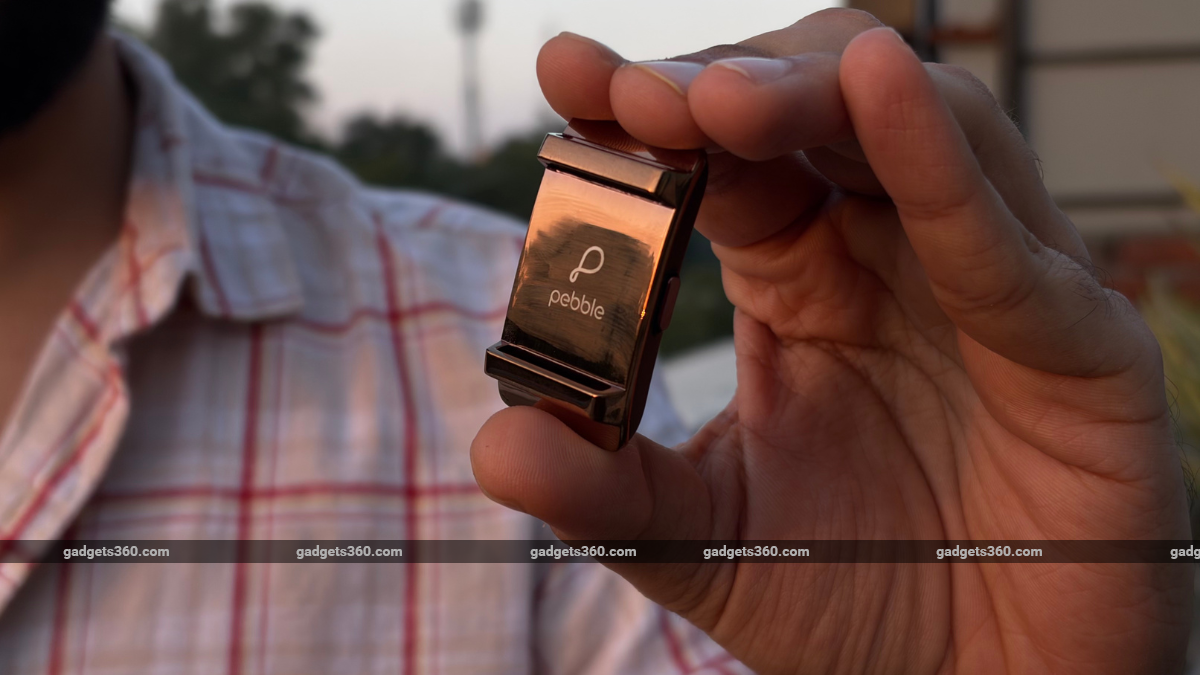
Pebble Qore 2 looks really premium
On the bottom, you’ll see the sensor cluster of the Pebble Qore 2, along with multiple certifications, branding, and the pogo pins for charging. I wore it on my right wrist, so the button faced my forearm. Yes, it provides all-day comfort. But the fitness tracker would have done much better with a higher-quality wristband. The cloth band is made of a stretchable material, which is comfortable to wear.
But this band could make your wrist feel itchy. Similarly, the Velcro also feels sub-standard, and it could lose its teeth during wrist exercises or other workouts that require aggressive forearm and wrist movement. Still, I have fewer complaints given the price.
Pebble Qore 2 Software and Companion App: Gets Most Things Done
- Supported platforms: Android and iOS
- Companion app: Pebble Halo
You control everything on your wrist through the Pebble Halo app on your phone, available for Android and iOS. I was glad to find how information-rich the app is, and that it doesn’t limit you to a few irrelevant metrics. Before moving forward, I want to note that I got stuck on the first step, pairing the Pebble Qore 2 to my iPhone, for a long time. Even after watching several videos and reading the manual on the company website, I couldn’t connect the two devices for a good hour, if not longer.
Once I got past this hurdle, which is significant given how much I value ease of use, things were relatively smooth. The Pebble Halo’s UI seems just fine for a fitness tracker. It doesn’t charge extra for additional health metrics, and everything syncs with Apple Health. When you open the app, you see your activity details, like your step count, calories burned, and distance covered.
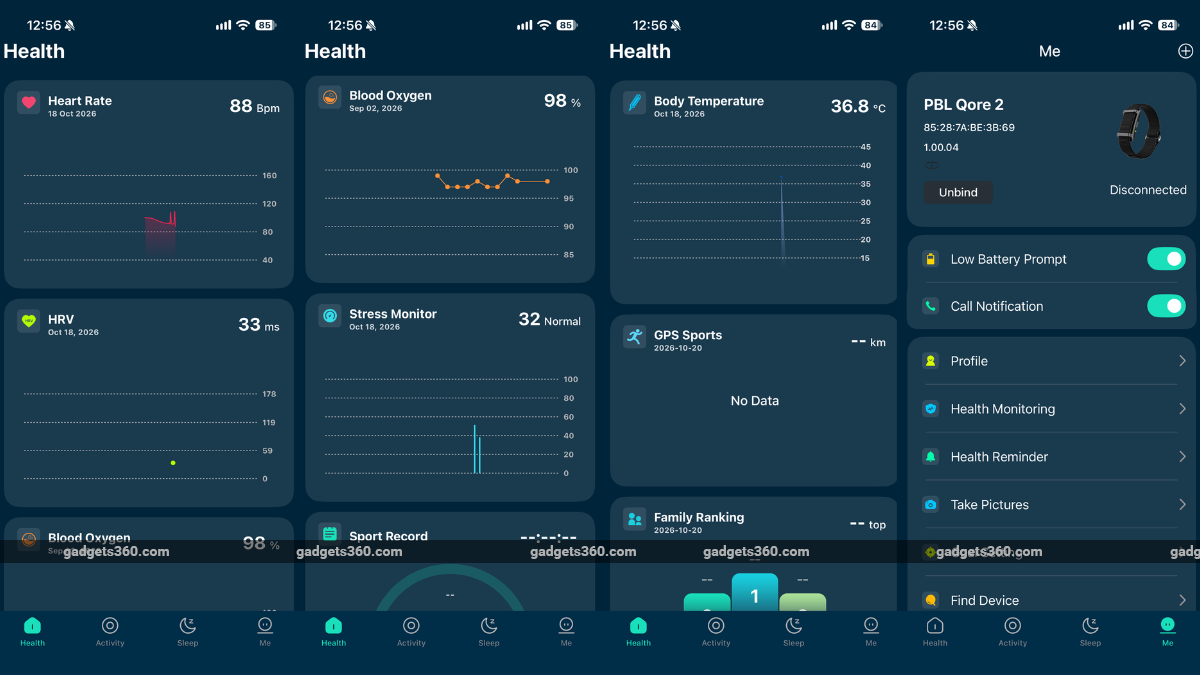
Pebble Halo companion app is available on Android and iOS
Based on these metrics, you are awarded a score and an AI health score. Scroll further to see other relevant metrics. You can also customise the home screen to show the metrics you want as soon as you open the app. You can also navigate to the activity, sleep, or “Me” sections for more data points and settings. From the app, you can also trigger Find Device, which makes the LED indicator blink and the tracker vibrate.
To sum it up, the Pebble Halo app is a great companion app with an intuitive design, if you can get past the trouble of pairing the Qore 2 with your phone.
Pebble Qore 2 Performance and Battery Life: Don’t Mind the Inaccuracies
- Health Tracking Features: Heart Rate Monitoring, Blood-Oxygen Level Tracking, Step Tracking, Stress Monitoring, HRV, Body Temperature, Sleep Tracking
- Battery: 150mAh, Up to 45 days
The most important aspect of a screen-less fitness tracker is, of course, how accurately it records health data. Unfortunately, the Pebble Qore 2 fails miserably here. The Qore 2’s core functionality is where it falters most, and you can’t look past it. On the bright side, I found the device to be under-recording metrics, which means you will be burning those extra calories and taking those extra steps on most days.
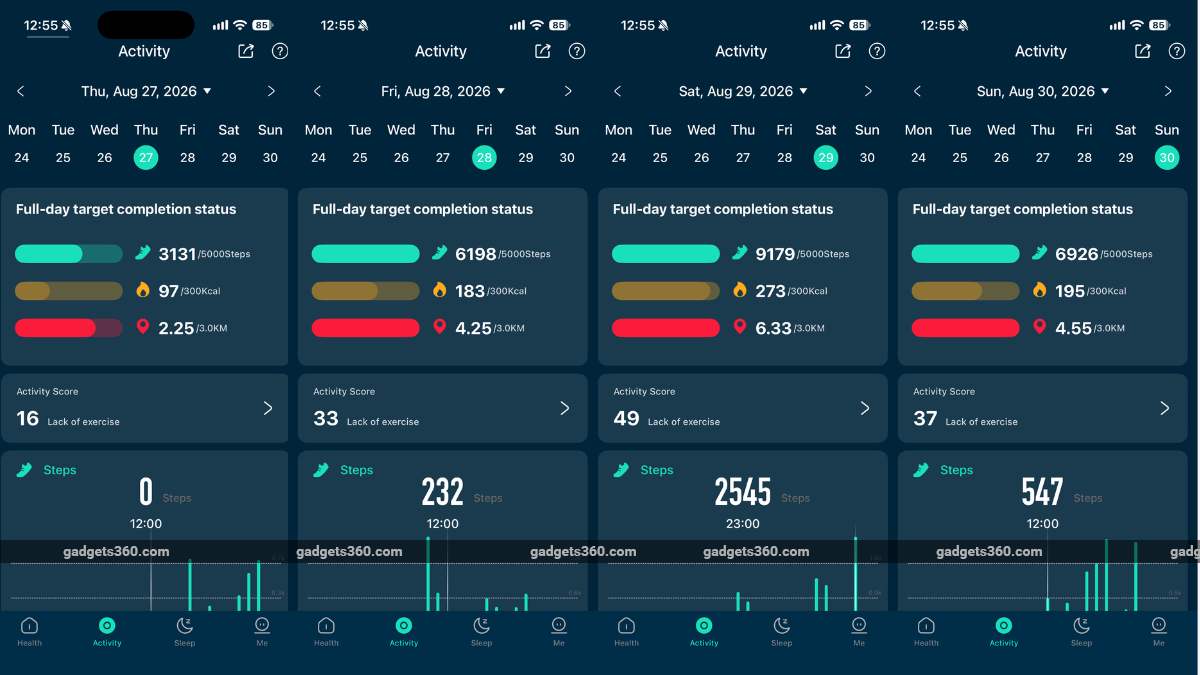
Pebble Qore 2 is quite inaccurate with step counts and calories burnt
My 6-day-a-week workout schedule includes an hour of warm-up, functional strength training, mixed cardio, traditional strength training, and core training. Besides this, I have a daily steps target of 10,000. I wore my Apple Watch and the Pebble Qore 2 on either wrist, and the delta between the numbers was sometimes huge.
On one particular day, the Pebble Qore 2 recorded 273 active burnt Kcal, compared to 842 shown on my Apple Watch at the end of the day. The Qore 2 recorded 9,179 steps, thousands behind the 13,113 steps recorded by my Apple Watch. This also reflected the distance measured by the two devices, 6.33km and 10.38km, respectively. The trends continue, with an average delta of 4,000 daily steps and 700 kcal burned.
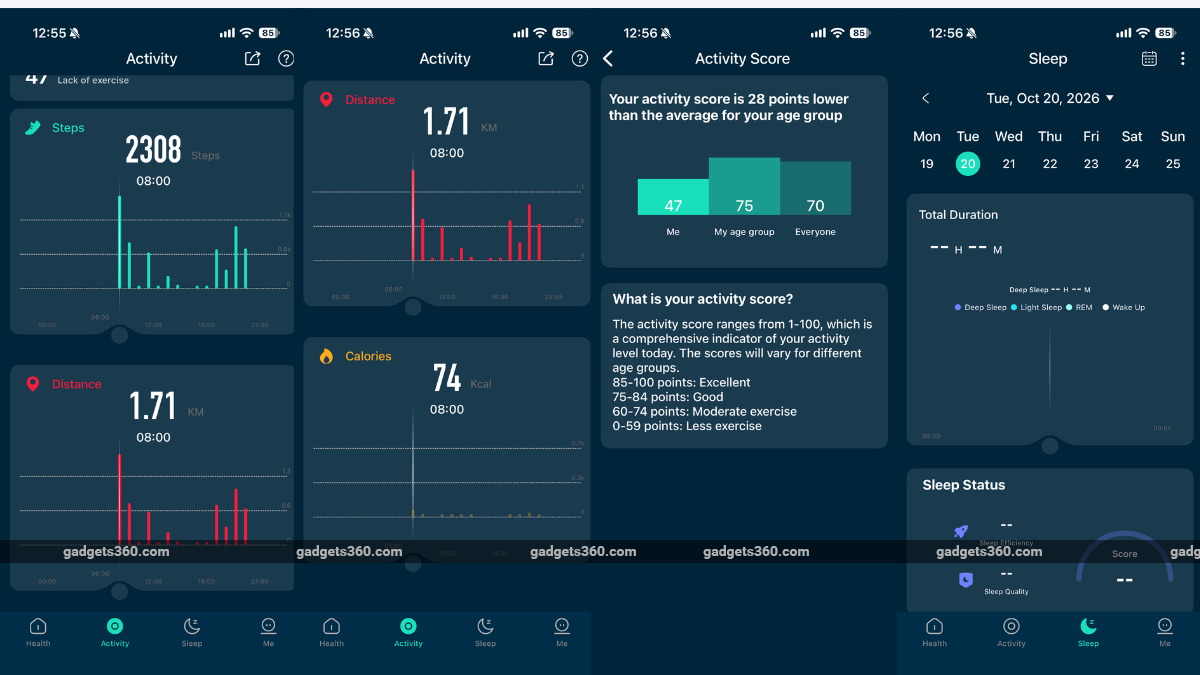
Pebble Qore 2 is still decent for casual users
Now, my Apple Watch costs at least 10 times as much as the Pebble Qore 2. So you might not find these comparisons fair. Also, Apple Watch models can over-record certain statistics, which could widen the gap between the metrics shown by the two devices. Yet these numbers do reflect that the Pebble Qore 2 underrecords metrics, even if the difference I recorded in my usage isn’t that large.
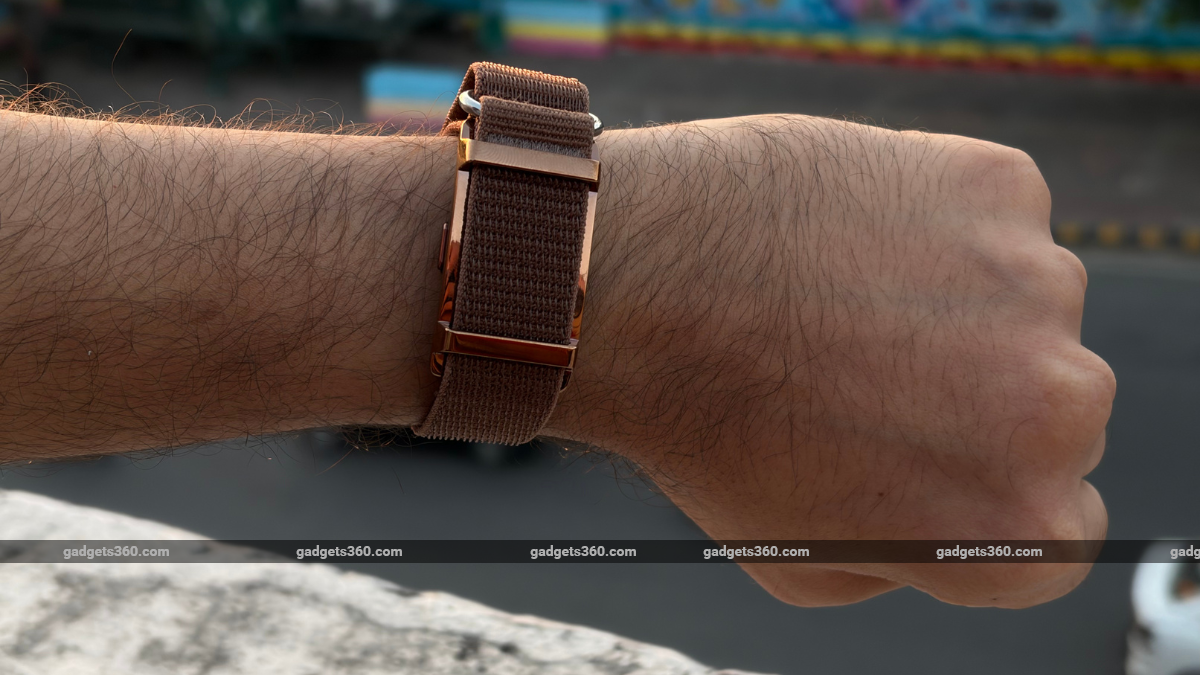
Pebble Qore 2 features a decent vibration motor for alerts
While the activity and steps counters are quite off, the heart rate and SpO2 sensors on the Pebble Qore 2 are much better. You shouldn’t rely on these numbers blindly without consulting your physician, but they’re decent for pointing in the right direction.
Apart from this, the vibration motor, used for sending call and notification alerts, works really well. The vibrations are subtle and don’t bother you while you are working. You can also use the physical button on the Pebble Qore 2 as a capture button. However, this functionality only works within the Pebble Halo app.
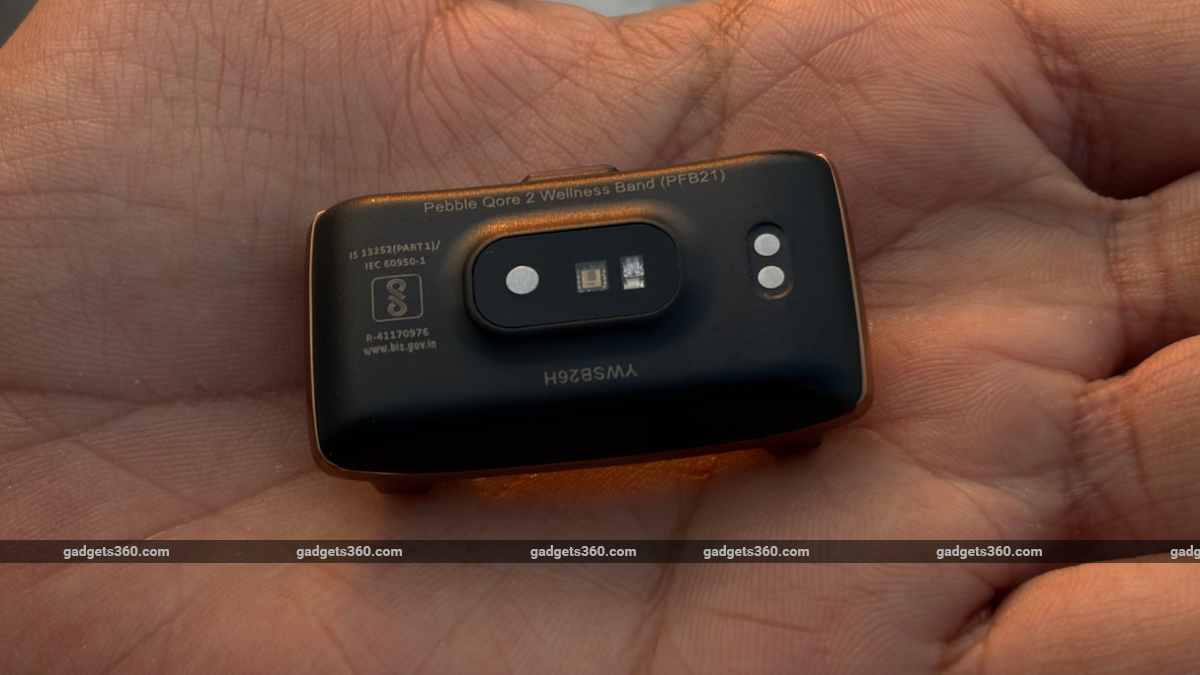
Pebble Qore 2 offers really long battery life
One area where the Pebble Qore 2 outperforms almost all smartwatches, and even a few screen-less fitness trackers, is battery life. The company claims up to 45 days of battery life, but real-world use is less. For reference, I got 30 to 35 days of battery life before the low-battery alert. Charging doesn’t take long. I left it on charge for a few minutes and got days of extended usage. But the pogo pin magnets are quite weak. You can easily knock it off the charger if you are not careful.
Pebble Qore 2 Verdict
At Rs. 3,799, the Pebble Qore 2 is worth considering if you want an affordable, screen-less tracker. It is a strong contender for people who don’t want tiny screens stuck on their arms and are fine with largely inaccurate activity data. The heart rate, HRV, and SpO2 tracking work slightly better. Similarly, if your routine doesn’t include rigorous workouts and you don’t plan your day around steps or calories burned, the Pebble Qore 2 is a solid option.
The fitness tracker competes with the slightly more expensive Noise REP and might not add as much value to your daily routine. But if you are seriously considering a reliable screen-less fitness tracker, and there are no budget constraints, the Whoop band still rules the category. Even with the arrival of the Google Fitbit Air (review), which emerged as the strongest contender in the screen-less wearable category, the Whoop band remains a crowd favourite among athletes.