


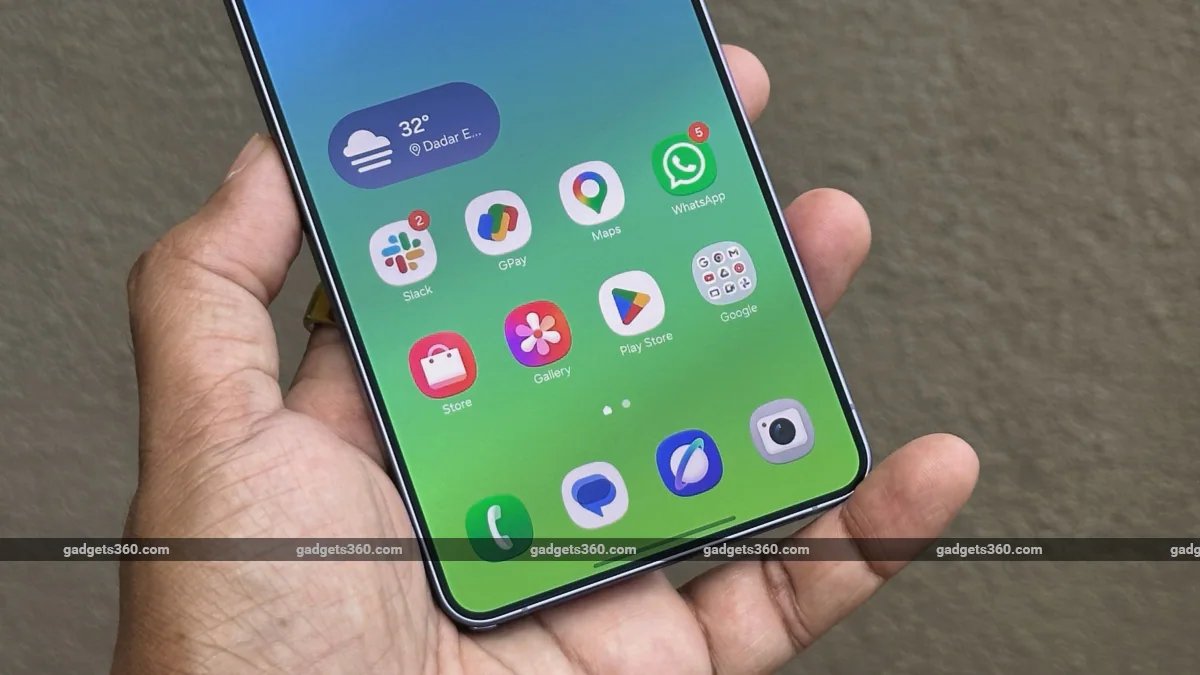
Samsung Galaxy S26 Ultra was launched earlier this year as the flagship Galaxy S series handset from the tech giant. With the Galaxy S26 Ultra, Samsung introduced its new Privacy Display feature with the aim of curbing shoulder surfing. The hardware-based solution dims the wide-viewing pixels of the display to reduce the viewing angles. Now, a tipster claims that the tech giant is working on the next-generation Privacy Display functionality, which is said to bring multiple improvements over its predecessor. The enhanced Privacy Display is said to ship with the rumoured Samsung Galaxy S27 Ultra, which could be unveiled early next year.
Samsung Galaxy S27 Ultra Specifications, Price (Expected)
In a post on X, tipster Sawyer Galox (@Sawyergalox) claims Samsung has started working on the second generation of the Privacy Display functionality, with plans to offer improvements on various fronts. The rumoured Samsung Galaxy S27 Ultra will reportedly be equipped with the new Privacy Display. It is expected to deliver higher resolution when the Privacy Display functionality is enabled.
Apart from this, the tech giant is reportedly planning to improve the overall viewing angles of the panel, while also enhancing the quality and clarity of the panel. Further, the leaker claims that the new hardware improvements could result in a notable price increase. The Samsung Galaxy S27 Ultra will reportedly debut with a starting price tag between $1,400 (roughly Rs. 1,33,000) and $1,500 (about Rs. 1,43,000).
The new leaked pricing is slightly higher than earlier anticipated figures. Recently, a report highlighted that the Samsung Galaxy S27 Ultra will be launched at a starting price of $1,399 (roughly Rs. 1,35,000) in the US, $1,499 (about Rs. 1,45,000) in South Korea, and between $1,499 (roughly Rs. 1,45,000) and $1,549 (about Rs. 1,50,000) in select global markets. However, it is worth noting that the tech giant has yet to confirm these details.
Introduced with the Samsung Galaxy S26 Ultra, the Privacy Display feature aims to curb shoulder surfing. Users can enable the privacy feature for specific apps, messages, passwords, and other banner notifications. It uses wide-viewing and narrow-viewing pixels. When the feature is enabled, the wide-viewing pixels are turned off, significantly reducing the viewing angles. Interestingly, after launch, users started complaining about reduced pixel density and resolution when the functionality is enabled.