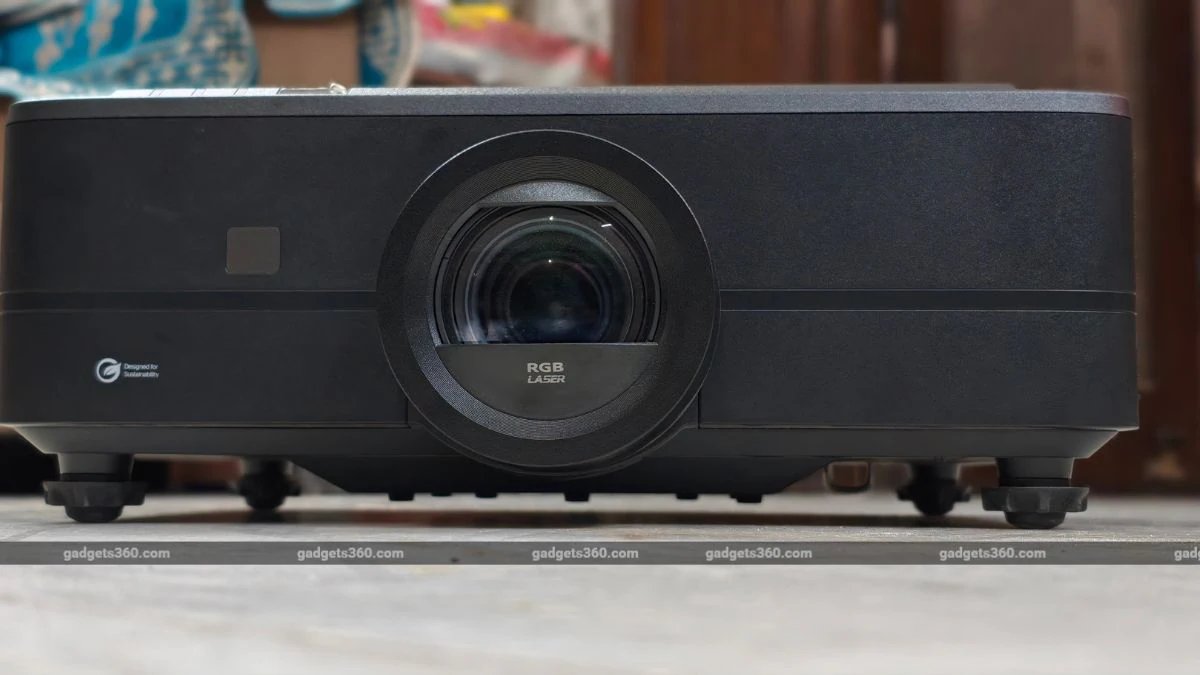
For years, Optoma has been one of the few reliable brands in India’s projector market. The company is known for offering a strong range of home projectors for those who want theatre-like quality at home. And with the latest Optoma UHR90DV 4K UHD triple laser RGB projector, the company has seriously upped the game. At a whopping starting price of Rs. 15,90,000, it is one of the most expensive projectors Optoma is selling in India. With flagship-grade features like 5,000 ISO lumens, Dolby Vision, IMAX Enhanced, and more, the projector isn’t your usual living-room home projector; it demands a proper home theatre experience. That being said, does it actually make sense to go with such an expensive projector in the first place? I’ve had the chance to use it for a while now, and here’s what you need to know.
Optoma UHR90DV 4K UHD Triple Laser RGB Projector Design and Portability
- Dimensions: 486 x 432.5 x 185.5mm
- Weight: 11.5kg
- Motorised 1.6x optical zoom, focus and lens shift
- Projection size: 80 to 300 inches
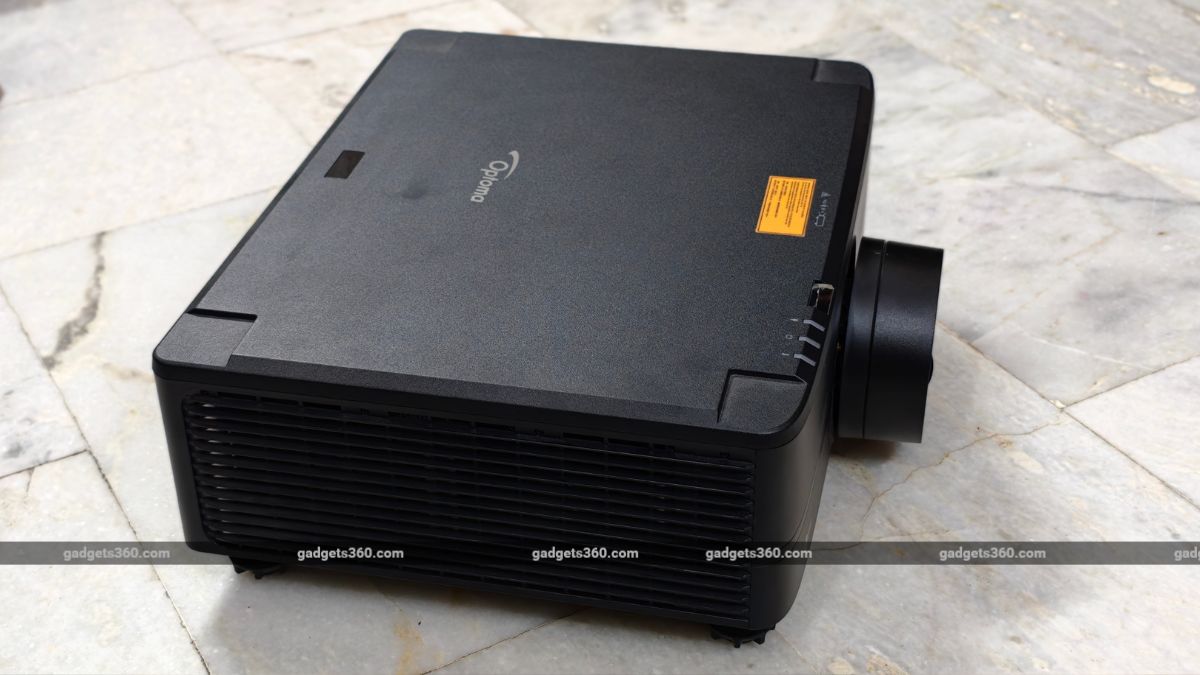
The Optoma UHR90DV isn’t your usual portable projector you can carry around the house. The projector measures 486 x 432.5 x 185.5mm and weighs 11.5kg, making it a full-fledged projector rather than a portable one, which is quite common in the projector market. This is the sort of projector that needs to be permanently placed on a ceiling mount or a sturdy shelf. Optoma rates it for projection sizes between 80 and 300 inches, with a throw ratio of 1.25:1 to 2.0:1.
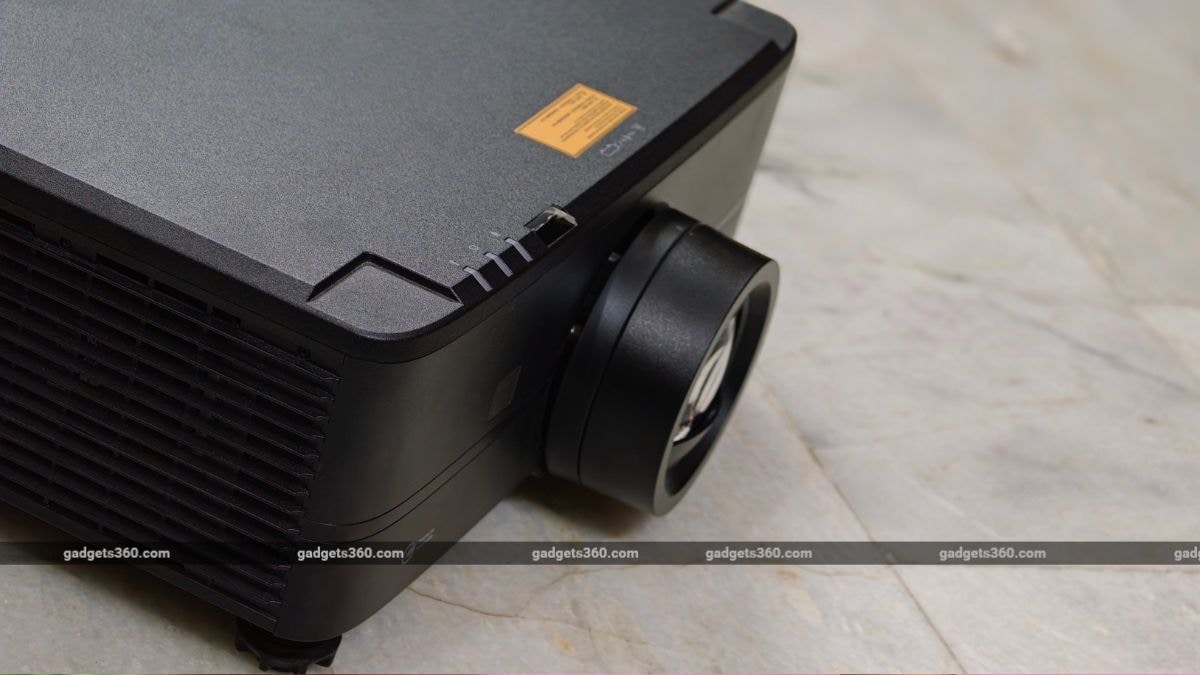

The Optoma UHR90DV is designed for those who want a cinema-level experience right from the comfort of their home
That much bulk has a reason. The projector comes with an RGB triple-laser light source along with 5,000 lumens, which usually generates a lot of heat. Although the cooling system is quite effective, you need to place it so it gets maximum airflow for better thermal efficiency.
So, setup is a hassle and requires proper installation in your room rather than simply setting it up like usual portable projectors. This is mainly because a projector like this needs more hardware to run the features it promises.
That said, the company has made sure you won’t have trouble installing it. The projector can be wall-mounted or placed on a shelf. It also comes with an adjustable stand if you place it on a shelf. Moreover, the lens is motorised, making it easier to adjust with the remote rather than physically reaching the lens every time the image needs adjustment.
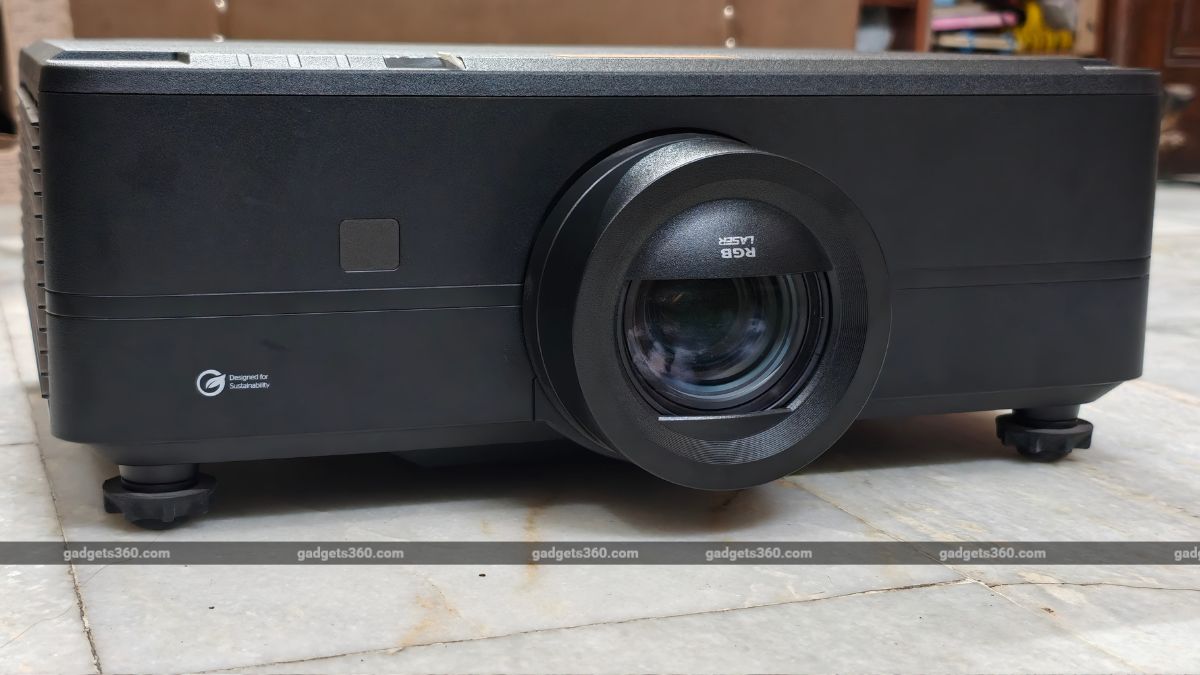
The 4K projector brings flagship-grade features and specifications that can give any 4K projector a run for its money.
The projector offers a 1.6x optical zoom, vertical lens shift of up to plus or minus 55 percent and horizontal lens shift of up to plus or minus 25 percent. It also has five lens-memory positions, which you can use for different screen formats or to switch aspect ratios.
For connectivity, the projector offers plenty. You get one HDMI 2.1 and two HDMI 2.0 ports, with one supporting ARC/eARC. The projector also comes with two USB Type-A ports for power, a 3D Sync port, a 3.5mm audio jack, a S/PDIF port, one RJ45 port, one RS232 port, and two 12V trigger ports. The port selection is generous.
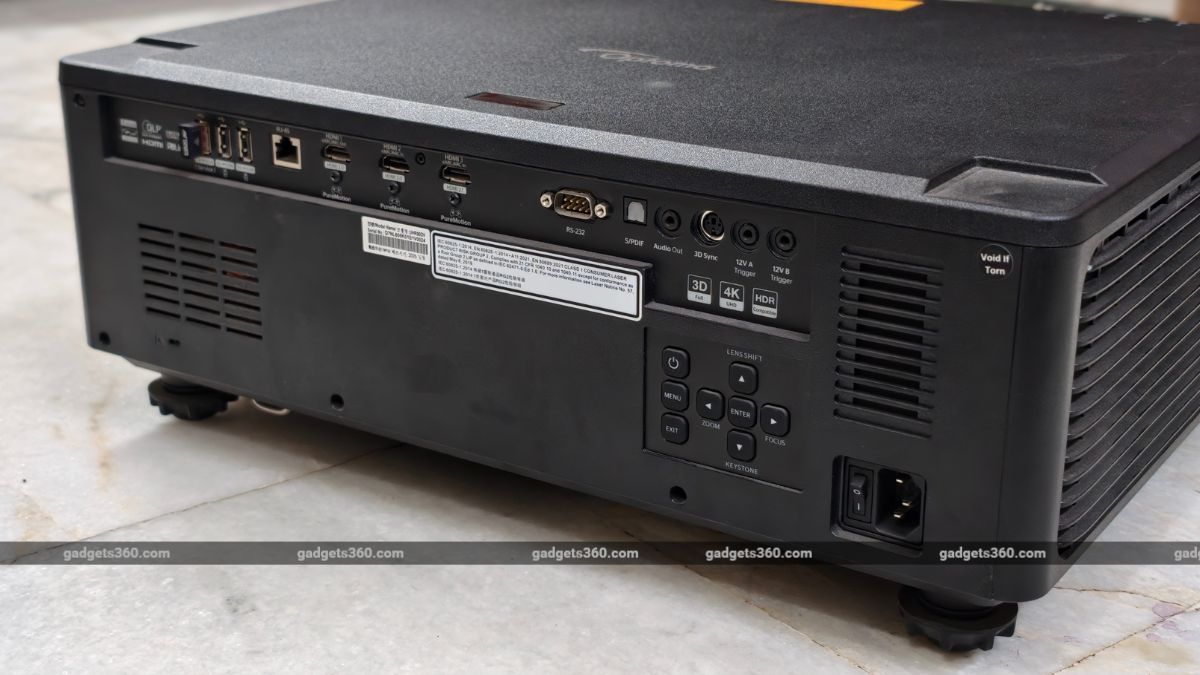
However, I wish the company had added one more HDMI 2.1 port, which would have made it easier to connect your current-generation console and a 4K Blu-ray player or streaming stick for the best viewing experience. That said, the projector also lacks built-in speakers, which makes sense. Anyone spending this much on a projector will buy an audio system to get a proper cinema-like experience.
Optoma UHR90DV 4K UHD Triple Laser RGB Projector Performance
- Resolution: 4K UHD
- Brightness: 5,000 lumens
- Light source: RGB triple laser
- HDR: Dolby Vision, HDR10+ and IMAX Enhanced
- Laser lifespan: Up to 30,000 hours in Eco mode
The Optoma UHR90DV packs flagship specifications and features. The triple-laser RGB projector uses a 4K UHD Digital Light Processing (DLP) system with a 3840×2160 pixel resolution. The projector features an RGB triple-laser light source and delivers 5,000 ISO lumens. The projector also delivers a 4,500,000:1 contrast ratio, up to 12-bit colour depth, 96 percent coverage of the BT.2020 colour gamut, and 98 percent of DCI-P3.
It also supports Dolby Vision, HDR10+, HDR10, HLG, IMAX Enhanced and Filmmaker Mode, along with Optoma’s PureEngine Ultra image processing. The projector can produce images from 80 to 300 inches and features a 1.6x motorised optical zoom, motorised focus, and lens shift. The company claims that the RGB laser light source is rated to last up to 30,000 hours in Eco mode.
That said, the projector doesn’t come with a smart platform like Google TV, so you’ll need a streaming device to watch content on it. For the review, we used an Amazon Fire TV Stick 4K and more to get the best possible results.
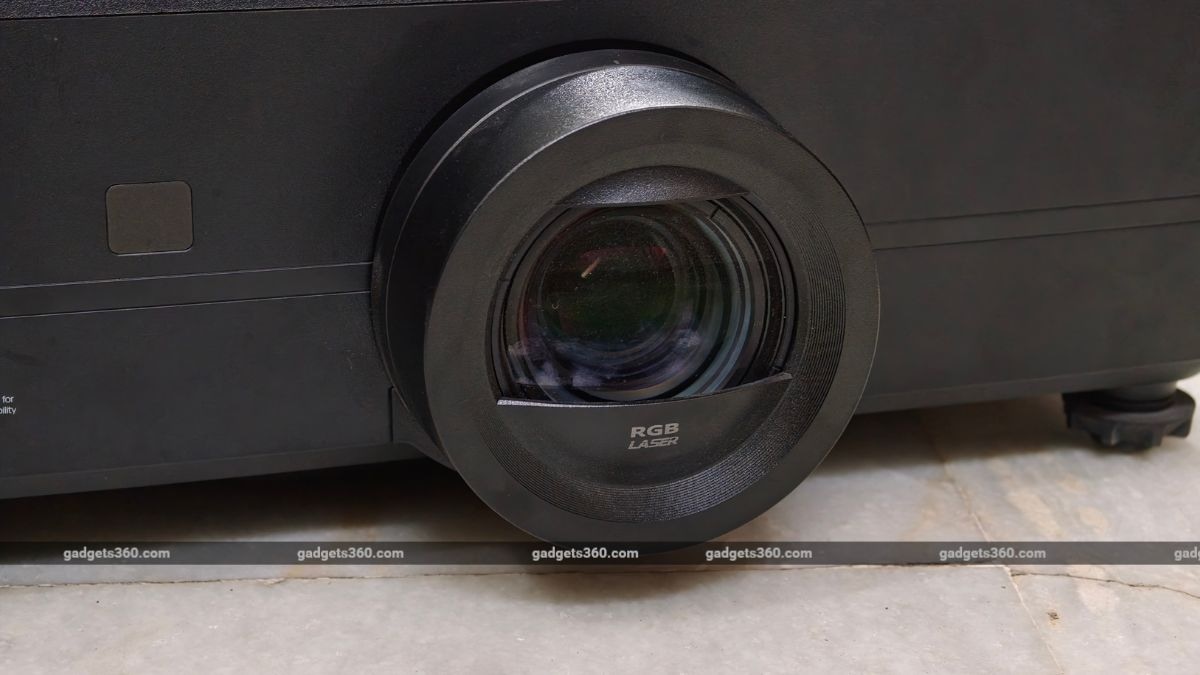
Talking about the performance, the first thing you will notice is the sheer amount of brightness of the image that has been projected. The projector is capable of producing a large picture without looking dull, and you can thank 5,000 lumens for this. Scenes appear bright enough and retain colours, as you’d see in a cinema hall. However, it also has a limitation, especially in a room with light-coloured walls. The UHR90DV can produce very bright highlights, but reflected light from the screen can raise the perceived black level and reduce overall contrast. A dark, controlled room and a properly matched screen therefore make a meaningful difference.
As for colour, the projector handles the wide colour range with ease. It’s especially noticeable with supported content. While watching Our Planet on Netflix, which supports Dolby Vision, HDR, and HDR10+, scenes of dense forests, blue oceans, and wildlife looked rich without becoming too over-saturated. The projector also preserved small details like foliage, feathers, and animal textures with ease.
The projector also supports Dolby Vision and IMAX Enhanced, making it a delightful big-screen experience. With Dolby Vision, you get Bright, Dark, Vivid, and Cinema Dolby Vision modes, which give some flexibility. You also get Filmmaker Mode, which reduces unnecessary image processing and projects the picture closer to the source. Then there’s IMAX Enhanced certification, meaning you can watch supported content with that cinema-hall feel.
Gaming is surprisingly well handled for a projector that is primarily aimed at home cinema. The HDMI 2.1 port supports 4K at 120Hz, while ALLM is available with compatible sources. Optoma quotes input lag of up to 20ms at 4K/60Hz and as low as 8.5ms at 1080p/240Hz. The 4K/60Hz figure is the most relevant for consoles and feels responsive while playing games on this projector.
I also liked that the company offers an in-depth level of customisation. However, it takes some digging and a learning curve to operate it. The user interface feels a bit dated for the price, and this is one area where I think it could have done better. The interface feels a bit unresponsive sometimes, and you have to dig a lot to get to the feature you want.
Coming to the remote, it works as intended. You get almost all the features as shortcuts to get the basic functionality. I also liked that the remote is backlit, which makes it easier to see the controls in dark environments. The motorised lens system does a decent job, too.
The 1.6x optical zoom, focus and lens shift allow the image to be positioned accurately without repeatedly moving the projector, while five lens-memory positions are useful when switching between different aspect ratios.
Optoma UHR90DV 4K UHD Triple Laser RGB Projector Verdict
The Optoma UHR90DV is an impressive piece of home cinema hardware, especially for those who want an experience of cinema-like quality in the comfort of their home, of course, without any price constraint. The RGB triple-laser engine delivers strong colour and plenty of brightness, while Dolby Vision, HDR10+, IMAX Enhanced and Filmmaker Mode cover most of the important formats. Motorised lens controls, five lens-memory positions and HDMI 2.1 also make it a versatile option for a permanent installation.
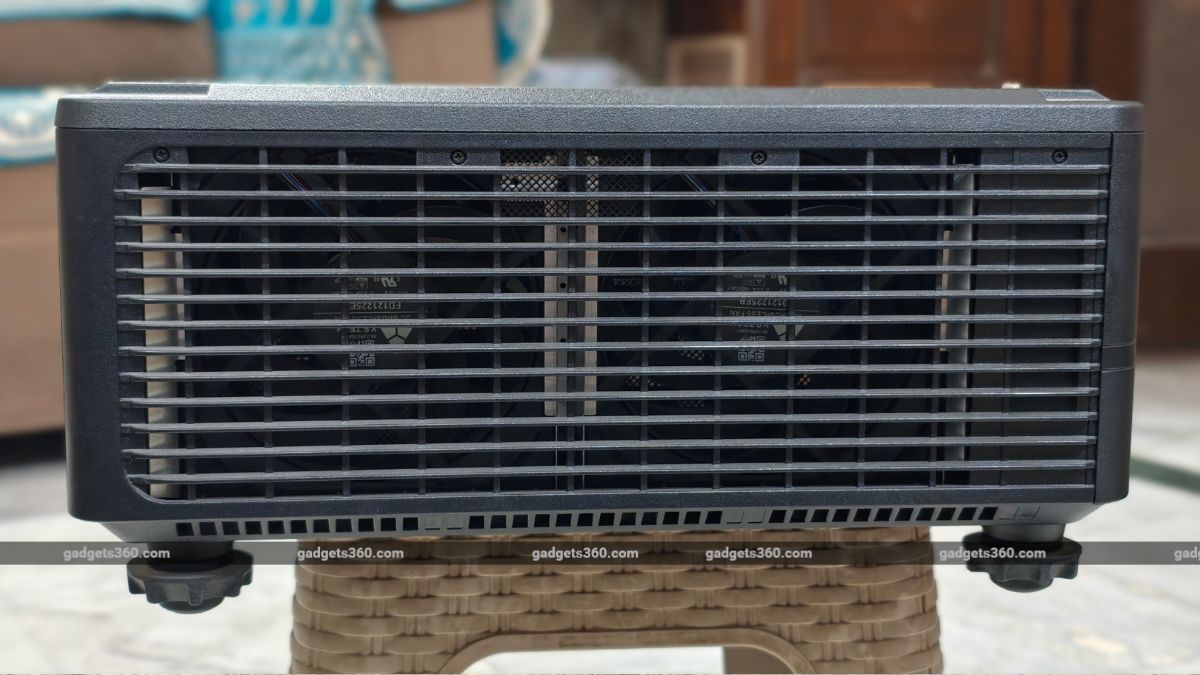
That said, it is still not your portable projector. It is large and heavy, which makes it difficult to carry around the house. Moreover, there are no built-in speakers, and you need a proper screen along with controlled lighting and a capable audio system to get the best out of it. That said, at Rs. 15,90,000, it is still one of the most expensive 4K projectors on the market, and it’s meant for those with an acquired taste for cinema. As for the alternatives, you have projectors like the JVC DLA-NZ800 and Sony BRAVIA Projector 9 (VPL-XW8100ES) that offer premium performance at slightly lower prices.
Ratings
Design: 8/10
Performance: 9/10
Value for Money: 6/10
Features: 9/10
Overall: 8/10
Pros
- Excellent colour volume and HDR performance
- Very high brightness for a home cinema projector
- Dolby Vision and IMAX Enhanced support
- HDMI 2.1 with 4K/120Hz and low-latency support
- Long 30,000-hour laser light source
Cons
- Extremely expensive
- Large and heavy for a home projector
- Requires a proper home cinema setup to make sense
- No built-in speakers