NASA wants to install a nuclear reactor near the moon’s south pole by 2030. Its planned output, 20 kilowatt (kW), could power a few households on earth. Russia’s planned reactor for the International Lunar Research Station (ILRS), led by China, will produce around 10 kW. But the fact that they are nuclear makes them significant.
The U.S. and China are pursuing parallel efforts today — in partnership with other countries — to be the first to set up a semi-permanent, and in future permanent, moon base. Such a facility will need electricity for everything from heating and life-support to recharging rover batteries.
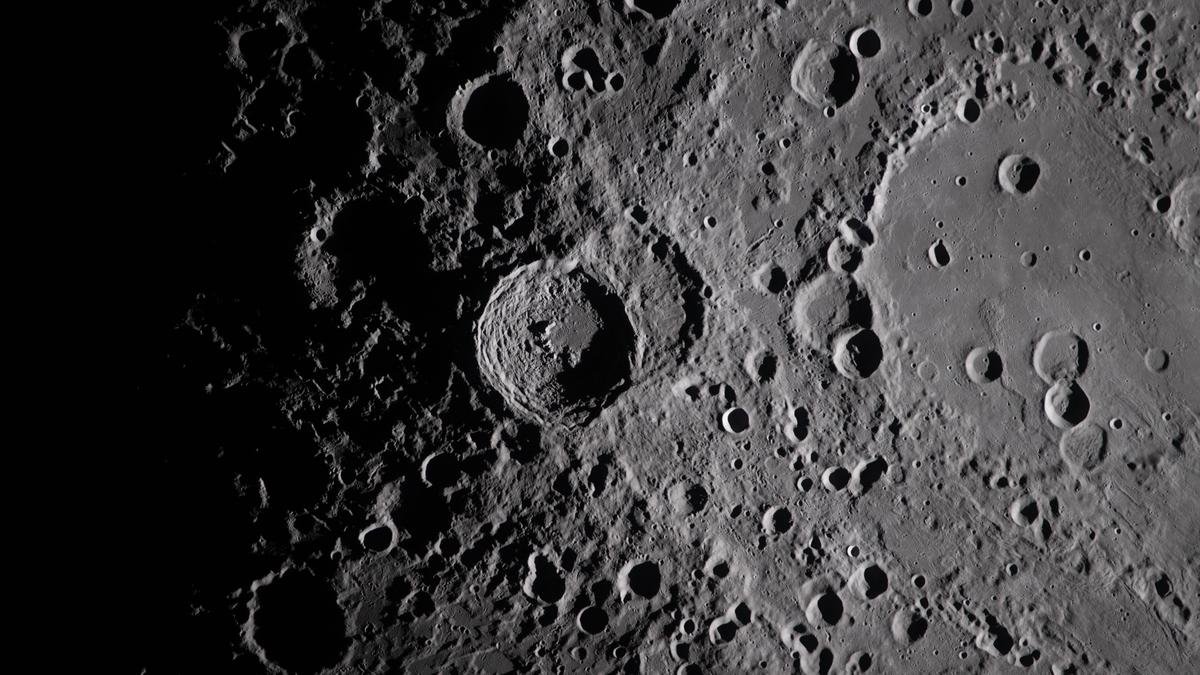
At most locations on the moon, a fortnight of daylight follows a fortnight of darkness. Near the south pole, where both factions are concentrating their activities, promontories and craters create a pastiche of lit and shadowed patches, with temperatures inside some of the latter dipping under a frigid –200 C. But unlike solar panels, a nuclear reactor can produce power irrespective of whether it receives sunlight.
Also Read | NASA plans to build a nuclear reactor on the moon
The reason the moon’s south pole has drawn this attention also changes the equation for nuclear power, however. The exceptionally colder craters preserve water ice, which can quench astronauts’ thirst and could also be electrolysed to produce hydrogen and oxygen, to be used as propellants for rockets launched from the moon itself.
In one 2020 assessment, NASA scientists Julie Kleinhenz and Aaron Paz figured producing 10 tonnes of oxygen this way would require around 68 kW of power. So a 20 kW reactor could well be a stepping stone in the U.S.’s, and China’s and Russia’s, plans to set up an array of small reactors on the moon, with an eye on industrial-scale operations in future.
Nuclear reactors also warrant some geopolitical urgency. Both the U.S. Artemis and the Chinese ILRS programmes envisage long-term activity near the moon’s south pole. European scientists are also exploring lunar microreactors and the U.K. has financed studies on nuclear power in space. The urgency arises from a scarce resource: land.
Also Read | The science, technology, and pitfalls of using nuclear power in space
While the moon as a whole is barren, the more ideal locations, with longer periods of sunlight, terrain more suitable to land on, access to craters with water ice, and so on, are highly limited. Research commissioned by NASA has recommended situating nuclear reactors at least a kilometre away from humans, further constraining the suitability of ideal patches.
Now, the Outer Space Treaty 1967 says no country may appropriate any part of the moon through occupation or other means. But the Artemis Accords, to which the U.S. and its allies vis-a-vis the moon are signatories, envisage temporary ‘safety zones’ to prevent harmful interference. Put differently, a state does not have to stake territory on the moon to limit access to others: it can simply plonk a nuclear reactor there and appeal to the need for subsequently legitimate safety requirements.
The Accords say these zones must remain temporary and respect free access but a country, or a bloc, operating a cluster of reactors, landing pads, mines, and habitats could nevertheless confer a controlling advantage.
Also Read | U.S. in race with China to claim ‘best’ part of Moon: NASA Chief
For the appeal of this idea, however, there are significant technical hurdles. Shielding a nuclear reactor on the moon demands either launching, at great cost, the components to ensure its safe operation, including shielding, or producing them on the moon with lunar resources. Distancing a reactor from a base still warrants deployment machines and power cables.
The reactor core(s) will also have to be launched unirradiated and, once online, space agencies will have to install large surfaces to radiate the copious amounts of waste heat away, and keep them free of moondust. If a reactor fails on the moon, it will risk contaminating the same few places astronauts would like to be at on the moon.
In the end, while nuclear power could prove indispensable to a mature economy centred on the moon, no country possesses that economy today even as governments are being tempted to install reactors first, before their ‘opponents’ — a danger in and of itself.
Published – October 06, 2026 10:25 pm IST