Every smart TV sold in India runs on some version of software, and that software decides almost everything about how the television feels to live with, from the first screen you see after switching it on to how long it takes to find something worth watching. LG’s webOS and other smart TV platforms available in India are what most Indian buyers will run into, and each has taken a different route to the same problem, which is making a TV screen easy to use every single day.
A Cleaner Home Screen, Fewer Steps to Navigate
webOS builds its home screen around a row of cards, showing recently used apps, live TV, and a short list of recommendations, all visible without opening a single menu. Other manufacturers have moved their interfaces closer to this idea after recent design updates, though the first screen on some of these platforms still carries more tiles and settings shortcuts than webOS does. Some other platforms lean further into automated suggestions from the outset, pulling recommendations from every connected streaming app into one long scrolling feed under its dedicated recommendations tab. That feed helps with discovery, but it also tends to feel more crowded, especially for someone who already knows they want to open Netflix or JioHotstar and would rather not scroll past a dozen suggested titles first. For a first-time smart TV buyer, webOS simply asks less of them before they reach what they came for.
Content Discovery and Personalisation
Content discovery on webOS works through the same card layout rather than a separate dedicated feed. Recently watched shows and app shortcuts sit together on one screen, and a feature called AI Concierge builds its recommendations by learning what a household actually watches, without sending that viewing data through a third party’s servers the way some competing platforms do. It is a smaller, quieter kind of personalisation, built for finding your next episode quickly rather than replacing the decision entirely with an algorithm.
The App Ecosystem
LG’s Content Store carries several apps and channels, and every major Indian streaming platform is there, including JioHotstar, Netflix, Prime Video, SonyLIV, and Zee5. Some competing platforms technically hold a larger catalogue overall, since they draw from the same app store used on smartphones, but a good number of those apps were never built with a television remote in mind. LG has chosen to keep its store limited to titles optimised for TV hardware rather than compete purely on numbers, and for most Indian households the everyday streaming needs are covered either way. The difference shows up less in what is available and more in how consistently it behaves once you open it.
Smart Home Integration and Voice Control
Where webOS separates itself more clearly is in how it talks to the rest of the house. The Magic Remote supports point-and-click navigation along with built-in voice commands, so switching inputs or searching for a film does not require typing on an on-screen keyboard. It also carries a dedicated AI button, which opens up features like AI Concierge, voice search, and the built-in AI chatbot with a single press, rather than requiring a separate app or menu to reach them. Through the ThinQ app, a webOS TV can also sit on the same home screen as LG’s other connected appliances, including air conditioners, refrigerators, and washing machines, and recent updates have extended this further through Matter support, letting the TV act as a hub for other smart home devices as well. Other platforms integrate more naturally if a household already uses a particular phone brand or smart speaker, and some manufacturers tie their TVs into a separate app for controlling their own appliances. For a home already built around LG products, though, webOS offers that same convenience without needing another device plugged in.
Software Updates
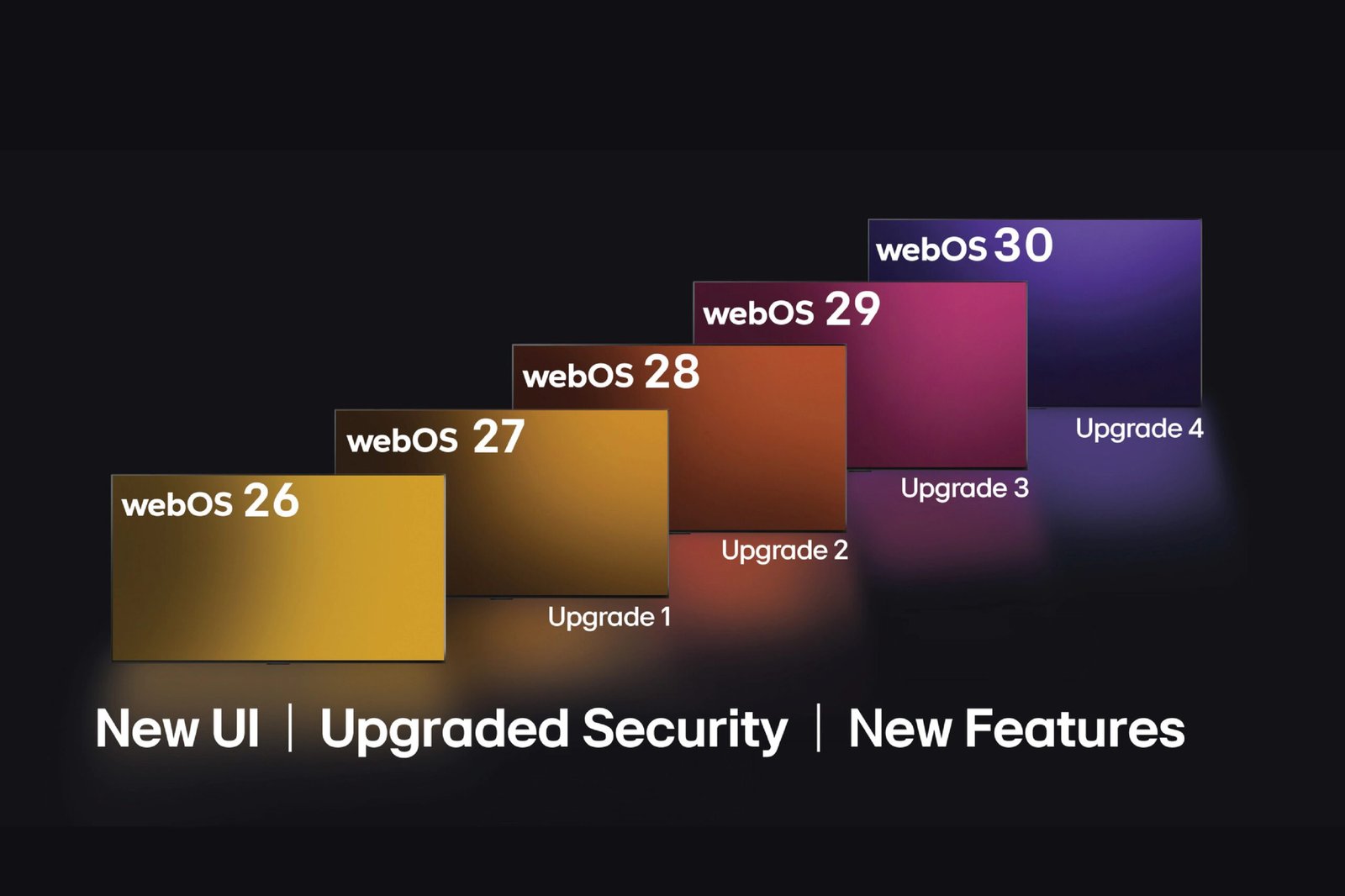
Software updates are where the yearly rhythm of webOS becomes most visible. Since 2024, LG has committed to sending each new version of webOS to eligible existing TVs, not as a security patch but as a genuine feature update, and TVs bought two or three years ago have picked up tools that did not exist when they left the showroom. Other brands have recently promised a similar long support window on paper, and update records on shared platforms depend heavily on which of the many manufacturers built the set, since no single manufacturer controls does not control that rollout the way LG does on its own hardware. LG’s approach at least means the update experience stays consistent across its own range, year after year.
Overall Experience
webOS gets the basics right, and it does them well enough that most people will not feel the need to look elsewhere. Other platforms hold their own for everyday viewing too, but it is in the smaller things, fewer steps between switching on the TV and finding something to watch, a smart home story that does not need extra hardware, where webOS pulls ahead.