
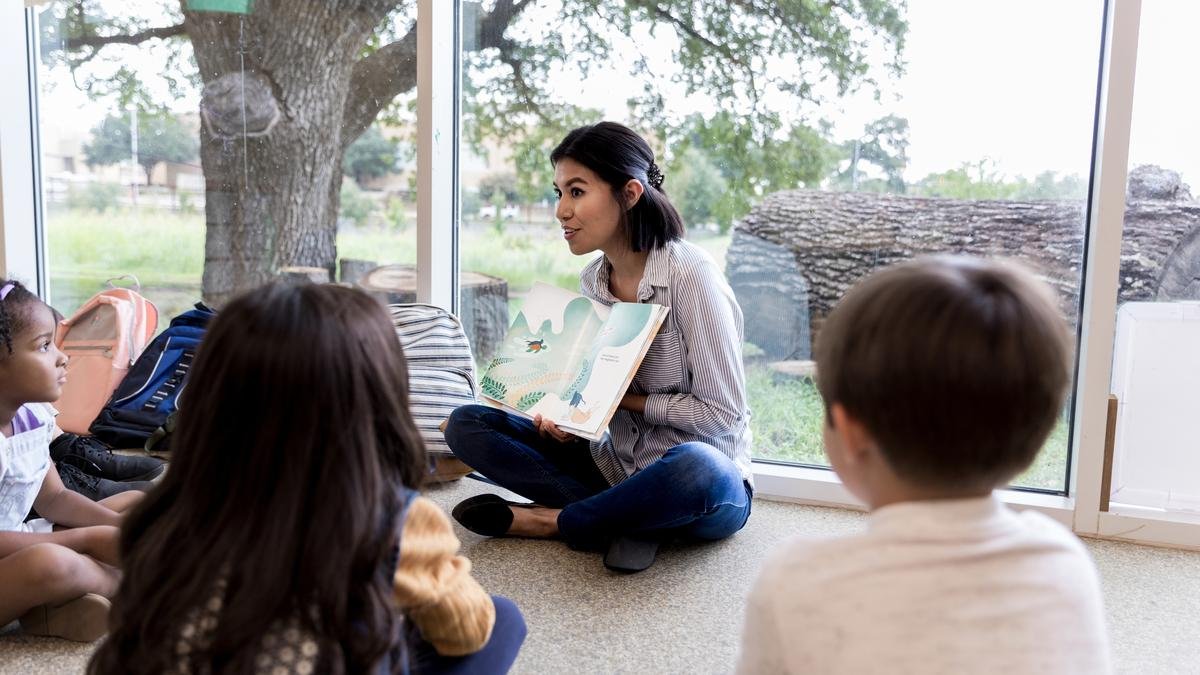
To help us retain the information about the Second World War, Rani Miss, our History teacher, divided the class into three groups. A few students were the Axis powers, another set was the Allied powers, and the rest were bodies like the League of Nations and the UN. A History class that could have been just about remembering the dates and names of people turned into a journey. As we took on the roles of Hitler, Mussolini, Churchill, and Stalin, the textbook became part of our lives, and information stayed well beyond the class tests. The debates that took place also made us understand the distance between the leaders waging wars and the human cost.
(Sign up for THEdge, The Hindu’s weekly education newsletter.)
This is a teaching technique known as scaffolding, which is a kind of storytelling where the listener is also a character. Unlike passive storytelling, scaffolding helps students engage more with the information presented, thus improving retention and comprehension.
In a 2026 study published in Nature, titled ‘Enhanced word learning and neural synchrony during children’s storytelling ’, scientists found that learning outcomes in school-going children significantly improved through social experiences like storytelling and scaffolding. And during these teaching processes, the brain wave patterns in teachers and their students were in sync or aligned with each other – a situation scientists call neural synchrony.
Scientists say that when neural synchrony occurs between teachers and students during a session, it is an indication that students are comprehending and engaging.


In the study, researchers tested passive storytelling, where the child is the listener, and scaffolding, where the child is a character in the story. They used functional near-infrared spectroscopy (fNIRS), a brain imaging method, to record neural activity in the frontal lobes, the temporal lobes, and the parietal lobes of the child and the instructor.
Regions of the brain engaged
Through neuroimaging, it was found that during a scaffolding session, synchrony occurred mainly between the child’s left prefrontal cortex, which controls language, decision-making, planning, attention, and retention; and the teacher’s right hemisphere which is tied to spatial awareness, empathy, and nonverbal communication.
In passive story-listening, synchrony predominantly engaged the child’s right premotor cortex, which is associated with planning and organising movements and actions. “The premotor cortex is known for its part in perceiving and predicting others’ actions within goal-directed contexts, which is essential for social learning,” the authors said in the study. Here, the child was primarily in the receptive role.
“This is extremely important from a learning outcome point of view. Simply put, children learn better when there is active engagement from the teacher, which probably tunes several other networks beyond language comprehension, namely attention, arousal, emotion, saliency, and flexible decision-making,” Arpan Banerjee, a scientist and professor at the National Brain Research Centre, told The Hindu (he was not involved in the study). He added that engagement of brain regions involved in social communication is also a key player in improving learning outcomes and gets more optimally involved in an in-person setting.
The study found that children were able to pick up new words significantly better in the scaffolding session, as it involved spontaneous dialogue and the left prefrontal cortex was more actively engaged. Several studies have found that children’s vocabulary improves in social learning environments, with storytelling an effective medium of instruction. The sessions have to be instructor-led, with the child given space for responding and answering. “These findings may point to the relation between neural synchrony and the active engagement of both instructor and learner, as they collaboratively build a shared understanding,” the authors wrote in the study.
Remote setting not as effective
However, when the child attended a remote storytelling session online, they were found to be less engaged. The scaffolding effect also disappeared. This is significant as remote classes have become a common phenomenon following the COVID-19 pandemic. Several studies have shown that for active learning, face-to-face interaction plays a vital role in comprehension and mutual understanding between the educator and the child.
For educators, it is also essential to test whether children understood the concepts taught in class. The study found that both passive storytelling and scaffolding had an equal impact on test scores. It also showed that neural synchrony does not automatically translate to better outcomes in tests. “The ideal way to test the students would be via an active approach; for example, give them real-life situations where they can project themselves and answer questions akin to solving puzzles,” Dr. Banerjee said.

The manner of instruction also has a major impact on the child’s comprehension. A recent study conducted by researchers from the University of Iowa found that combining gestures with speech through scaffolding helps improve neural synchrony and learning. The study found that it does not matter how much time is spent on a particular topic, but the nature of the interaction is what matters for effective learning. The researchers saw that when parents used gestures, blood flow rose in the problem-solving areas of the child’s brain and the adult’s perception region, which senses when someone understands you.
The relationship a student shares with the teacher also influences the learning outcome. A study published in the Journal of Cognitive Neuroscience, conducted among high school students,found that students who reported higher social closeness had more neural synchrony during lectures than other students. In terms of retention, the social closeness the student had with a teacher had more influence on the learning outcome than neural synchrony. This helps in predicting students’ performance and shaping course outlines.
When facts and figures are presented in an isolated manner, it is difficult for children to retain and comprehend the information. Presenting the matter through creative methods like storytelling and scaffolding becomes important to ensure that learning occurs in the classroom. Dr. Banerjee also said it is important to test how such techniques can be applied for children who are within the neurodiversity spectrum. “For example, designing a scaffolding paradigm from brain activations that enhances the learning outcomes in kids or young adults who fall under the spectrum will help to understand how these techniques can work for everyone,” he said.
Published – September 28, 2026 08:30 am IST