
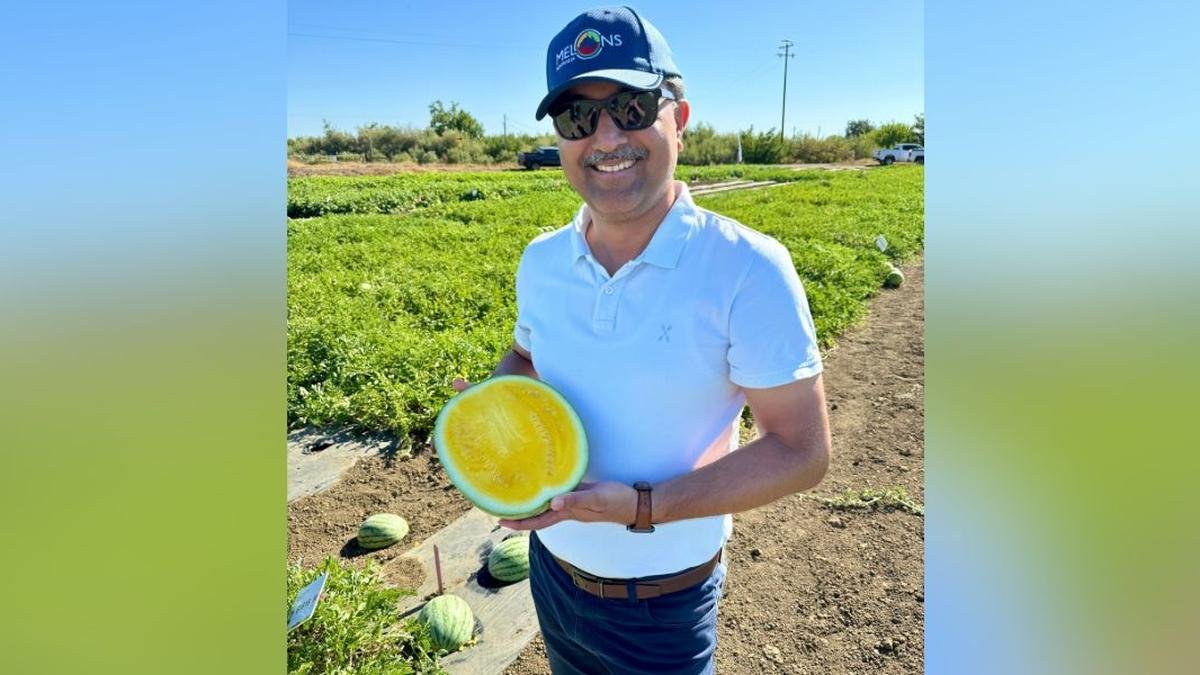
Australia-based food-safety scientist Sukhvinder Pal Singh, whose roots hail from a family of farmers in Una, Himachal Pradesh, is a senior research scientist with the New South Wales Department of Primary Industries and Regional Development, in Ourimbah. Fondly called SP Singh, at 46, he leads research on fresh-produce safety and traceability.
His work following Australia’s deadly 2018 Listeria (bacteria in rockmelons) outbreak — which infected 22 people, killed seven, and caused a miscarriage — helped drive changes in horticultural food-safety practices. In 2025, he received the Australian Institute of Food Science and Technology’s national Food Safety Award. Excerpts from an interview on how to curb India’s rising food adulteration incidences:


Low- to medium-income households are more prone to food fraud due to affordability and accessibility issues. While some adulteration is primarily an economic deception, some can create genuine health risks.
There is also a significant data and knowledge gap regarding population exposure to chemical contaminants, heavy metals, environmental toxins, microplastics and antimicrobial-resistant organisms through food and water. Comprehensive and easily accessible public data on the scale and cumulative impact of these exposures remain limited, while the long-term health consequences of some emerging contaminants are still not fully understood.


Sukhvinder Pal Singh, senior research scientist, New South Wales Department of Primary Industries and Regional Development, Ourimbah, Australia.
| Photo Credit:
Special arrangement
A major weakness is the lack of a sufficiently systematic, intelligence-led and risk-based approach to food fraud and contamination. The system needs to identify food supply chains that are particularly vulnerable to adulteration, substitution, misleading labelling or contamination and determine where in the supply chain these risks are most likely to originate or occur at scale and who are the supply chain actors involved. Enforcement can become fragmented when it is overly concentrated on inspections and sampling at the retail end.
Given the enormous scale and complexity of India’s formal and informal food economy, from farms and mandis to processors, distributors, restaurants, street vendors and households, monitoring compliance at the final point of sale cannot adequately control risks that originate much earlier in the supply chain.
First, make high-risk food chains safer through risk-based, intelligence-led enforcement. Rather than attempting to fix every part of an enormous and complex food system simultaneously, India should identify, perhaps, top 10 high-risk, high-volume food categories and address them systematically. These could include milk and dairy products, spices, edible oils, meat and seafood, and fresh produce.
For each commodity, authorities should map the entire supply chain and identify where adulteration, substitution, contamination and temperature abuse are most likely to occur. Regulatory resources should be concentrated at these critical points, particularly bulk manufacturers, processors and distributors, rather than relying predominantly on end-point retail sampling.