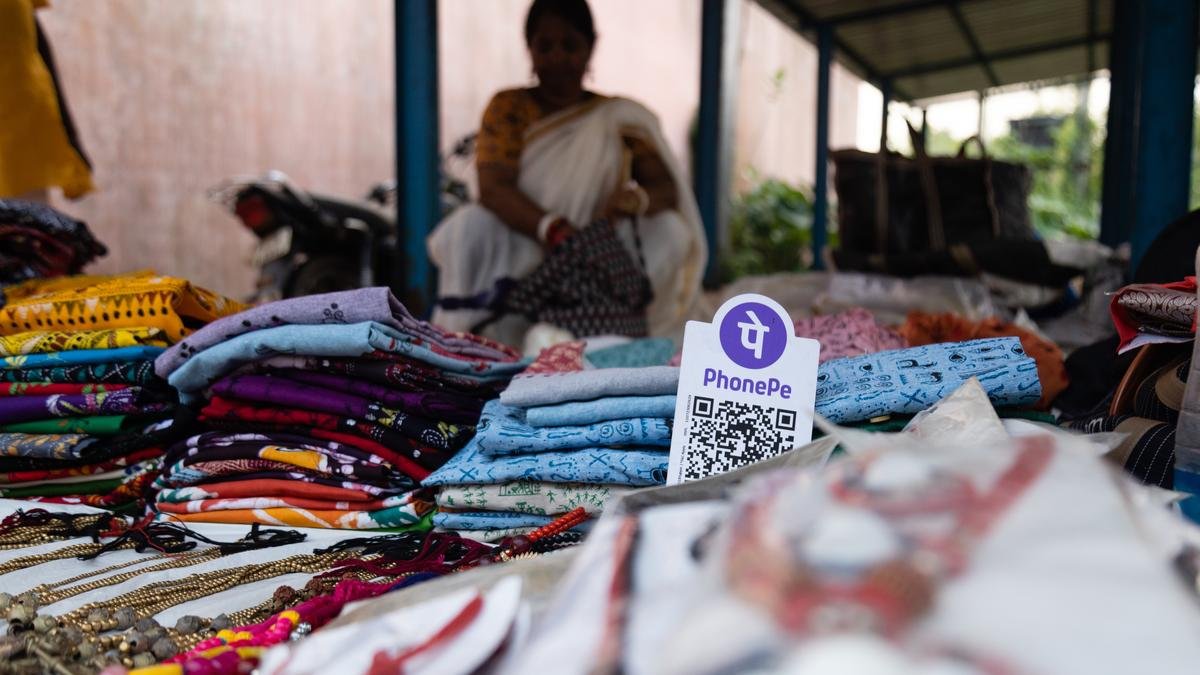
On April 30, 2025, Bibhash Bormedhi looked on as a tonne of waste left Majuli on a boat across the Brahmaputra river. This was a first for the world’s largest river island.
“This was the first time the waste from Majuli crossed the Brahmaputra, instead of being dumped into the river,” Mr. Bormedhi, Project Manager at waste management non-profit Sahaas, which led the initiative, said.
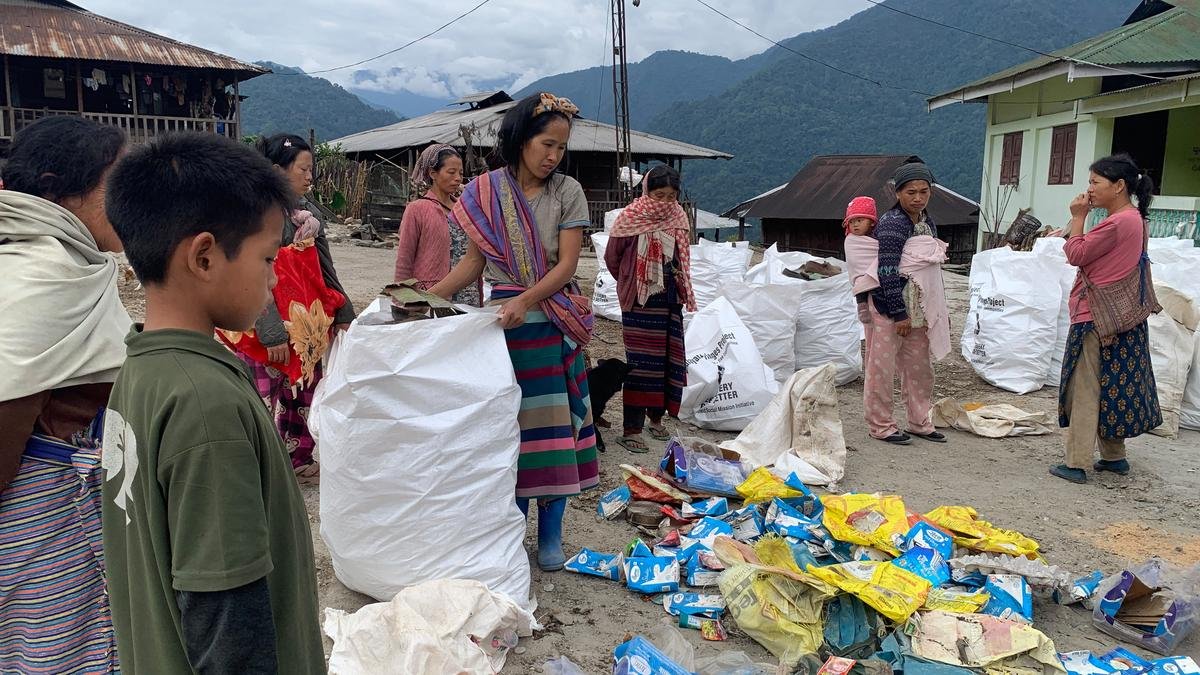
On Independence Day 2024, in Arunachal Pradesh’s Tawang District, villagers from Zemithang Circle sent away 4.4 tonnes of garbage in a lorry. Nestled in the folds of the Himalaya, between 6,900 feet and 8,000 feet high, they had segregated their waste for the first time. The truck made a 390-km journey lasting over 12 hours to scrap dealers in Tezpur, Assam.
Behind these efforts lay months of preparation, creative ways of financing, and a growing awareness that waste was becoming a mounting problem in the remotest corners of India.

‘Data does not exist’
The country produces 1.7 lakh tonnes of waste every day, per the Central Pollution Control Board. Of this, 22% ends up in landfills and 17% is unaccounted for. Activists groups and experts have said data on rural waste are simply not counted at all.
“Waste data for rural areas doesn’t exist,” said Siddharth Singh, programme manager, Solid Waste Management and Circular Economy, Centre for Science and Environment (CSE), New Delhi. Urban and rural local bodies are tasked with solid waste management and data collection, including volumes and expenses, but they rarely do the needful, Mr. Singh said.
Earlier this month, the Supreme Court pulled up the national and State governments for not institutionalising the Solid Waste Management Rules 2026. Regulatory bodies must be notified, staffed, and provided with the necessary infrastructure to function effectively, the Court ordered.
Data show a rise in per-capita spending in India’s villages. More consumption also results in more waste.
“Food, beverages, personal care or hygiene products — almost everything is wrapped in plastics or multi-layered packaging,” Mr. Singh said. “These goods have penetrated the remotest rural markets.”
Waste management has not, however.
Worldwide, around 2.7 billion people do not have their waste collected — and of them 2 billion live in rural areas, an analysis by the UN Environment Programme (UNEP) found.
Where people cannot manage waste, they dump it on land or in rivers, streams, and seas, or they burn it — a major concern in India.
“In Majuli, people used to throw the waste in their fields or in the river,” Brojen Pegu, a Majuli local, said. “When it flooded every year, the river carried the waste away.”
For centuries, organic waste was used to feed livestock or as manure. But more plastics and other non-biodegradable materials have led to a mixed waste today, which is harder to decompose.

Majuli’s method
Alakesh Gogoi, District Official, Swachh Bharat Mission and the Public Health Engineering Department, said his department built the Central Material Collection Facilities (CMCFs) in 19 of 20 panchayats and mini-collection facilities in most of the 160 villages between 2017 and 2022. However, neither were these tin sheds used nor were the workers mobilised.
In 2024, Sahaas teamed up with the departments, he said.
A waste management system needs several other components besides CMCFs, according to Mr. Bormedhi.
Community participation goes hand-in-hand with operationalising collection and transportation. Village leaders, homestay and hotel owners, schools and self-help groups participated in awareness programmes, and handed out bags for storage and segregation.
Simultaneously, the logistics of managing the non-biodegradable waste was fine-tuned, Mr. Bormedhi said. This included funding, staffing, and training sanitation workers; arranging for vehicles for transport; operating the material collection facilities; and finding recyclers.
Today, garbage is collected in 19 of 20 panchayats despite the locals facing floods and erosion, Mr. Gogoi said.

A community-led model
In the land-locked and mountainous villages of Tawang, there was no escape for garbage.
Having sanitation workers collect garbage from door to door wouldn’t work here because the settlements are scattered, Alifa Zibrani, senior project coordinator with Himalayan Fringes Project, Further and Beyond Foundation, a nonprofit focused on community-led waste management, said.
Instead, in 2023, through the Project, local officials and village leaders came together to pilot a community-led model of waste management in Chullyu in Keyi Panyor district. Within two years, the model had been adopted by a third of Tawang district and parts of Keyi Panyor and Upper Siang districts as well.
“Every household is responsible for segregating biodegradable and non-biodegradable waste. They store it in their homes. And then once a month, the community comes together and segregates the waste on a ‘collection day’,” Tashi Dondhup, additional deputy commissioner, Lumla Circle, which adopted the model as well, said.
“We don’t have any sanitation workers. Every village organises a collection day called Swachchata Divas (Cleanliness Day),” Ms. Zibrani said. A designated location in the village becomes the collection and sorting point, where “residents gather with sacks full of waste, and sort it into 22 categories. Some even clean the streets along the way.”
So far, 26 villages that are part of the project have organised more than 150 Swachchata Divas and collected 30 tonnes of waste.
The waste is taken to material recovery facilities (MRF), sites in Zemithang and Lumla, where it is received, sorted, and processed. There are also smaller community-led MRFs in Chullyu and Gobuk in Upper Siang.
Here, 12 full-time MRF operators and dozens of women from self-help groups perform the secondary sorting, into 35 categories. The locals also wash and dry sanitary napkins and diapers, which are also stored at MRFs.
More than 20 tonnes have been sold to recyclers, generating a revenue of Rs 3.53 lakh.
Monthly fee


Villagers gather during a waste collection drive in Taksang, Zemithang Circle, Tawang District. Taksang is 11,000 feet above sea level.
| Photo Credit:
Further and Beyond Foundation/Special arrangement
Per the UNEP, the most expensive step in the waste management chain is collection: in the form of crew wages, vehicle fuel and maintenance, insurance, and other indirect costs. A recent CSE report on plastic waste management, which Mr. Singh co-authored, also found that primary collection and transportation account for the bulk of costs in Indian cities.
The report examined the case of rural Dharamshala, where nearly 50% of the primary collection cost was attributed to manpower, while transportation and administrative costs accounted for the rest.
The Himalayan Fringes Project eliminated the costs associated with sanitation workers and door-to-door collection.
And to keep the operations financially sustainable, the community has set up accountability and independent financing mechanisms. Specifically, each region has a central committee chaired by a Circle Officer and a Lama (an influential religious leader) as secretary. At the village level, a gaon bura (village head) and a treasurer lead the committees that draft waste management policies, and set the rules, responsibilities, and fines. They meet every quarter.
Households are asked to pay a monthly fee of Rs 50. Shops and cafes pay Rs 100.
“Money is the biggest problem to run such a system,” Deewan Mara, former Zemithang Circle Officer, now officer and district magistrate, Daporijo, and a State Silver Medal winner for his work on managing waste, said. “Our aim is to make it sustainable so that this doesn’t stop because of financial problems.”
While there are some who don’t want to pay the fees, most villagers are complying, said Ahi Sitek, who is part of a self-help group in Gobuk village in Upper Siang. However, “there is some resistance from shop keepers, who find it hard to store the garbage for several weeks, until the next collection day.”
Mr. Mara said while there are fines for flouting segregation norms, the model avoids a top-down approach and focuses instead on community ownership of the waste management chain.
After two years, Further and Beyond hands waste management over to communities and local governments and becomes an advisor. Saahas plans to step down by March 2027.

First and last mile
Majuli’s 1.67 lakh people are served by 37 sanitation workers and 19 sorting staff.
Mridul Das, 38, from Silakola is one of them. When it is not too hot, he puts on his gloves and safety gear before setting out to collect garbage from door to door along a 40-50 km route every morning. He drives across the island’s broken bridges, narrow roads, and eroded coastline collecting non-biodegradable waste, which is sorted into six categories at one of the 19 panchayat-level CMCFs.
Most people segregate their waste, he said. “But in every 100 households there may be 30 who still give mixed waste. They don’t listen.”
Recently, Mr. Gogoi’s department and the Panchayat and Rural Development Department purchased 21 e-vehicles — including the one Mr. Das drives — and 15 tricycles, and approved funds for the collection crew. Saahas covers the sorting staff’s salaries.
The transportation cost to recyclers is high in rural areas because the waste travels farther, Mr. Singh said, rendering the task less attractive for scrap dealers.
Ms. Zibrani said it costs Rs 45,000 to send one truckload of waste from Arunachal Pradesh to Assam.Initially, the locals in Tawang volunteered their vehicles for collection. But over time, the project’s success drew the attention of Senior state government officials, who donated a truck. Yet the cost of fuel and driver is still Rs 20,000 per trip, she added.
Apart from this, some two tonnes of multi-layered plastics were sent to a processing plant at Lhou in Jang sub-division, where it was used to make paver blocks, Mr. Dondhup said.

‘Show a way’
Between April 2025 and May 2026, Majuli transferred 16.78 tonnes of waste and earned Rs 1.47 lakh. Mr. Bormedhi said there have been three boat transfers, which are expensive, so now Majuli sells its waste to local scrap dealers as well.
However, there have been no takers for black polythene and textile scrap, and Majuli’s long-defunct plastics management facility is undergoing repairs. Many CMCFs are also filling up quickly.
According to Mr. Singh, it is not uncommon to find rural collection facilities filled to the brim with baled waste, and with few takers.
Mr. Bormedhi is not discouraged, however. Since 2024, Majuli has collected 82.4 tonnes of waste and thus prevented it from ending up in the Brahmaputra and the ocean, he said.
“All we are trying to do is to show a way. A model where rural waste management can work.”
Mahima Jain is a resident fellow at the Climate Change Media Hub, Asian College of Journalism.
Note: This article was updated 2.45 pm on September 1, 2026, to note that the pilot project began in 2023, not 2024, and that the MRF in Daporijo is not yet ready.