
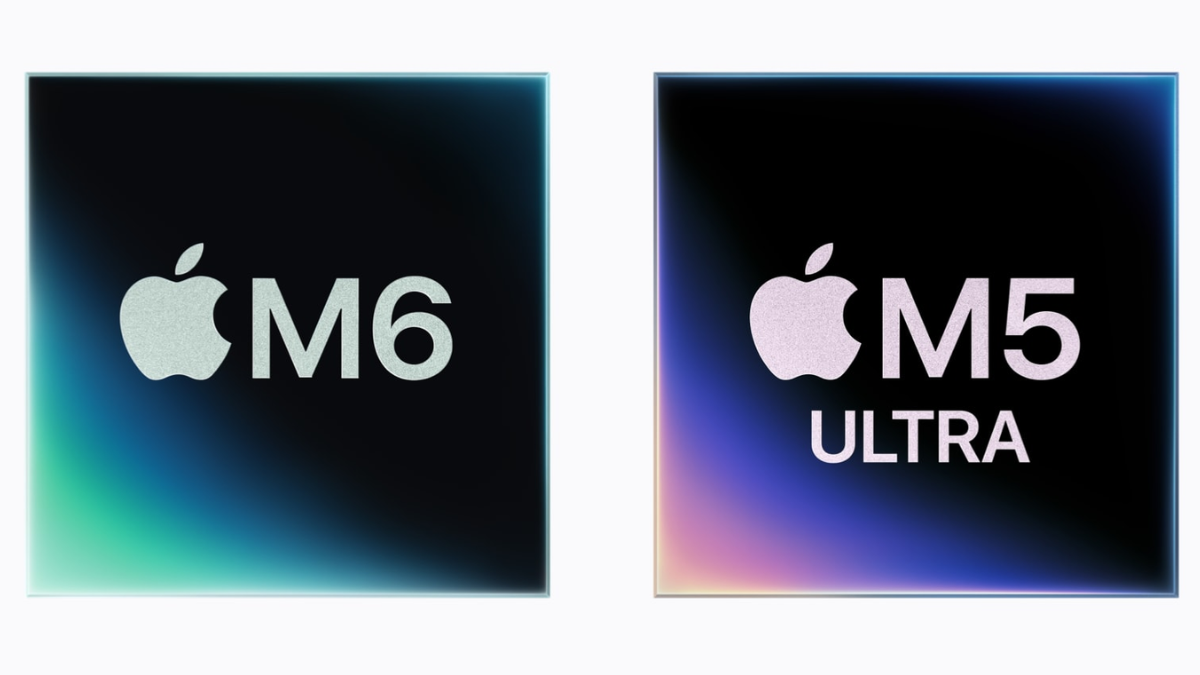
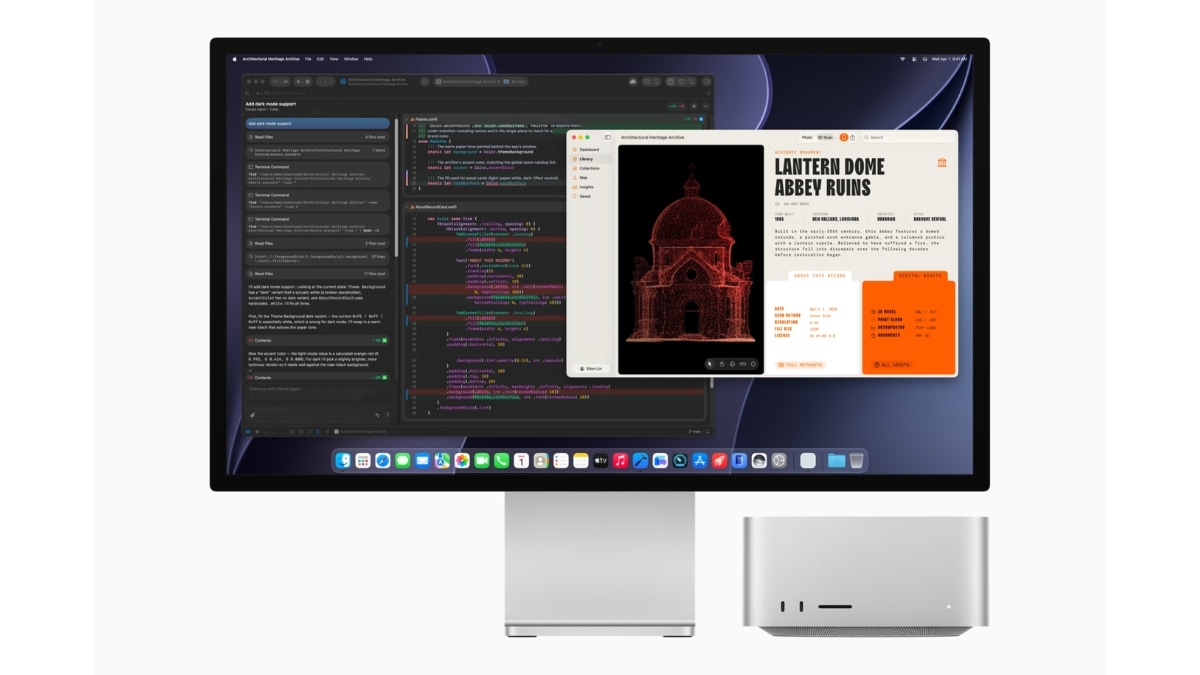
Apple launched two new Mac devices, namely Mac Studio (2026) and Mac Mini (2026), on Tuesday. The Cupertino-based tech giant refreshes the two Mac devices with the company’s next-generation and most capable processors. Along with the Mac Mini (2026) and Mac Studio (2026), the tech giant has introduced the latest Apple Silicon M6 and M5 Ultra chipsets. The M6 chip succeeds last year’s M5 processor, which currently powers the MacBook Air and the base MacBook Pro models. Meanwhile, the M5 Ultra is the first Ultra series Apple Silicon chip to launch since the M3 Ultra’s introduction with last year’s Mac Studio model.
Apple Silicon M6 Specifications and Features
The Tim Cook-led tech giant has shared key details about its next-generation Apple Silicon M6 and M5 Ultra processors in a press release. The new M6 is Apple’s first chipset fabricated using the 2nm process technology. It features a Dual 16-core Neural Engine, which is claimed to deliver up to 2x peak compute, compared to previous generations.
This is said to make on-device AI workflows faster. The system framework of Apple’s M6 SoC is capable of automatically utilising both Neural Engines simultaneously for faster execution of AI models. It also features a new 12-core CPU complex, which comprises two ‘Super Cores’, four performance cores, and six efficiency cores. The performance cores are claimed to use less power, as the ‘Super Cores’ are dedicated to single-threaded processing, while the two clusters perform multi-threaded tasks together.
Compared to last year’s M5 SoC, the M6 has two additional CPU cores. Apple claims that the M6 SoC delivers up to 1.2x and up to 2.4x faster multithread performance compared to the M5 and M1 chips, respectively. Additionally, the Cupertino-based tech giant says that the Apple Silicon M6 chipset delivers “the world’s fastest single-threaded performance”.

The new M6 chip also brings updates to the shader core architecture, Dynamic Caching, and hardware-accelerated ray tracing. Apple claims that this results in faster rendering and higher frame rates while gaming. It also delivers 50 percent higher geometry rates for complex graphics processing. The M6 SoC supports up to 32GB of unified memory, while delivering up to 70GB/s of unified memory bandwidth, which is said to be 10 percent faster than the M5 chip.
Apple Silicon M5 Ultra Specifications and Features
On the other hand, the new Apple Silicon M5 Ultra SoC is the tech giant’s first chip to feature the new Quad-Die architecture. It uses the UltraFusion technology to connect two dual-die M5 Max SoCs to create one quad-die architecture. Apple claims that this increases the inter-die bandwidth to over 4.4TB/s while enhancing the connection density by more than 6x. Further, the company highlights that the “ultra-low-latency” and “high-bandwidth” interconnections enable the four dies to act as a single unified processor.
Moreover, the new M5 Ultra SoC features up to a 36-core CPU, with 12 ‘Super Cores’ and 24 performance cores, which is claimed to deliver up to 1.25x higher single-threaded performance and up to 1.3x higher multi-threaded performance over last year’s M3 Ultra chip.
On top of this, the Apple Silicon M5 Ultra chip boasts Apple’s next-generation 80-core GPU, featuring a Neural Accelerator in each core, delivering up to 4.5x and 6x higher peak GPU compute than the M3 Ultra and M1 Ultra chipsets, respectively. It also features Apple’s new shader core with second-generation Dynamic Caching, hardware-accelerated mesh shading, and third-generation ray tracing, which is said to offer up to 40 percent faster graphics performance than the M3 Ultra.
Further, the new M5 Ultra SoC features a new Media Engine, along with dedicated hardware-enabled H.264, HEVC, four ProRes encode and decode engines, and hardware-accelerated AV1 decode. It gets a 32-core Neural Engine, too. The chipset offers up to 512GB of unified memory with 1.2TB/s unified memory bandwidth, which is claimed to be 50 percent faster than the M3 Ultra.