


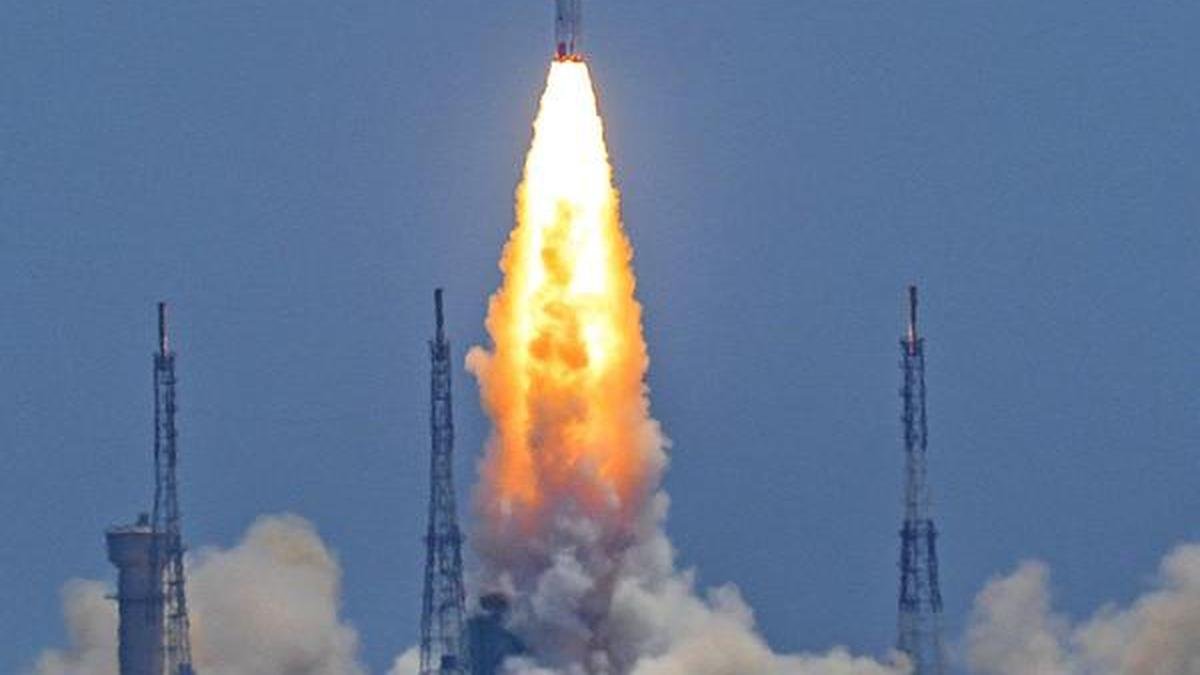

The PSLV-C57 mission lifts off from Sriharikota on September 2, 2023.
| Photo Credit: PTI
India spends more to put a kilogram of payload into orbit than any other major spacefaring nation, marring its public image as a cost-effective launcher, according to a new peer-reviewed analysis of more than six decades of rocket launches published in Economics Letters.
The authors, Alessio Terzi of the University of Cambridge and Francesco Nicoli of Politecnico di Torino, estimate that it cost $13,302 to send a kilogram to low-earth orbit on Indian rockets in 2025 — higher than Europe ($9,897), Russia ($6,682), China ($5,809) and Japan ($5,287), and the U.S. ($3,225). The global average was $3,868.
The authors say the high cost is due to ISRO mostly flying small rockets, due to which the fixed cost of each launch is spread across very little payload. The study finds that only the U.S. and Europe have shown a statistically significant experience curve — meaning costs falling steadily as cumulative launches grow — since 2010. India, the authors write, simply doesn’t launch often enough to bring its costs down.
The analysis comes as India is trying to increase the number of launches through private industry. Since opening the sector in 2020, the country has registered about 400 startups with its regulator, IN-SPACe. In July, Hyderabad’s Skyroot Aerospace flew India’s first privately built orbital rocket, making India only the third nation — after the U.S. and China — with private orbital launch capability.
But while IN-SPACe had projected 30 launches between January 2024 and March 2025, ISRO managed fewer than half. India recorded only five launches in 2025.
The gap is already pushing Indian satellite operators abroad. In November 2024, NewSpace India flew GSAT-N2, a 4,700-kg communications satellite, on a Falcon 9 from Cape Canaveral — ISRO’s first use of a SpaceX rocket. This spacecraft was too heavy for India’s LVM-3 rocket and Europe’s Arianespace had no operational launcher available. Two months on, Bengaluru startups Pixxel and Digantara placed India’s first private commercial satellites in orbit aboard a SpaceX rideshare from California. Other startups such as GalaxEye have also booked Falcon 9 slots for 2026.
The dependence matters because launch cost, the authors argue, is becoming a geopolitical vise: “SpaceX … was responsible for 75% of global payload to orbit in 2025 … going forward, it is not implausible that a U.S. administration might decide to weaponise this dependency or use it as a bargaining chip to coerce other nations.”
Published – August 14, 2026 02:00 pm IST