


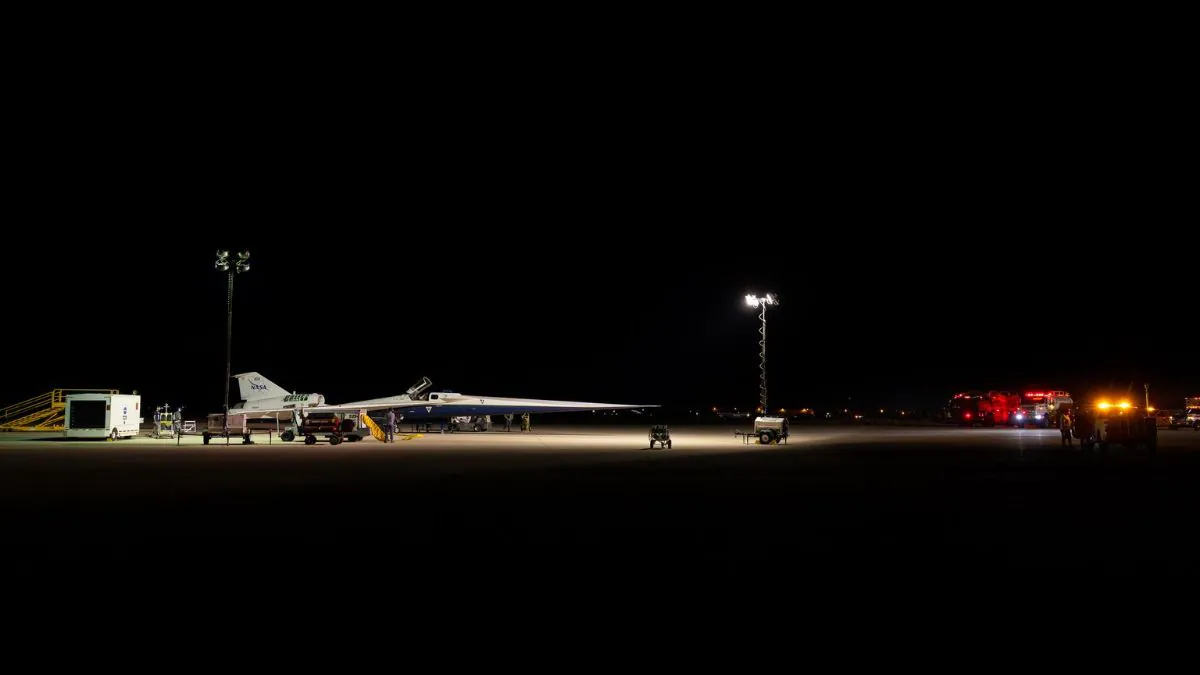
NASA’s X-59 experimental quiet supersonic jet is to make the first flight, with safety informing every step from taxiing down the runway to landing. The first tests will be a closed low-altitude loop at roughly 240 mph to check system integration before moving on to higher, faster flights that go supersonic. Unlike normal supersonic planes, which simply break the speed of sound and cause a sonic boom, the X-59 is designed to have that BAM and swap it out for something quieter — essentially shaking things up if all goes well and leading to an era of these faster-than-sound flights without bone-crushing noise.
NASA’s X-59 Supersonic Jet Packs Safety Systems to Prove Quiet Flight Future
According to NASA, the X-59’s layered protections include its Flight Test Instrumentation System (FTIS), which collects 60 data streams and over 20,000 parameters. Engineers noted that more than 8,000 files generated across 237 days of ground testing now serve as a detailed history for verifying readiness.
The aircraft also relies on a digital fly-by-wire system, redundant electrical and hydraulic backups, and an emergency hydrazine restart system to ensure reliability. Safety also goes all the way up to the pilot, who is supported by oxygen delivery, a counter-pressure suit for high-altitude flight and an adapted ejection seat from a U.S. Air Force T-38 trainer.
“I trust Chalk’s crew chiefs; I know the engineers and flight operators who have prepped this one–off airplane,” mentioned lead test pilot Nils LarsonDesigned to fly faster than sound with only a gentle thump instead of a boom, the aircraft could redefine future supersonic travel and guide safe regulations for overland passenger flights.