


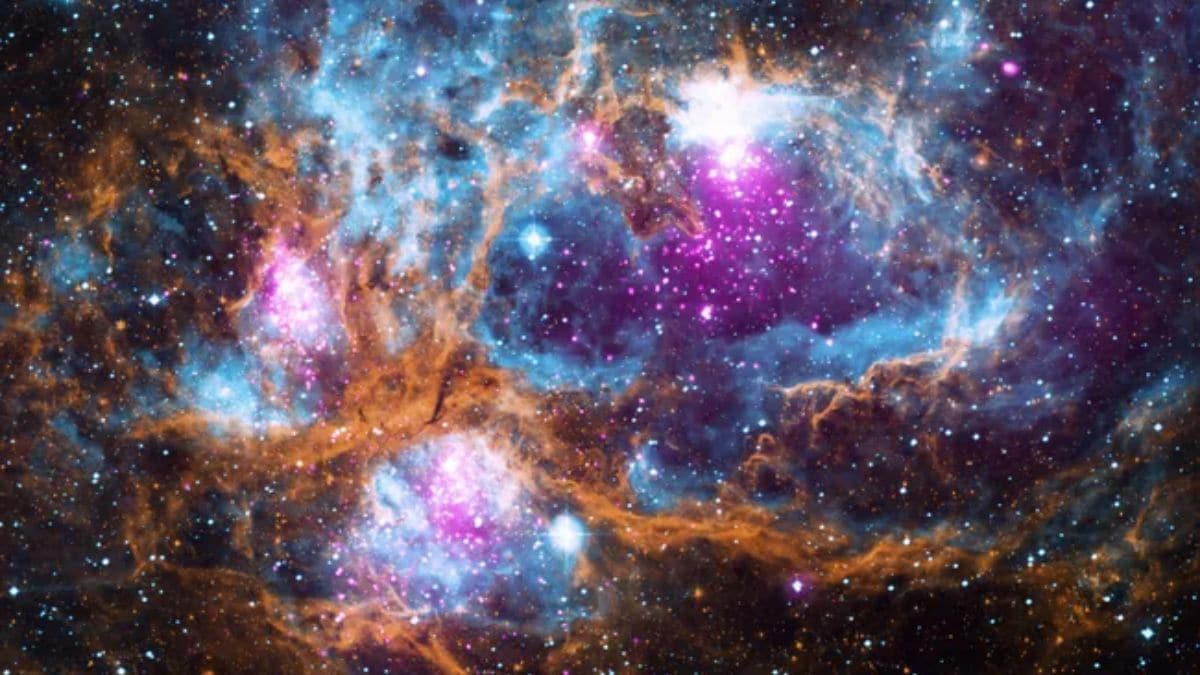
New images from the James Webb Space Telescope (JWST) of a bewildering planet-forming disk discovered to be remarkably carbon dioxide-free and yet water-rich in potential Earth-like planet sugary regions have been released. These disks typically have lots of water vapour, but here, almost none can be found, which has scientists stumped. This striking disparity defies existing ideas about how planets form, says Jenny Frediani, a doctoral student at Stockholm University and the lead author of the study, which was published on Aug. 29 in Astronomy & Astrophysics.
Why Water Is Missing in the XUE 10 Disk
Called XUE 10, the star system is located within NGC 6357, an estimated 8,000 light-years away from Earth. This surprising discovery implies that classical models of disk chemistry may not apply universally, and raises new questions about how such noxious, rocky, even potentially habitable planets can come to be.
How Future Telescopes Will Unlock New Clues
There are two possible explanations for this oddity, says Frediani. One is that intense ultraviolet radiation from the young star, or nearby massive stars, may evaporate the system’s water early in its history. Another possibility is that local dust contains more carbon dioxide than water because of specific environmental processes.
JWST, which is observing from its vantage at a stable Lagrange point distant from the noise of the Earth, offers the only platform that can take such a photo of the thermal staining. Its strong mirrors can even study the chemistry of planet-forming disks around young stars in high-mass star-forming regions.
With the Wideband Sensitivity Upgrade to the Atacama Large Millimetre/submillimeter Array (ALMA) in Chile by the 2030s, the cold gas and dust reservoirs could be imaged. Meanwhile, the Extremely Large Telescope (ELT), underway to be accessed in 2027, will be able to resolve substructures in irradiated disks showing potentially imprints of super-planets.