


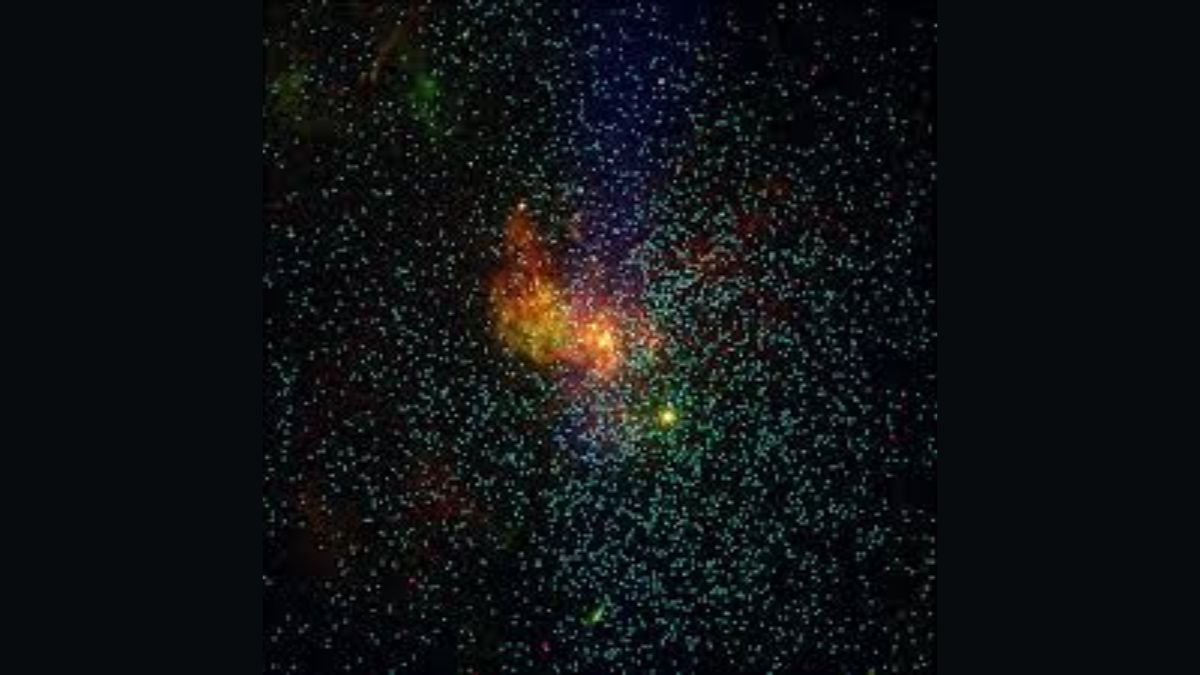
NASA’s Chandra X-ray Observatory has unveiled a rich trove of high-energy X-ray data, likened by astrophysicists to a “back catalogue of cosmic recordings.” The updated Chandra Source Catalogue (CSC 2.1), released in its final form in April 2024 and updated in October 2024, contains 22 years of observations—comprising 407,806 distinct X-ray sources and over 1.3 million detections. Astronomers state that this vast dataset can be combined with data from instruments like Hubble and the James Webb Space Telescope (JWST), opening new paths to discovery across the electromagnetic spectrum.
Mapping the Galactic Centre
According to NASA’s official website, a dramatic composite image of the Milky Way’s core highlights the catalogue’s depth. This new X-ray portrait covers “just about 60 light-years across, a veritable pinprick on the entire sky,” around the black hole Sagittarius A*. The image is the sum of 86 Chandra exposures (over 3 million seconds), detecting “over 3,300 individual sources that emit X-rays”.
Astronomers can explore this dense field of point-like sources and diffuse clouds to study phenomena like pulsar wind nebulae or historic black hole eruptions. This deep view may help piece together the galaxy’s violent past.
Cosmic Sonification
In another innovative move, sound has been used to represent this new catalogue. Sonification of the sky uses CSC to turn astronomical data into sound. Each repeated detection of X-rays is turned into a different note. This is to demonstrate that there is a way to display repeated X-ray sightings over time with different notes.
This is translated to mean that astronomical data is being translated into sound and that this 22-year survey of the sky is akin to a cosmic symphony. This catalogue is publicly available online and thus serves as a future aid to researchers across the globe.