


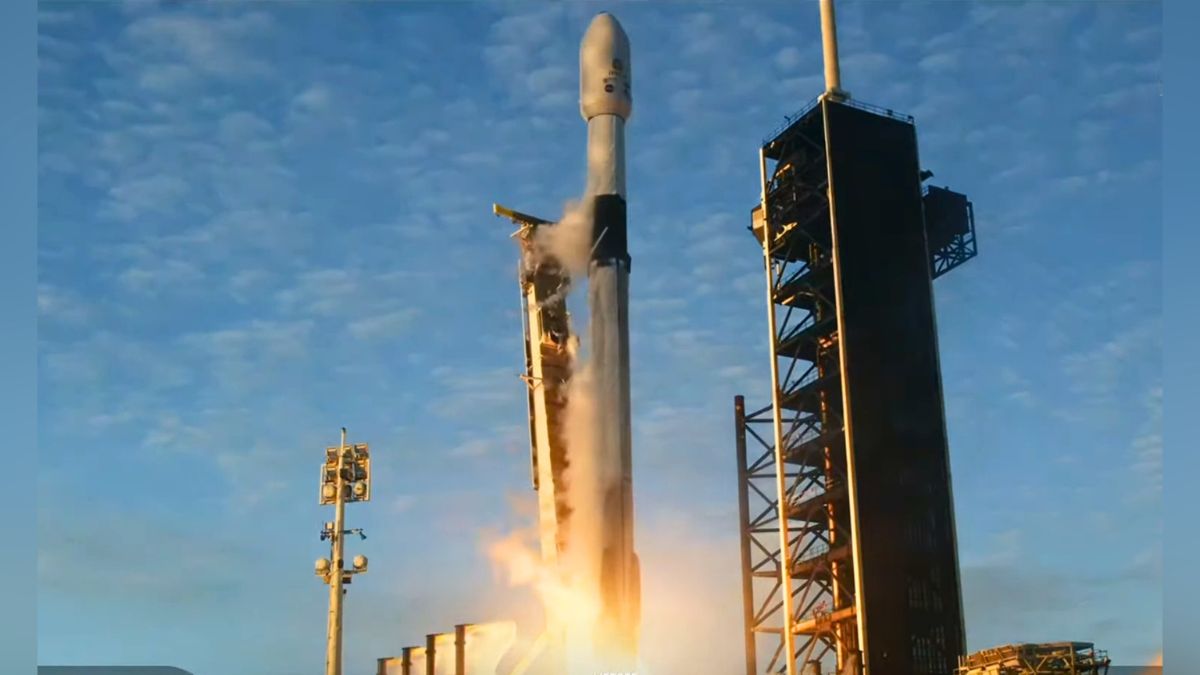
On September 24, 2025, SpaceX was able to launch three scientific spacecraft that were on board a Falcon 9 rocket to examine space weather and determine the outer edge of the solar system. NASA Interstellar Mapping and Acceleration Probe (IMAP) was the primary payload, and it was accompanied by Carruthers Geocorona Observatory (CGO) and Space Weather Follow-On L1 (SWFO-L1). They both intend to defend technology and astronauts and discover the dynamics between the Sun and the interstellar space.
Science Objectives
According to NASA, IMAP will work in the Sun-Earth Lagrange Point 1 and with the help of ten instruments, it will map the heliosphere, the magnetic bubble which has been inflated by the Sun’s wind, and it will examine how the charged particles accelerate at its boundary. CGO will capture ultraviolet radiation of the Earth in its thin geocorona, which will help in understanding how solar radiation forms our planetary outer space. The SWFO-L1 will offer monitoring of the space weather on a 24-hour basis, giving prior warnings of solar storms that can destroy satellites, electrical networks, and future lunar crews.
Launch and Impact
At 7.30 a.m. EDT, the Falcon 9 took off at Kennedy Space Center and launched IMAP approximately 84 minutes afterward, and then expelled CGO and SWFO-L1. Another milestone in the reusable launch by SpaceX was the first stage of the rocket performing an accurate droneship landing. The information obtained during such missions will provide a better understanding of the heliospheric models, enhance radiation predictions, and protect future deep-space missions, including the NASA Artemis missions. The trio expands the knowledge of mankind to travel safely beyond the magnetic shield of the Earth, as it also explores the solar frontier.
For details of the latest launches and news from Samsung, Xiaomi, Realme, OnePlus, Oppo and other companies at the Mobile World Congress in Barcelona, visit our MWC 2026 hub.