


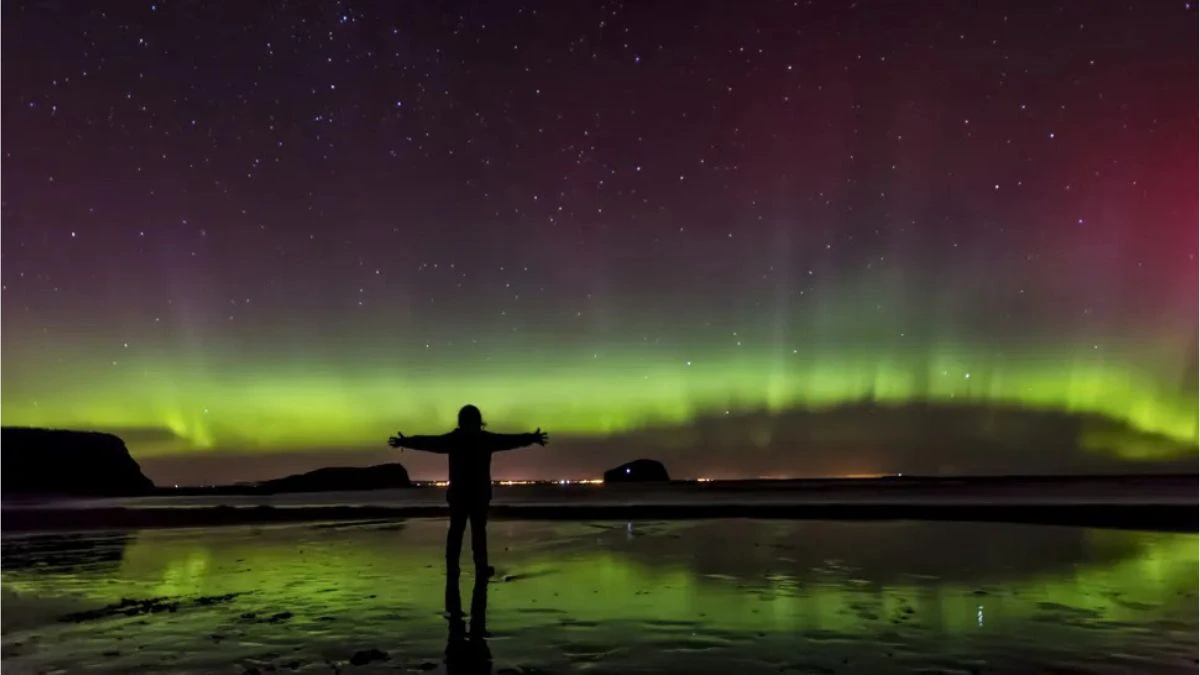
There are 4 coronal mass ejections (CMEs) that are approaching Earth and will have the potential to cause spectacular auroras on Earth this week. Although the eruptions will not cause significant disturbances, they might lead to slight geomagnetic storms and colourful northern lights that can be seen in the high latitude areas and, perhaps even, in the lower parts of the latitudes. These parallel bursts of the sun are closely observed by scientists and researchers as they head to Earth.
What’s Happening on the Sun — and What It Means for Earth
According to the NOAA’s Space Weather Prediction Center, between October 11 and 13, the Sun released a series of CMEs in an active sunspot region (AR4246), and eruptions were forecasted to reach between October 15 and 17. Various disturbances will be the strongest at the end of October 15 to October 16, and they may cause a G1 (minor) geomagnetic storm.
The lowest category of storm on a five-point scale of NOAA is G1, which can generate significant auroras in far north and favourable mid-latitude sources. The moderate storms may bring about small-time disruptions in power systems, hits on satellites and radio interference
How and Where to Watch — Tips for Skywatchers
The visibility of the moon is time and place-specific and is subject to clear skies. The greatest opportunities are experienced after sunset and preceding the middle of the night in dark country with a clear northern horizon. The Aurora 30-Minute Forecast is a monitoring tool provided by NOAA that allows the observation of real-time activity.
Although the conditions may appear silent, solar storms tend to vary. Several nights spent on the alert might give the spectators a stunning natural light display across the skies.