


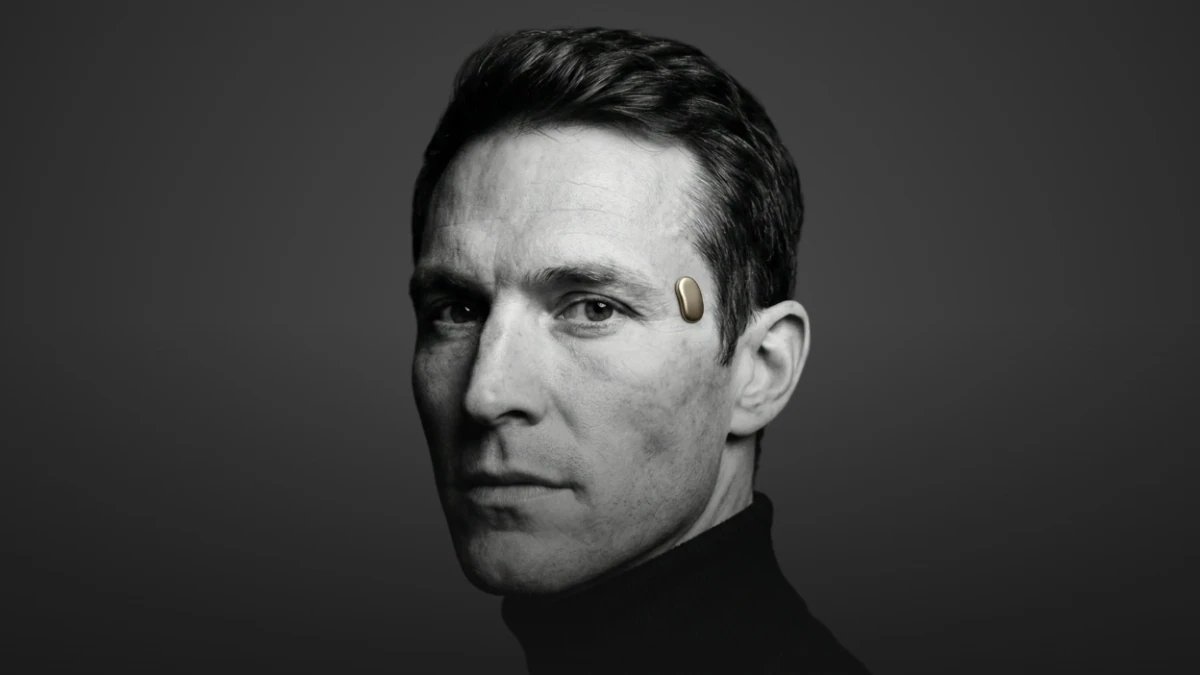
Zomato’s former Chief Executive Officer Deepinder Goyal announced he will step down from his role and hand over day-to-day responsibilities to Albinder Dhindsa. Goyal later launched a new venture, Temple, offering early access to the wearable health-tracking device with the same name. Recently, the executive said the company has significantly shrunk the device, which sticks to the side of the user’s forehead or temple. Now, Goyal has announced that the first validation study of Temple’s efficacy against another medical device is complete, showing promising results in evaluating blood flow in the brain.
Temple Validation Study Shows Promising Results
During the validation study involving 23 healthy adults, the Temple device was compared with the results of Transcranial Doppler (TCD), a medical-grade device used to measure brain flow, dubbed the “gold standard for measuring cerebrovascular function”. The purpose of the validation study was to evaluate the Brain Flow Index (Temple-BF) against the measurement of Middle Cerebral Artery Velocity (MCAv) read by the TCD during cycling to recovery and standing to lying down situations.
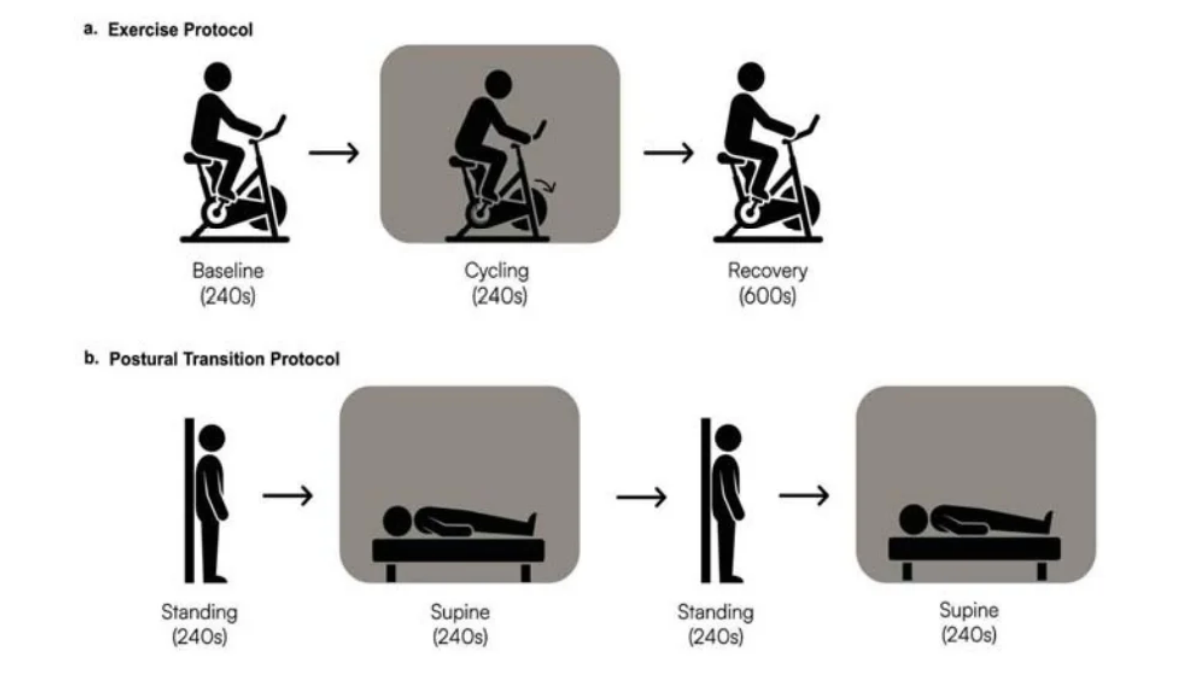
Temple’s validation study involved two protocols, cycling to recovery and standing to supine.
Photo Credit: Screenshot/ medRxiv
Currently submitted for peer review, the validation study pointed out that Temple was able to track the heart rate “well”, with a Mean Absolute Percentage Error (MAPE) of about 4 percent during cycle-ergometer exercise. The wearable also showed “strong” temporal associations between MCAv from the TCD and Temple-BF, accurately capturing the trends.
The study highlights that heart rate, as well as brain blood flow, increases during cycling compared with baseline and recovery. Both Temple-BF and TCD-measured MCAv reflected these changes, showing similar brain flow trends. Similarly, with postural changes from standing to lying down, subjects’ heart rate decreased. Simultaneously, their brain flow, or the blood flow in the brain, increased. Hence, Temple was not merely considering the heart rate changes to determine the brain flow trends.
According to the validation study, Temple also captured these trends accurately, coming close to the MCAv measurements recorded by TCD. As Goyal points out, a conventional health-tracking wearable, like a smartwatch worn around the wrist, would show the fall in heart rate in the supine state (or lying down). However, it would not capture the rise in brain flow that the Temple has managed to achieve.
The researchers said that in specific instances, “poor-quality TCD recording occurred” when the headframe used to position the TCD probe moved during the session. Such instances are less likely to occur while using more compact wearables, such as Temple, which are worn on the side of the head or the temporal region and not attached to other headgear.
However, the validation study has yet to be peer-reviewed. Even in the conclusion of the paper, the researchers pointed out that while a strong association between Temple-BF and TCD’s MCAv recordings was noticed, it does not conclusively prove that the wearable is accurately measuring brain flow activity.
More research is needed to prove the correlation, as Temple could be using the tissue in and around the temporal region to produce the Temple-BF readings. Yet, it did manage to capture changes and trends in brain flow similar to what TCD recorded. Hence, Temple should not be considered an absolute replacement for the TCD device at this stage of development.
Temple recording the trends near-accurately during the validation study is a promising sign. An anesthesiologist, replying to Goyal’s post, pointed out that brain flow measurements are used during liver transplants, in cases of Acute Liver Failure. However, TCD “equipment and expertise” are not always available.