


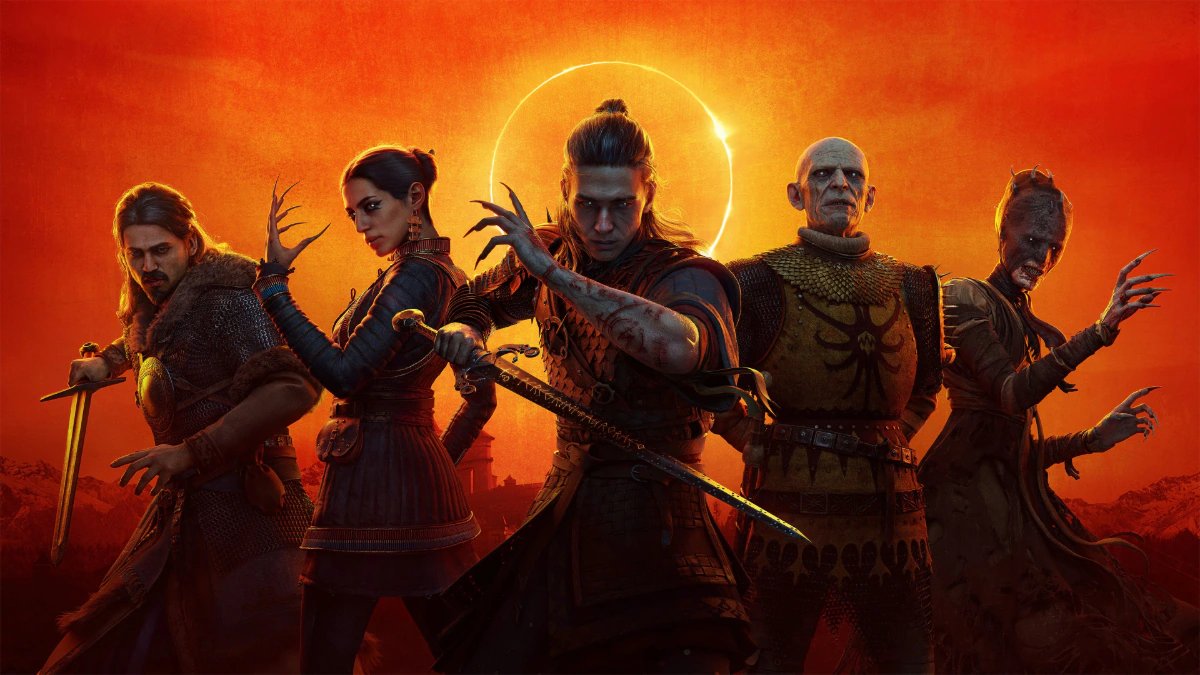
When you boot up The Blood of Dawnwalker, the upcoming story-driven dark fantasy RPG from the new studio Rebel Wolves, you can’t help but think of The Witcher 3: Wild Hunt. Even before you’ve started to experience the variety of its gameplay systems and the depth of its story, you realise that the game’s language follows the grammar of CD Projekt Red’s masterpiece. The Witcher 3 is one of the greatest games ever made, so any comparison to it can only be flattering for a game. But that first impression can also distort the larger picture.
The similarities between the two games aren’t a coincidence. One of the co-founders of Rebel Wolves, a studio formed in 2022 by several CDPR veterans, is Konrad Tomaszkiewicz, the game director of The Witcher 3. So, a lot of the ideas driving the two games come from the same creative wellspring. And that initial and instant feeling of sameness could lead one to believe that The Blood of Dawnwalker is a derivative action-RPG, treading much of the same trail that The Witcher 3 blazed when it released in 2015.
But spend some time in Vale Sangora, the picturesque fictional valley in medieval Europe that serves as the game’s gothic setting, and The Blood of Dawnwalker reveals itself to be so much more than just a game trying to emulate its biggest inspiration. In fact, there are far more flexible gameplay and narrative systems at play here than there were in The Witcher 3. The Blood of Dawnwalker is a robust and excellent open-world action-RPG that treats time as a resource and story as a sandbox. The game’s fabric is made up of choices, actions, and consequences, all occurring on a timer and contributing—in small and big ways—to the central conflict that drives things forward.
You can take one of several paths to multiple endings and experience facets of story and gameplay along the way that you will miss if you play differently. That makes each approach in The Blood of Dawnwalker feel personal, consequential, and final. The game also puts its story on the clock. Key moments and actions move time forward through recurring day-and-night cycles, essentially giving you a deadline to complete the main mission. Because time matters in The Blood of Dawnwalker, its narrative comes with an urgency missing in most open-world games where you’re encouraged to get distracted.
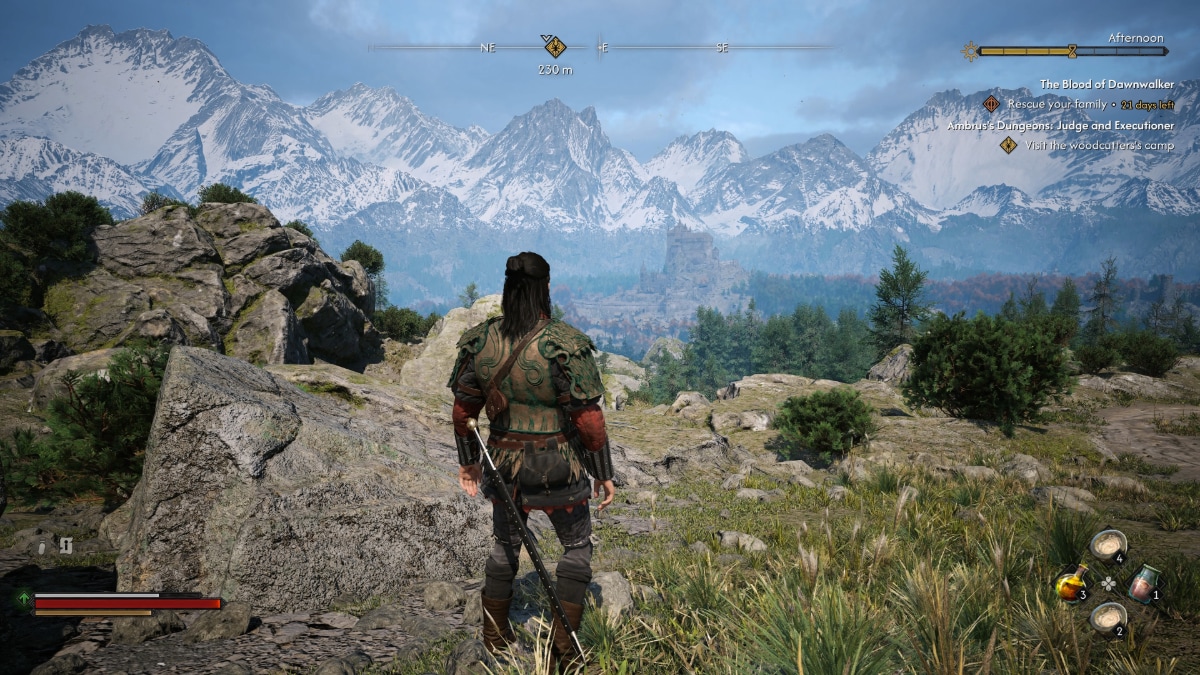
The Blood of Dawnwalker takes place in 14th-century medieval Europe
Photo Credit: Bandai Namco/ Rebel Wolves (Screenshot – Manas Mitul)
These reactive systems combine to create a deeply satisfying RPG experience where the game world responds to your decisions and moves forward with their outcomes, whether good or bad. Over the 50 or so hours it will take you to finish the main story, the game’s combat may start showing signs of wear and tear, but its compelling characters, its bleak atmosphere, and its time-bound quest design remain persistently persuasive.
The Blood of Dawnwalker takes place in 14th-century Europe, where years of conflict and plague have left the people of Vale Sangora in the Carpathian Mountains all too familiar with death. Change comes in its own twisted way when a clique of powerful vampires arrives in the valley, violently dismantles the brutal rule of the local nobility, and takes control of the troubled region. The group’s leader, Brencis, an ancient vampire lord, does away with all tithes and tolls levied by the previous rulers on the people of the valley and promises a powerful cure for the plague ravaging the land — his own blood, fed to everyone ritually, curing them of all ailments. In return, however, he exacts a “blood tax,” demanding a few drops of blood each month from every adult human.
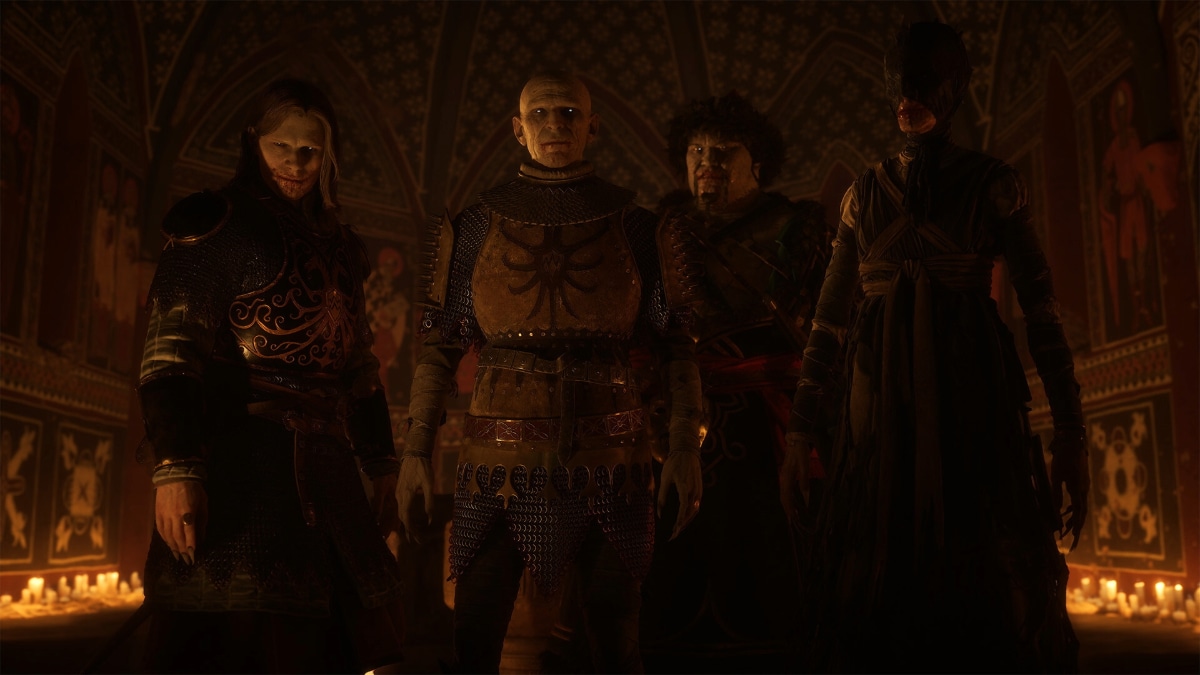
Vale Sangora has been taken over by a group of vampires led by Brencis
Photo Credit: Bandai Namco/ Rebel Wolves
You are Coen, now living with your family under Brencis’ sinister rule. He’s worried about the deteriorating health of his mother as the next blood ritual approaches, where Brencis and his followers cull the weak amongst the flock and cure the rest with their vampiric blood. Things do not go well for him and his family during the ritual and its aftermath, when a plan to rebel against Brencis backfires. Coen’s family is taken captive by the vampires, and a botched attempt to turn him into one of them instead transforms him into a “Dawnwalker.” Human by day and vampire by night, he walks the two worlds of the living and the undead.
With his newfound vampiric powers, along with the weaknesses that come with his bloodthirsty affliction, Coen sets about rescuing his family and dismantling Brencis’ rule brick by brick. On his journey, he finds a wide cast of allies, uncovers the darkest secrets of Vale Sangora, and walks the thin line that separates his human side from his monstrous one. Throughout the story, your choices not only carve a path for Coen to reach Brencis and save his family, but also decide how far he descends into vampirism. Certain actions like drinking human blood raise the vampiric corruption coursing in his veins, turning him more feral and unlocking powerful abilities that may help him save his family. But it’s your choice to resist the bloodthirst and save Coen’s soul, as well.
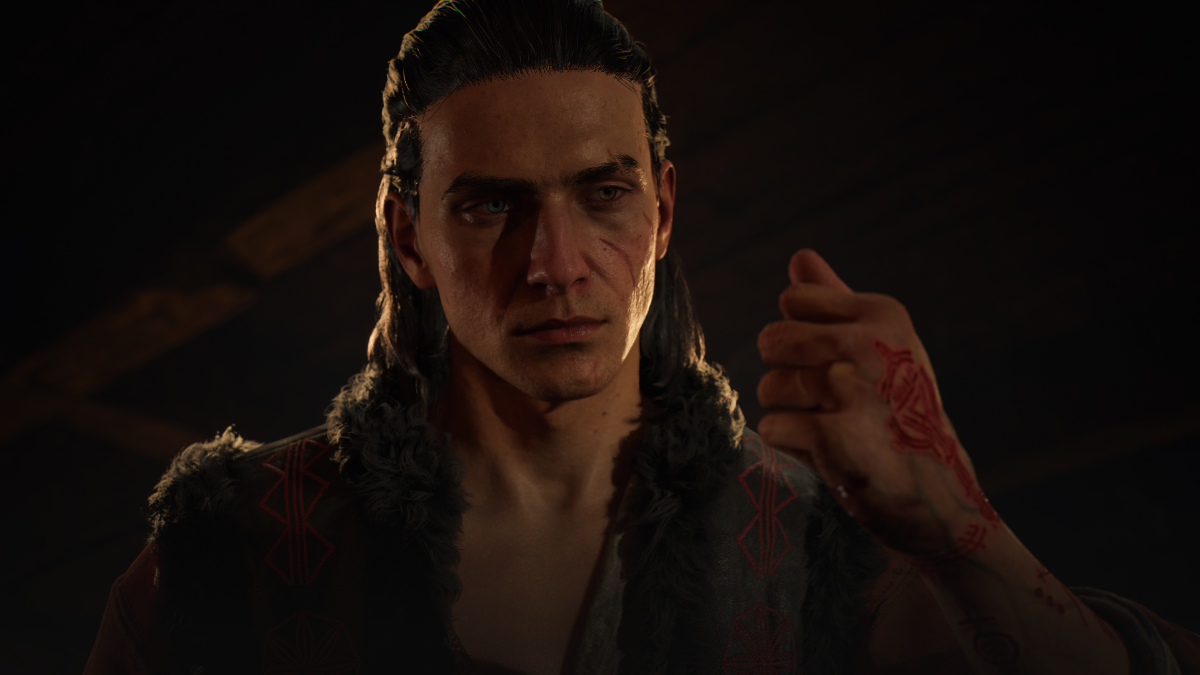
Coen becomes a Dawnwalker — human by day, vampire by night
Photo Credit: Bandai Namco/ Rebel Wolves
These weighty choices, which show up at regular intervals as you follow leads across the valley and meet potential allies, shape The Blood of Dawnwalker’s story. Your actions leave a tangible impact on Vale Sangora and its people. A selfless deed may not be the right choice for Coen’s quest of vengeance, but it may affect other characters in positive ways that become apparent later. Similarly, you can rush callously towards your interests and treat the lives of others in your way as means to an end, but you must be prepared for grim consequences that may follow. The malleability of the story makes the game world feel like a time and space you inhabit rather than a map you glide through.
The Blood of Dawnwalker’s quest design is tailored from the same versatile cloth, too. There’s a single, overarching main objective, but the game doesn’t draw a distinction between the main story path and its side quests. New encounters and diversions could help Coen forge alliances against Brencis or help him find powerful weapons, armour, or abilities that will eventually help him take down the vampire lord. Or, you could choose to skip all of that and jump headfirst into the final showdown with Brencis at his castle. You will be severely underpowered and alone and, as a result, the story could sway towards an unfavourable ending, but the game doesn’t stop you from rushing straight towards your goal.
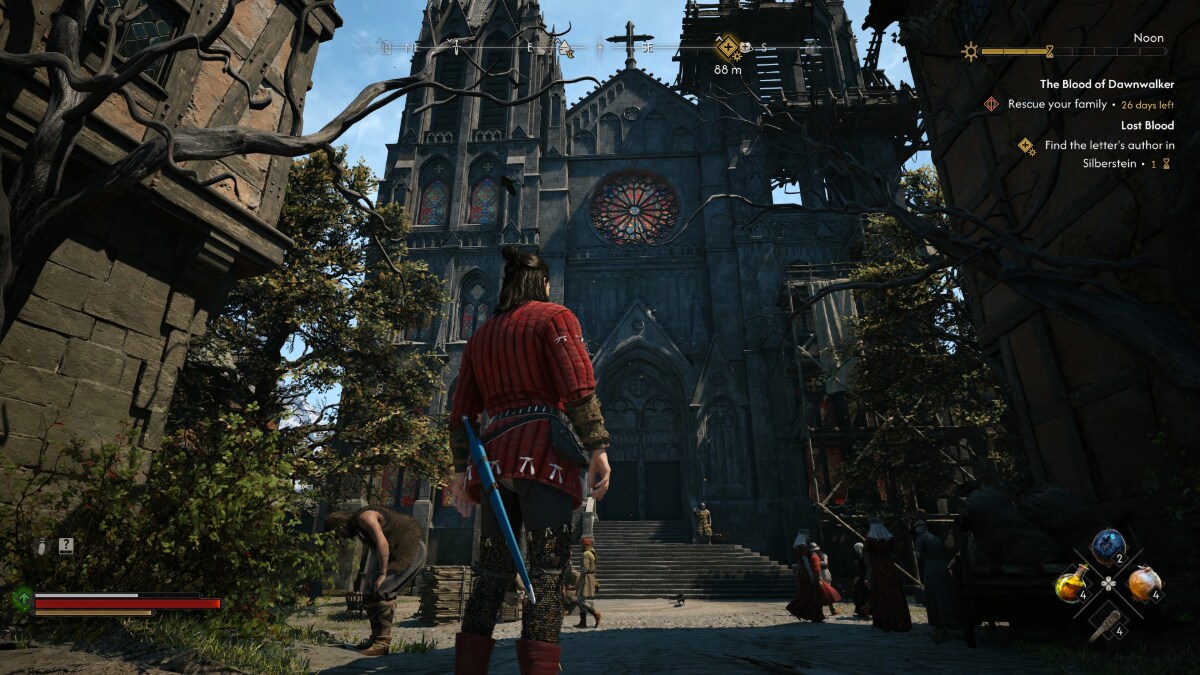
The Blood of Dawnwalker’s world is shaped by your choices
Photo Credit: Bandai Namco/ Rebel Wolves (Screenshot – Manas Mitul)
Perhaps the most important resource you manage as you prepare for your eventual battle with Brencis is time. Coen has 30 in-game days and nights to save his family, and key activities like quests, investigations, and even acquiring new abilities move the clock forward. Days and Nights are split over eight time segments each, and nearly every important thing you do consumes certain segments of time and advances the hours of the day. You see the 30-day timer counting down on the screen as each day passes, reminding you of your objective lest you get distracted. This brings an urgency to everything you do in The Blood of Dawnwalker. You can freely explore the open world without worrying about the ticking clock, but if you decide to plunge yourself into a quest or an activity, be prepared to lose the most precious limited resource you have.
The time penalties can feel harsh at times, too. Most new abilities you acquire or upgrade in the game’s skill tree consume one segment of time. You end up losing days in the process of slowly levelling up and becoming more powerful by unlocking new skills. I often found myself pausing and looking at the in-game clock before deciding not to spend a skill point in order to preserve the time for the next quest. The mechanic adds a bit of consequence and depth to skill upgrades, but it also ends up discouraging you from spending your hard-earned skill points. Perhaps a fairer approach to skill upgrades, where only certain special abilities cost you time, would have worked better.
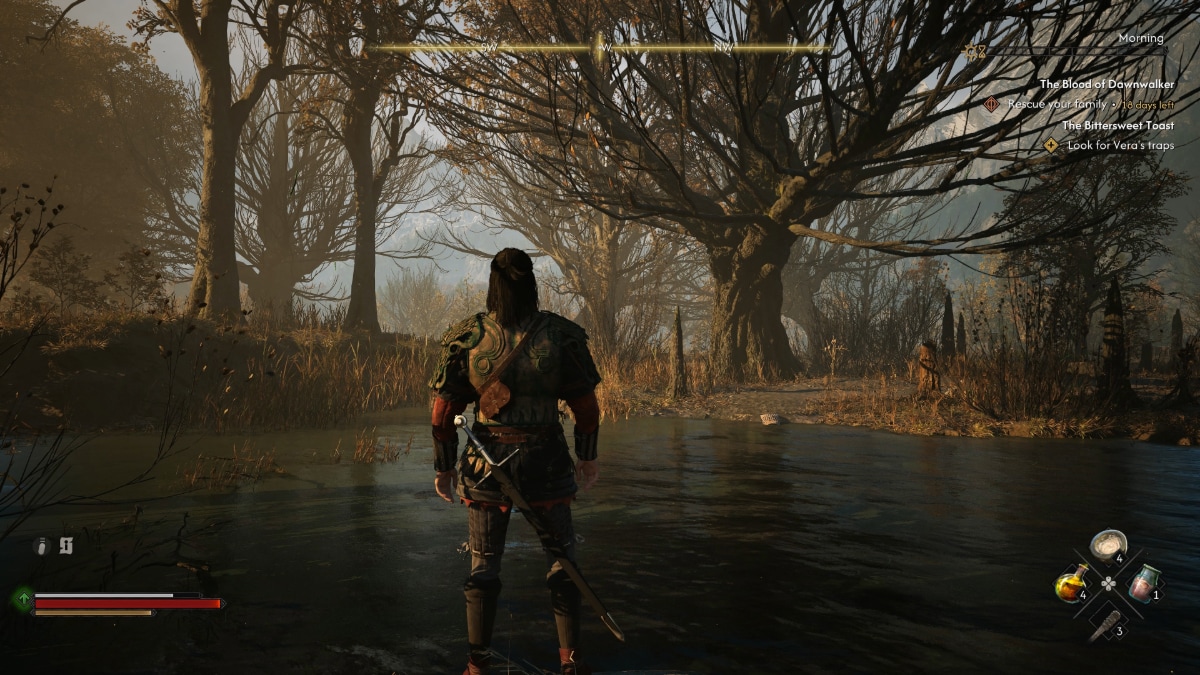
Most quests and activities consume precious time in The Blood of Dawnwalker
Photo Credit: Bandai Namco/ Rebel Wolves (Screenshot – Manas Mitul)
Between skill upgrades and side quests, you will not have enough time to see and do everything in Vale Sangora. It’s up to you to prioritise the tasks at hand — whether it’s spending precious hours to chase down a legendary silver sword that may help you take on Brencis, or taking a day weakening his forces across the valley. But it’s important to know that The Blood of Dawnwalker doesn’t simply end when the 30-day timer runs out. The game may funnel you into an ending where the fate of your family is decided differently, but it won’t hit a wall at the end of 30 days.
Time in The Blood of Dawnwalker is split between days and nights that come with distinct gameplay loops. During the day, Coen is human and can’t access his vampiric abilities. Because he’s a Dawnwalker, he is unharmed in the sun and can go about his day normally. At night, he turns into a vampire and gains powerful supernatural skills that make him stronger and faster. He takes on Brencis’ forces with his sword during the day, but at night, he can shred them apart with his vampire claws. As a vampire, Coen can use his Shadowstep ability to reach areas inaccessible during the day and dig his sharp claws into walls and ride his way down. He can also feed on both humans and animals to replenish his health.
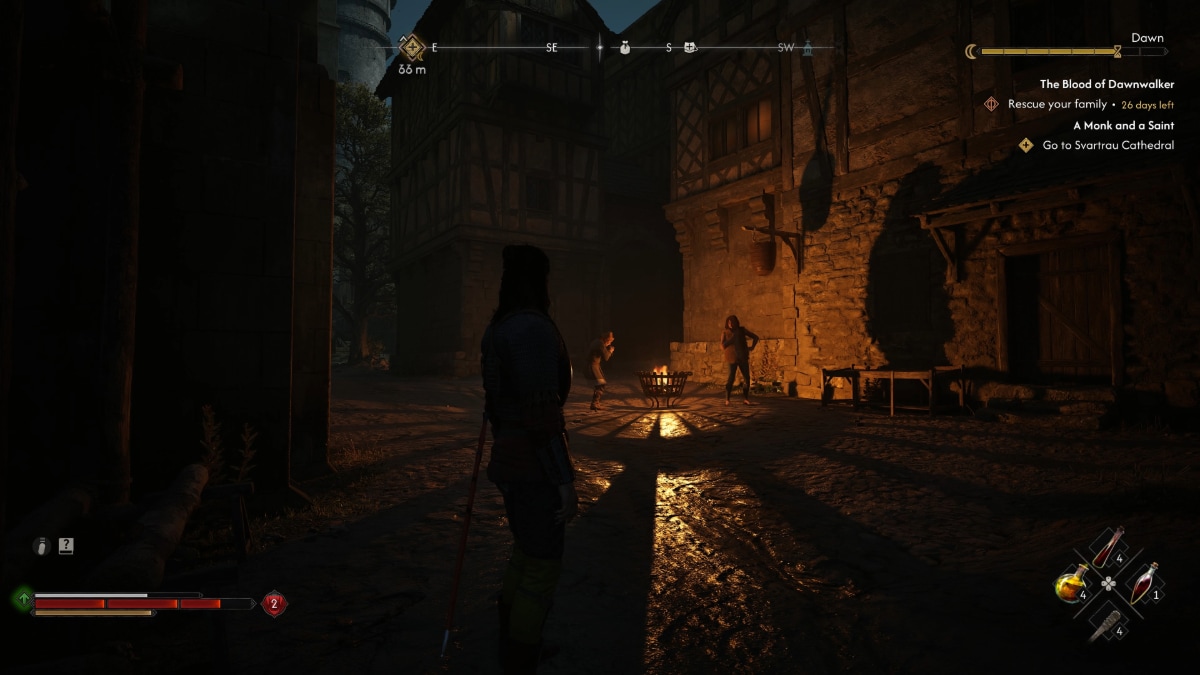
At night, Coen has access to vampiric abilities
Photo Credit: Bandai Namco/ Rebel Wolves (Screenshot – Manas Mitul)
But being a vampire comes with its weaknesses, as well. Coen descends further into vampirism the more he feeds on the blood of humans, gradually losing touch with his human side. If you lean into his bloodthirst, eventually you’ll be unable to restrain him from attacking his allies and friends while talking to them. His feral, monstrous side will take control, granting him powerful new abilities, but diminishing his human soul. The line between human and vampire acts almost like a morality system that guides your choices in the game. If you keep Coen’s humanity intact, you may miss out on gameplay experiences and abilities that come with greater vampiric corruption. But if you give in to Coen’s bloodlust, you may lose something far more important.
With its distinct day-and-night cycle, vampire and human gameplay loops, and emphasis on time as a resource, The Blood of Dawnwalker creates an interlinked, responsive sandbox for its story and gameplay in ways few RPGs have in recent years. The gratifying experience of moving through the game world, changing it with your choices, and living with the consequences makes the game stand out in a year full of excellent releases.
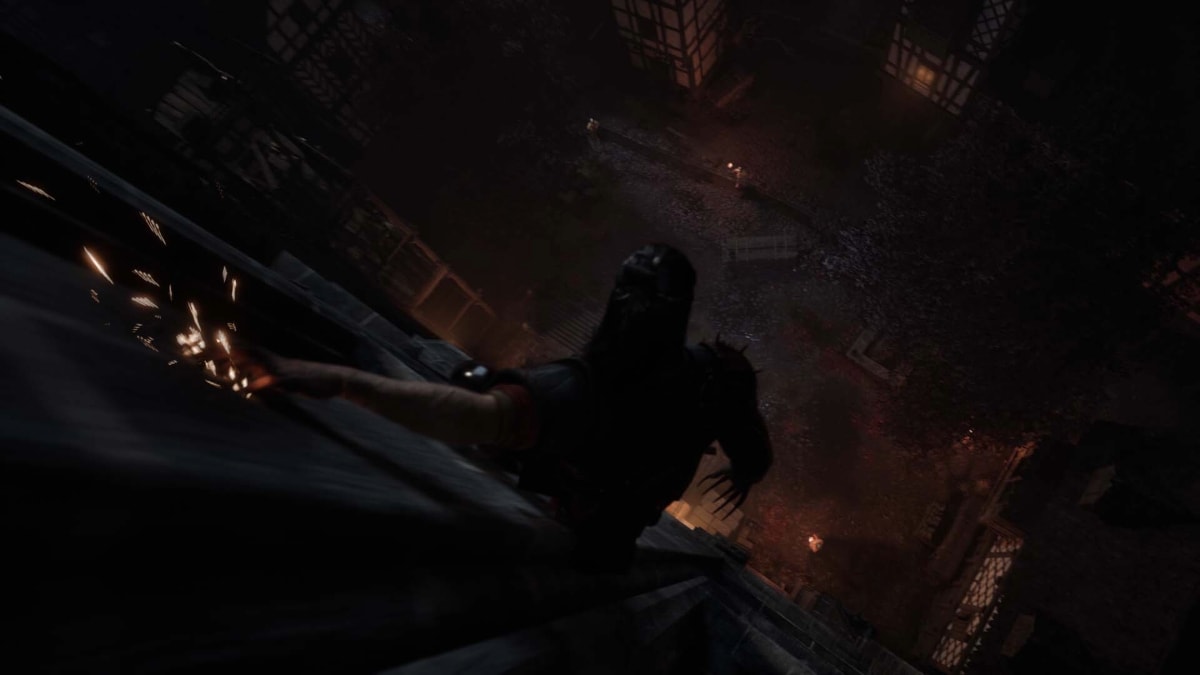
Coen can dig in his claws into walls and ride his way down
Photo Credit: Bandai Namco/ Rebel Wolves
The Blood of Dawnwalker’s story lives and breathes on its own merit, too, even without its interplay with well-defined gameplay systems. Just like The Witcher 3, a quest can go to unexpected places, revealing more about the world and the people. The characters Coen encounters in his journey shine, too. Anca is among the first allies you meet in the game. The village herbologist has been Coen’s friend for most of his life, and her gentle guidance helps him on his quest to save his family. But Anca also hides a dark past, and as Coen, you can choose to spend time helping her find closure and comfort.
Then there’s Lacra, another vampire who is on her own quest to vanquish Brencis and his hold on the valley. Coen forms an uneasy alliance with her as their objectives overlap, even if he can’t fully trust her motives. Brencis is also an exceptional villain. He isn’t painted as purely evil, even as he keeps the people of Vale Sangora bound to his contract of blood. In fact, he has the capacity to be benevolent. Many in the valley are thankful to him and his enforcers for dispatching the cruel nobles who ruled before and granting a cure for the plague, however macabre that remedy may be.
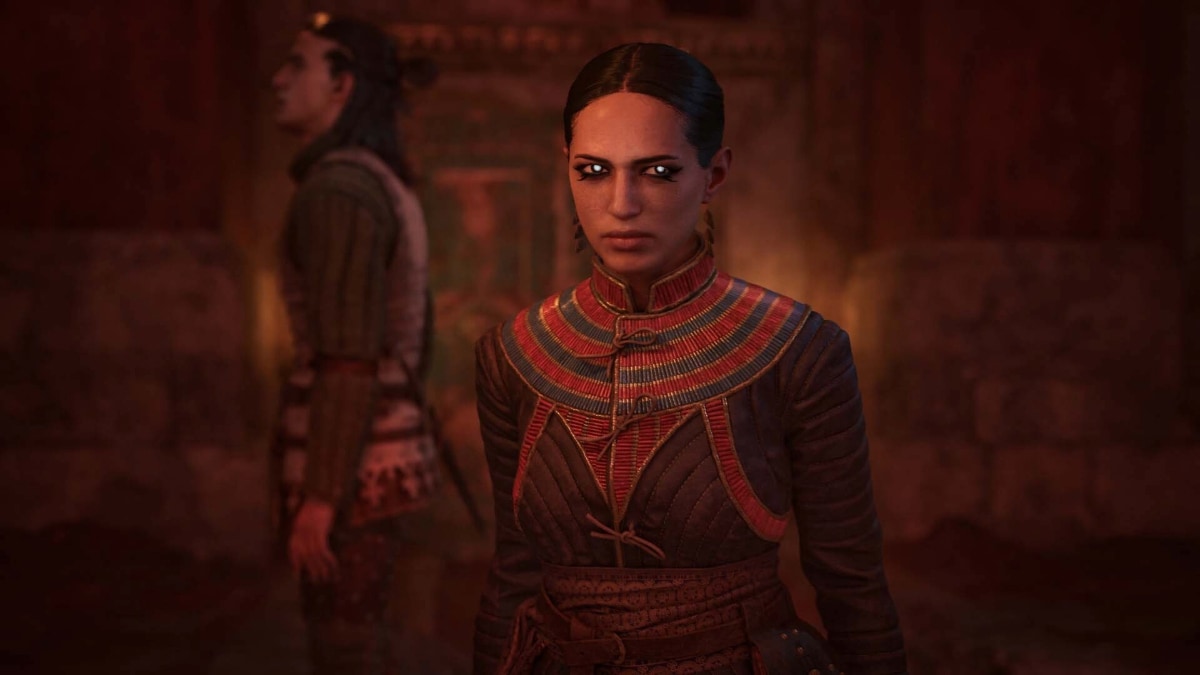
Coen forms an uneasy alliance with Lacra, a vampire intent on killing Brencis
Photo Credit: Bandai Namco/ Rebel Wolves
The Blood of Dawnwalker offers a great degree of freedom through its story and quests, but the game’s combat feels rather restrictive. Rebel Wolves attempts to make player choice matter through two distinct combat approaches. The traditional approach mirrors the combat systems of most third-person action-RPGs—intuitive, fast swordplay that hinges on parrying, dodging, and attacking, similar to The Witcher 3. The directional approach, on the other hand, relies on matching the four directions of attacks and blocks to create a carefully choreographed dance, much like the directional melee combat seen in Kingdom Come: Deliverance. This system grants you more control over Coen’s moves, but the combat still feels rigid and repetitive.
I opted for the directional approach during enemy encounters, but I often felt locked in place, waiting to react to incoming attacks rather than feeling encouraged to take aggressive initiative. Fighting the traditional way didn’t feel fluid or fun, despite the streamlined combat mechanics. At least the directional approach adds tactical depth to combat encounters. Aside from swords and vampire claws, Coen can utilise three separate sets of combat perks across Witchcraft, Vampirism, and Swordmastery skill trees. Witchcraft abilities can only be accessed as a human during the day, while vampiric abilities are active at nighttime. Swordmastery skills, on the other hand, are shared across day and night. The skill trees feature a mix of passive offensive and defensive perks and active abilities that Coen can utilise in the heat of battle. The three skill trees and their corresponding abilities offer a much-needed depth to an otherwise limited combat system that, while being fun, can get tedious over the course of a 50-hour playthrough.
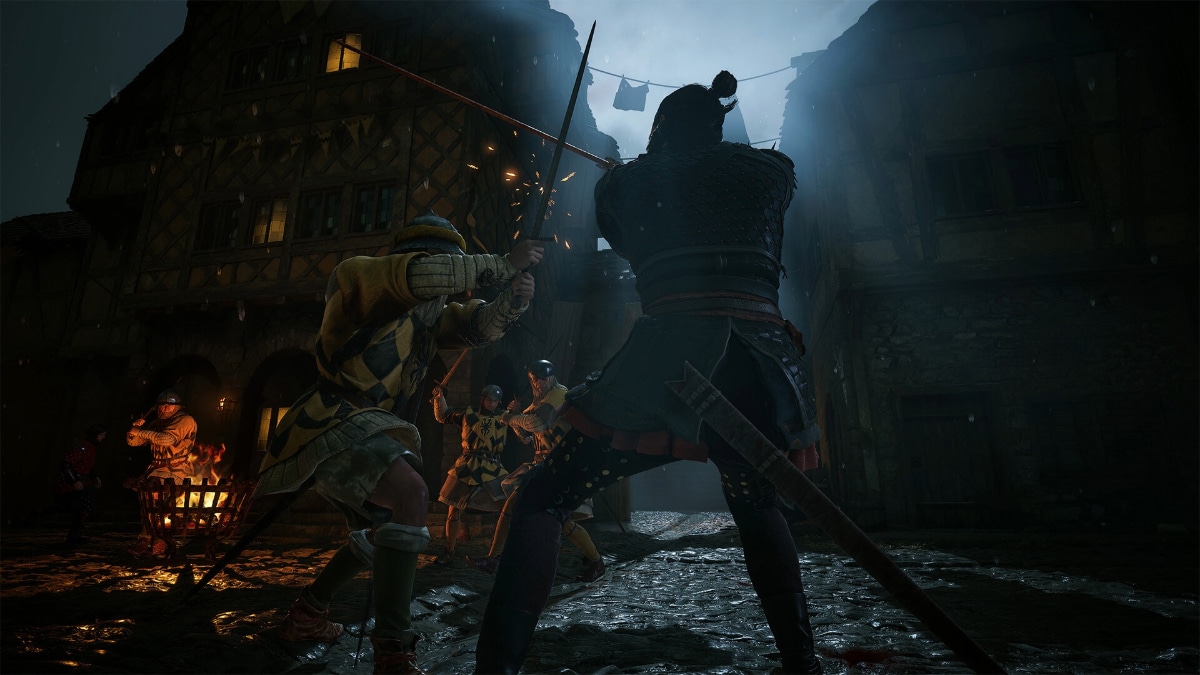
The Blood of Dawnwalker’s combat feels rigid and repetitive
Photo Credit: Bandai Namco/ Rebel Wolves
Thankfully, The Blood of Dawnwalker’s RPG systems are far more robust and engaging. The game’s branching dialogue paths, its excellent gear system, and its fully-fledged reputation system regulating Coen’s infamy across Vale Sangora as he breaks down Brencis’ grip on the valley — all these elements work together in impressive fashion. There are so many moving parts that if one big cog collapses, the entire machine would be at risk of breaking down. But each system plays its intended role. Day and night cycles, non-linear quests, flexible story sandbox, dual gameplay loops, and triple skill trees — all of it works while being on the clock.
Some technical issues chip away at the experience. On the PS5 version, I noticed noticeable visual flickering around foliage when moving the camera. The game also suffers a bit from quest bugs and gameplay glitches. I had particular trouble with inconsistent enemy lock-on throughout my playthrough. Rebel Wolves did address a tranche of technical problems with an update released for the console review build, but several issues persist. These will hopefully be patched at launch or in a later update. Performance on the base PS5 was short of impressive, too. The review build offered two graphics modes: a Quality mode targeting 30fps and a 40fps Balanced mode. I played most of my playthrough on the latter, with noticeable framerate drops. Rebel Wolves has promised a 60fps Performance mode patch at launch, which should make the console experience smoother.
The technical missteps aside, The Blood of Dawnwalker is a good-looking game with a visual style heavily reminiscent of The Witcher 3: Wild Hunt. You’d be forgiven to mistake the untamed mountainous region of Vale Sangora for the wilderness of Kaer Morhen. The bleak visuals, sombre atmosphere, and melancholic, folksy score feel directly inspired by CD Projekt Red’s role-playing masterpiece. Even Coen and his voice closely resemble Geralt, with his iconic cold, raspy whisper. I almost expected him to say “Wind’s howling” at some point in the game. But it’s hard to fault The Blood of Dawnwalker for evoking The Witcher 3, especially when it distinguishes itself from its inspiration on so many fronts.
Assassin’s Creed Black Flag Resynced Review: Ubisoft’s Remake Unearths Buried Pirate Gold
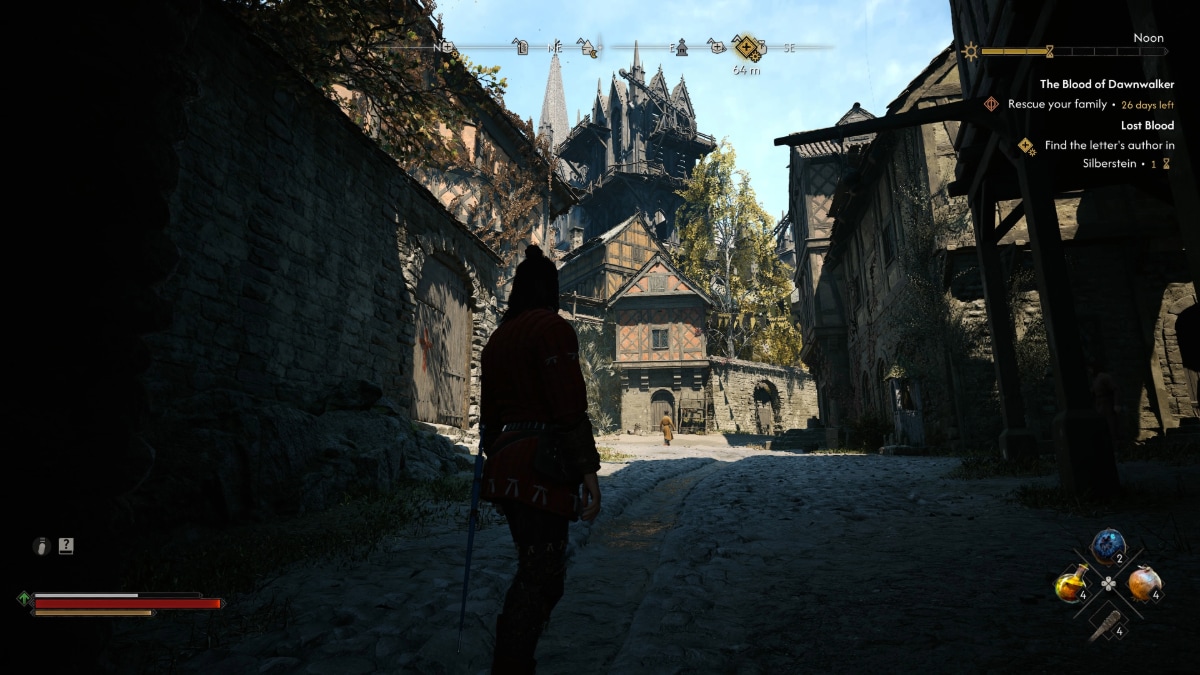
The Blood of Dawnwalker’s visual style is reminiscent of The Witcher 3
Photo Credit: Bandai Namco/ Rebel Wolves (Screenshot – Manas Mitul)
Rebel Wolves’ story-driven RPG is clearly built on the role-playing ethos established by The Witcher 3: Wild Hunt, but it’s the breadth and depth of original ideas at play that make the game stand on its own merits. The work is especially impressive when you consider the size of the studio. This isn’t a game made by a massive team. But the 160 developers at Rebel Wolves have clearly built The Blood of Dawnwalker with care and craft.
The game’s technical limitations pale in the face of its ambitious storytelling and bold gameplay design. The choice-driven, non-linear approach to quests, worldbuilding, and narrative offers a rare kind of freedom that I last experienced in Kingdom Come: Deliverance 2. And even after the ticking clock stops on its story, The Blood of Dawnwalker leaves you hungry for more.
The Blood of Dawnwalker releases September 3 on PC, PS5, and Xbox Series S/X.
Pricing starts at Rs. 3,999 for the Standard Edition on Steam for PC, the PlayStation Store for PS5, and the Xbox Store for Xbox Series S/X.