


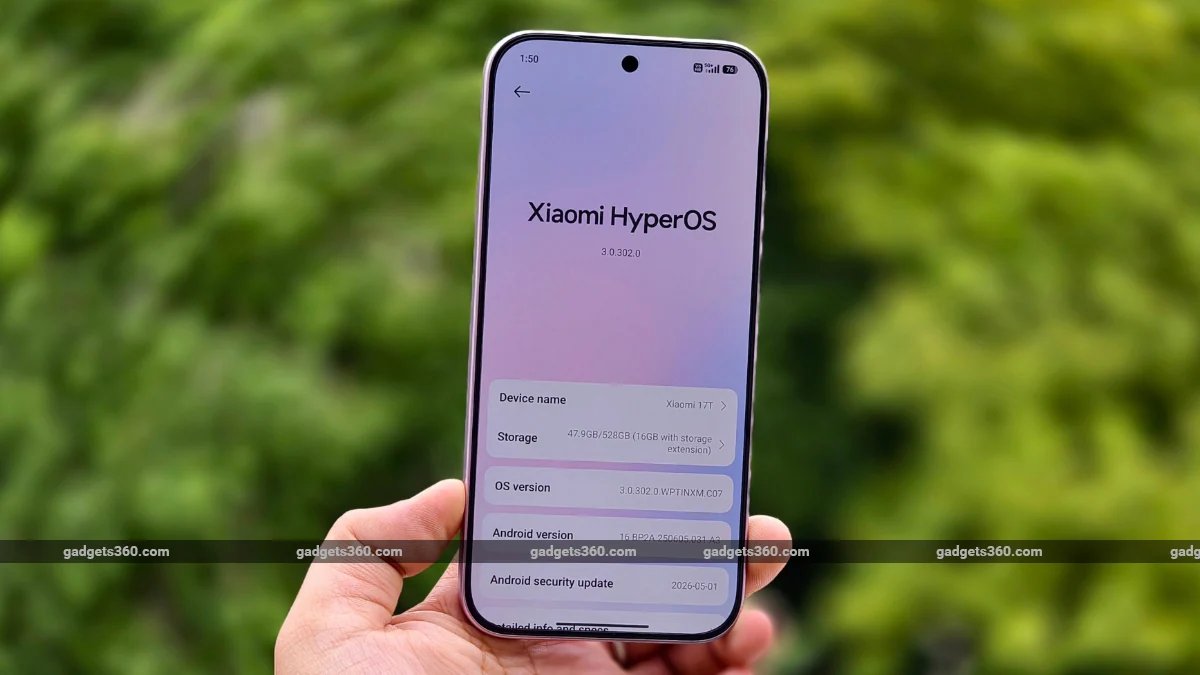
In recent years, storage space has become one of the most influential factors behind a a new smartphone purchase. While powerful performance allows you to install and play high-end games and great cameras help capture higher-resolution photos, all of these can eat through gigabytes surprisingly quickly. At the same time, 64GB phones have largely become outdated, and 128GB usually serves as a starting point on most affordable and mid-range smartphones. Some flagships also offer 256GB as the base storage, albeit a premium price.
But does everyone really need 256GB, 512GB or even 1TB of space? The answer usually depends on how you actually use your phone.
Why Storage Matters
Storage, or internal storage as known on a smartphone, is where everything you accumulate over time is stored. All of your photos, videos, apps, music, documents, and other files fill up this space as you keep on using your phone. However, the advertised capacity of a phone does not always mean you have all of that space to use. The operating system, which essentially runs your device, along with its associated files, occupy the memory before you even starting using the phone.
For example, a handset that is claimed to have 256GB of onboard storage will only allow you to use between 235–238GB, with the rest pre-occupied by system files. You also need to leave some headroom for temporary files, app data and software updates.
The amount of storage consumed by your own content also varies depending on how you use the phone. A high-quality photo can take several megabytes, while 4K video can consume a couple of gigabytes for even a couple of minutes’ recording. For gamers, the amount of required storage space is even higher, as more graphics-intensive AAA titles, like Genshin Impact and Wuthering Waves, can take up multiple gigabytes of space. Apart from this, cached data from social media and streaming apps can also accumulate over time.
Is 128GB Enough for a Smartphone?
On most smartphones, 128GB serves as a starting point and should be enough for many users. This particularly applies to those who use their phone primarily for messaging, social media, streaming, casual photography and everyday apps.
While you may be able to store many files on day one, the real issue surfaces after a couple of years down the line. As your photo library grows, apps become larger, and downloaded files pile up, you will most likely require more space if you still want to store content without deleting anything.
Software updates also require temporary space, which becomes a key factor. So, if you tend to delete old photos, use cloud storage and stream most of your content, 128GB can remain perfectly usable.
When Should You Buy a 256GB Phone?
In 2026, 256GB is the safest option for users who want to keep their phone for several years. It provides considerably more breathing room compared to phones with 128GB of onboard space.
This is particularly useful if you take lots of photographs, regularly record video, download music or films for offline use, or play several large games, as it is the middle-ground for users with regular photography, apps, games and offline media.
It is also worth considering the price difference between storage variants when buying a phone. The jump from 128GB to 256GB is relatively small, but larger 512GB and 1TB configurations cost considerably more.
Who Actually Needs 512GB or 1TB?
Higher storage variants 512GB and 1TB are a luxury rather than a necessity. However, there are still a few cases where it makes sense.
512GB of storage space is useful for those who regularly shoot 4K or 8K video, use their phone as your primary camera, download large games, edit video on the phone or keep a substantial offline media library. Content creators in particular can benefit because video files accumulate much faster than photos.
1TB, meanwhile, is aimed at the most demanding users. It only makes sense if your phone is used as a serious content-creation device, involving large amounts of high-resolution video. It can also prove to be useful if you want to keep a huge amount of content locally and do not want to regularly transfer it elsewhere.
For everyone else, paying a substantial premium for 1TB is difficult to justify.