


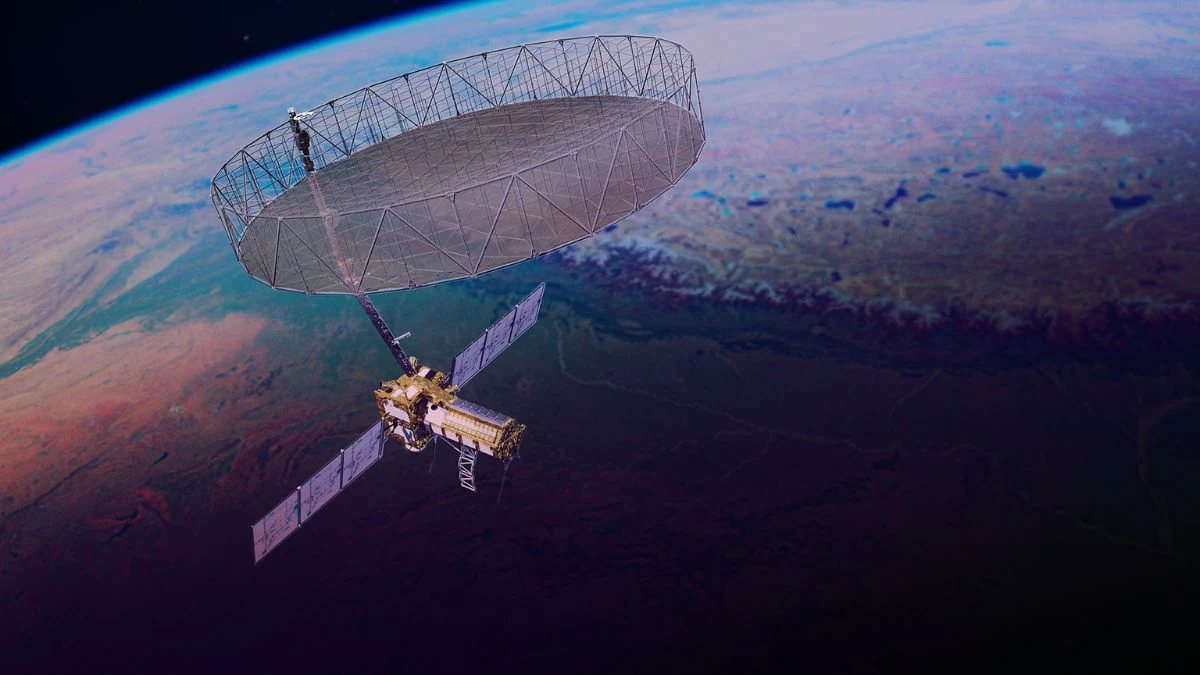
The 12-meter (39-foot) wide drum-shaped antenna reflector on the NISAR (NASA-ISRO Synthetic Aperture Radar) spacecraft has been deployed in space to the position it will be in when receiving signals from Earth. The spacecraft was folded like an umbrella, opened to a point, 30 feet (9 meters) away and held by gravity and atmospheric drag. NISAR, a joint project between ISRO and NASA, which was launched by ISRO on July 30 from the Satish Dhawan Space Centre, is going to be able to transmit ‘detailed information including glaciers, ice sheets, earthquakes, and volcanoes, apart from also helping to identify wetlands including forests. The mission would have ripple effects for agriculture, disaster responses and infrastructure planning, among other areas.
A Major Scientific Milestone
NASA Earth Science Division added that this was a milestone in earth observation. NISAR’s observations will help scientists and policy makers to understand alterations in the environment and to better use resources. From infrastructure to food security, the effort is expected to have deep implications and genuine lessons for other countries around the world.
Dual Radar Advantage
NISAR is the first mission to feature two SAR systems – one in L-band and the other in S-band. In contrast, the L-band penetrates through clouds and forest canopy, and the S-band is highly sensitive to vegetation and snow water. They support each other thanks to which they provide excellent photographic conditions. The reflector is an essential part for either system and successful deployment is a significant milestone.
The “Bloom” Process
The reflector structure, which consists of 123 composite struts and a wire mesh, 24kt gold plated structure, promotes a mass of 142 lbs. (64 kilograms). First it was the boom unfurling, which got underway on Aug. 9, followed by the reflector’s “bloom,” launching on Aug. 15, when explosive bolts released the frame.
U.S.-India Collaboration
It “represents decades of radar research and a very strong partnership between NASA and ISRO,” Luquette said. NASA’s contribution was the L-band radar, reflector and data system while ISRO provided the services for S-band radar, spacecraft bus and launch arrangement.