


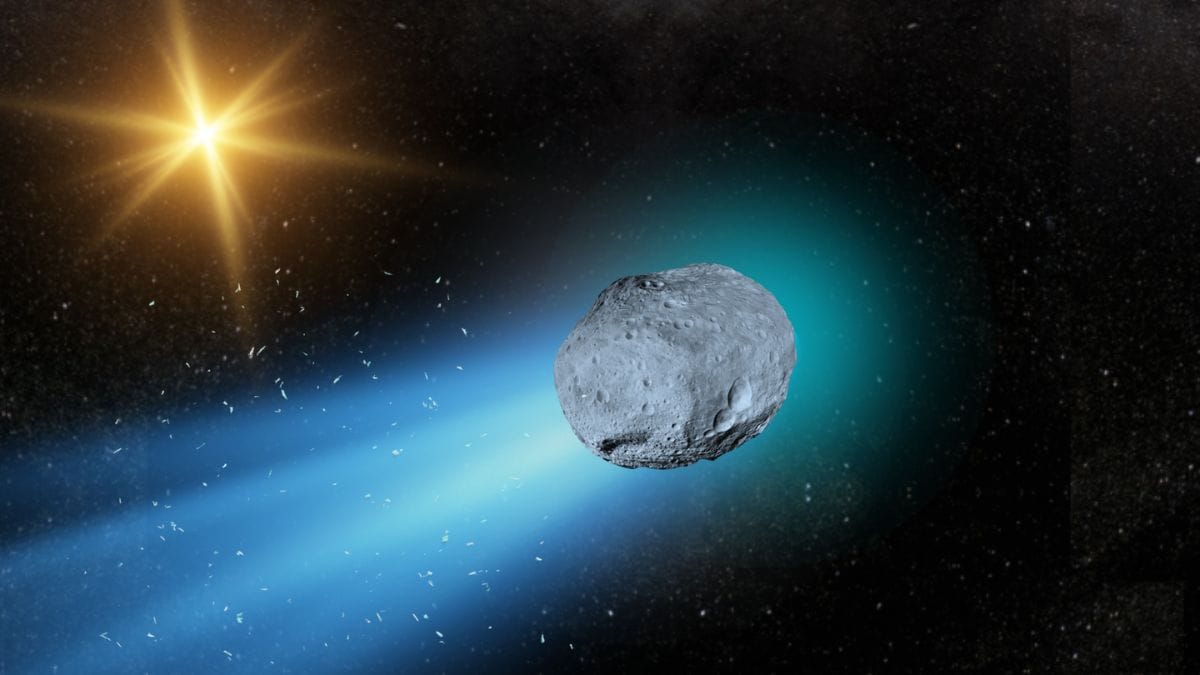
A new comet discovered in January by the Mount Lemmon Survey in Arizona (C/2025 A6, Lemmon) is heading through the inner solar system and is expected to brighten soon. It could become a fairly easy object to see in small telescopes or good binoculars. It will swing closest to Earth on October 20, 2025, and might be visible with binoculars or the naked eye. Current predictions suggest it may become a faint but exciting sight in our skies by early October.
Discovery and Orbit
According to a Space.com report, astronomers at the University of Arizona’s Mount Lemmon Survey first spotted the comet in January, although initial images made it look like a faint asteroid. It was extremely faint (magnitude +21.5) — about a million times dimmer than the dimmest star visible to the unaided eye. Follow-up observations confirmed it was a comet, not an asteroid. Now designated C/2025 A6 (Lemmon), calculations show it will swing closest to the sun on Nov. 8, 2025 (about 49 million miles away) and pass nearest to Earth on Oct. 20 (about 55 million miles).
Comets are made of frozen gas and dust. As Lemmon nears the sun, the ices vaporize. The gas forms a glowing cloud (coma) around the comet’s solid nucleus, and dust particles stream out behind it as a tail.
Observing Comet Lemmon
Predictions of the comet’s brightness vary. Some experts say it could reach magnitude +4 or +5 by early October, making it barely visible by eye. Others predict only about +7, meaning binoculars would be needed. Currently (early Sept) the comet is a faint morning object (around +9 or +10). It may reach about +6 or +7 by early October, at which point binoculars will easily find it.