


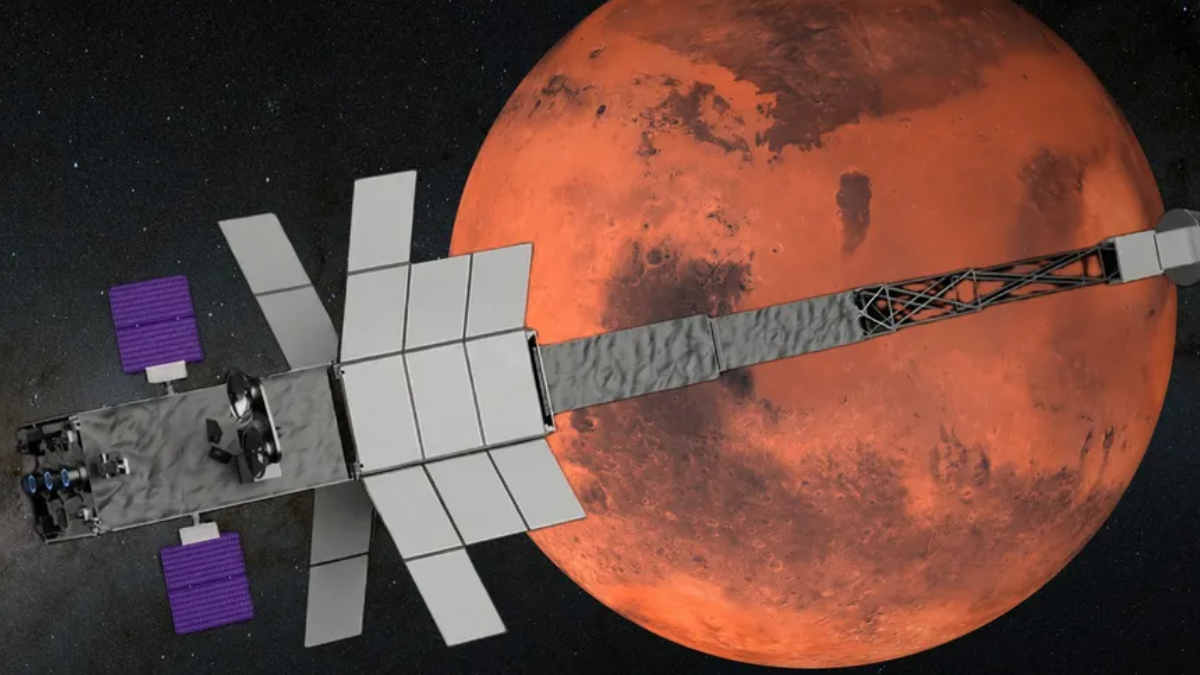
NASA is counting on nuclear energy to revolutionise the way humanity explores the solar system. On March 24, 2026, the space agency announced plans to build the Skyfall mission for a December 2028 launch. This mission will launch a swarm of helicopters similar to the Ingenuity Mars helicopter to Mars aboard “the first nuclear-powered interplanetary spacecraft.” This spacecraft, the Space Reactor-1 Freedom, will be a demonstration of the capabilities of nuclear electric propulsion systems in space travel.
SR-1 Freedom: A New Kind of Engine
As per NASA, nuclear electric propulsion differs from nuclear thermal propulsion: rather than heating propellant directly, the fission reactor generates electricity that powers ion thrusters. The spacecraft features a 20-plus kilowatt fission reactor fueled by High-Assay Low-Enriched Uranium, and draws on repurposed Lunar Gateway hardware — a Power and Propulsion Element that already exists and has been powered up. Less than 48 hours after launch, the fission reactor will be activated, allowing the ion thrusters to fire using nuclear power. The Department of Energy estimates that clear propulsion could cut a Mars transit time by at least 25% compared to conventional chemical rockets.
The Skyfall Helicopters: Scouting for Humans
The “skyfall” procedure will have the helicopters exit the entry capsule during atmospheric descent, providing their own landing, rather than the sky-crane method. Once on the Martian surface, the helicopters will be equipped with cameras and ground-penetrating radar to scout out future landing locations for humans, as well as subsurface water ice deposits, including their size, depth, and key characteristics. SR-1, after delivering the Skyfall payload, may proceed deeper into the solar system, providing information for future missions, including a lunar surface fission power system.