


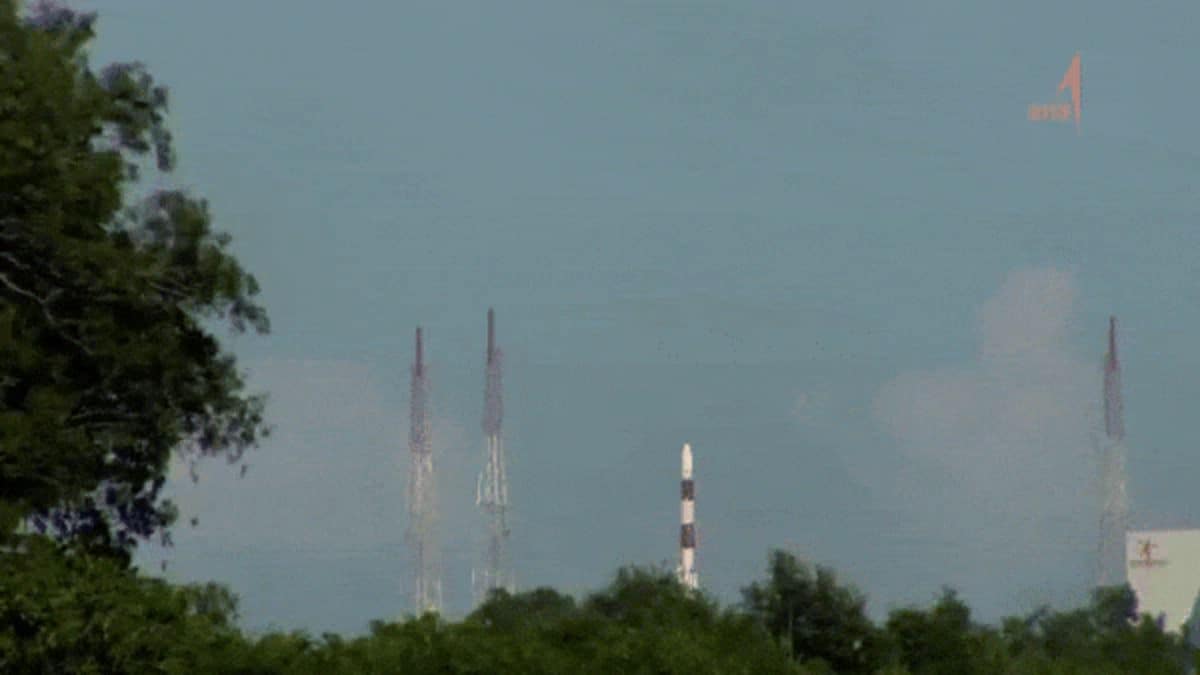
The Indian Space Research Organisation (ISRO) will launch the PSLV-C62 rocket on January 12, 2026, at 10:17 AM IST from Sriharikota. This mission will carry EOS-N1 (nicknamed “Anvesha”), an advanced hyperspectral Earth-observation satellite, along with 18 smaller co-passenger satellites. EOS-N1’s sophisticated imaging sensors are expected to significantly boost surveillance and environmental monitoring capabilities, as ISRO returns to flight after a PSLV launch anomaly in 2025.
PSLV-C62 launch mission
According to reports, PSLV-C62 is a mission of India’s Polar Satellite Launch Vehicle (PSLV), a multi-stage rocket commonly used for Earth observation launches. This would be the 64th flight of a PSLV using the DL configuration, which has two single-stage solid strap-on boosters. PSLV-C62 is a multi-payload flight: apart from EOS, N1, the rocket will launch 18 secondary satellites from Indian and foreign customers. Most of them are small experimental or educational CubeSats. As a result of a PSLV third-stage failure in May 2025, a successful flight of PSLV-C62 is very much needed to restore the confidence of the people in the PSLV launcher.
EOS-N1 (Anvesha) hyperspectral satellite
The EOS-N1 (also touted as “Anvesha”) is a hyperspectral imaging satellite that is mainly meant for the Defence Research and Development Organisation (DRDO) of the Indian government. Unlike a conventional camera, it can view the Earth in “hundreds of narrow bands of light” to “see” the material characteristics of terrain and other features on the Earth’s surface. It is thus a very useful tool for national security and strategic applications of earth observation of borders, for which earth observation data will also be used for agricultural planning and other applications.