


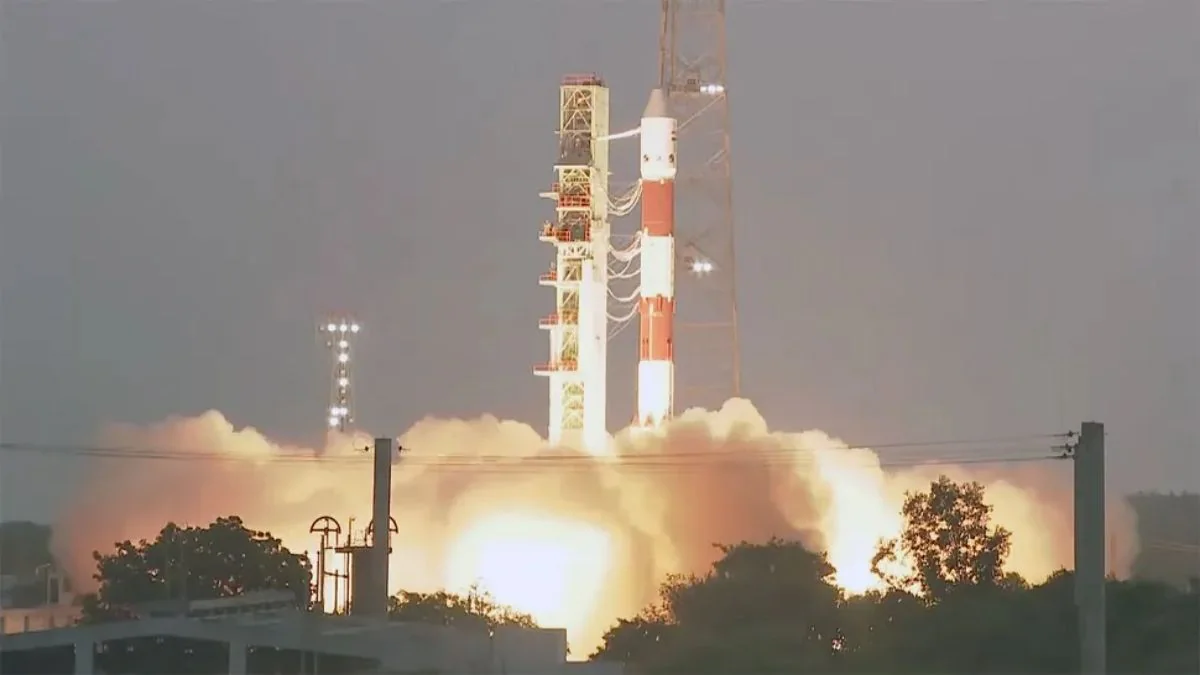
India saw the first launch failure in 2026 on January 12, as the PSLV-C62 mission of the Indian space program failed. During the third stage, there was some kind of technical issue, because of which the mission strayed from its original path, and as a result, the satellite could not attain the desired speed, and consequently, the satellite and the satellites accompanying it re-entered the Earth’s atmosphere. This satellite re-entry and ensuing burning, as stated by Manish Purohit, former ISRO engineer, resulted in the burning of 16 satellites.
Third-stage anomaly and satellite loss
According to Purohit, the rocket’s solid third stage began to ‘twist’ near burnout, causing a disturbance in its flight path. This meant the vehicle failed to reach the precise velocity needed to stay in orbit. Instead, its upper stage and the 16 satellites curved back toward Earth. By nightfall, they had likely re-entered the lower atmosphere and burned up in the heat, with any fragments falling into the ocean.
Mission context and ISRO response
PSLV-C62 was the 64th launch of the PSLV workhorse rocket, which carried the EOS-N1 (Anvesha) earth observation satellite and 15 smaller test satellites of India. The initial two stages were normal, but the failure of the third stage terminated the mission. It was the fourth failure on the PSLV missions, but the second third-stage glitch. To identify the fault, ISRO has established a team of failure analysts to examine all the flight data and hardware. The agency stresses its history of lessons learned and the space programme is the one that will keep moving forward.