


There continues to be intense debate worldwide about the definition of biological sex, boosted by some recent executive orders. The official theme of LGBTQ+ History Month (February) this year is ‘Science & Innovation’ and the natural universe is replete with examples of how the simple binary of sexes and genders to which some people would like to fall back on is really a cultural convenience rather than a “natural order”.
A particularly clear example is the white-throated sparrow (Zonotrichia albicollis). Studies of this bird have revealed that nature uses complex genetic systems to create a spectrum of sexual and social roles. With one in 100 individuals having an intersex condition, there is a growing demand to ‘usualise’ the concept of sexual diversity through the lens of biology, and the white-throated sparrow is a good natural metaphor for these social conversations.
Four sexes
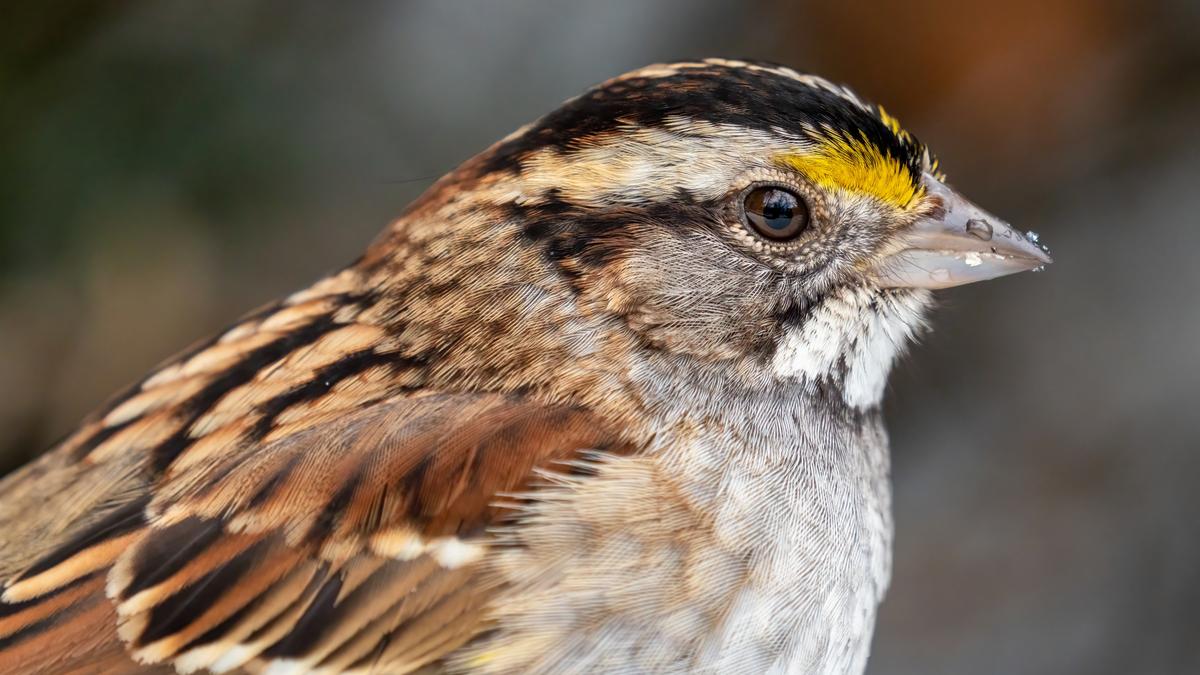
The white-throated sparrow is a songbird recognisable by its black-and-white or tan-and-brown striped head, a bright yellow spot above each eye, and a white patch on its throat.
Its secret? It exhibits not two but four distinct sexes, and each sex plays a fundamental role in weaving its intricate social and reproductive behaviours.
Indeed, a growing pile of evidence is pointing to the fact that the conventional idea of two sexes is over-simplified. Geneticists have discovered that sexual identity is a wider spectrum involving more intricate regulations than just the presence or absence of Y chromosomes.
Imagine individuals that straddle the boundary where the sex chromosome or anatomy doesn’t align strictly with ‘male’ or ‘female’. This is called being intersex and is present in about 1% of the population. Modern genome sequencing data have suggested that individuals can be a “patchwork of genetically distinct cells”, meaning an individual can have some cells with sex chromosomes that don’t match the rest of their body. This discovery further blurs what it means to be definitively a male or a female and points to a significant ‘area of overlap’ explaining why some people find it difficult to fit within the binary structure.
The white-throated sparrow exemplifies this complexity. The species displays two distinct feather patterns on its head, white-striped and tan-striped, each found in both males and females. These patterns are linked to the presence of a particular supergene in their DNA, in chromosome 2, which emerged roughly 2 million years ago.
Two morphs
A supergene is a chunk of DNA that contains multiple neighboring genes (or gene variants) that are inherited together as a package. This one in white-throated sparrows controls their birds’ unique disassortative mating system: a white-striped bird almost always pairs with a tan-striped one. This system creates four distinct behavioral sexes: white-striped male, white-striped female, tan-striped male, and tan-striped female. And each of them uses different life-history strategies for aggression, singing frequency, and parental care.
The two morphs of the white-throated sparrow also dramatically differ in their social behaviour. They spend their spring in the forests of the northeastern U.S. and Canada and migrate to the southeastern U.S. in winter. They breed in spring, when both sexes defend their territories by singing and attacking intruders. The females usually build nests while both sexes provision the young ones.
Interestingly, while they are socially monogamous, the birds’ sexual lives are often polygamous, with up to 40% of offspring in a single nest potentially having other fathers. The white-striped birds of both sexes are more aggressive and invest more in seeking mates and in intrasexual competition. They also engage in more territorial invasions, with higher song rates, and are more likely to pursue extra-pair copulations.
Conversely, the tan-striped birds adopt a more parental strategy, often provisioning nestlings at a higher rate and focusing on guarding their mates within their territories.
Thus, a mating pair consists of an aggressive white-striped male with a tan-striped female offering parental care or a tan-striped male focusing on guarding mates with an aggressive white-striped female. A typical mating pair presents a unique contrast in effect: an aggressive white-striped partner, whether male or female, with a more nurturing tan-striped counterpart of the opposite sex.
Since both types of pairs have comparable reproductive success, the four sexes are complimentary rather than competitive in nature.
An extraordinary lesson
The supergene arises from an accidental inversion of a large section in chromosome 2. An inversion is a type of chromosome rearrangement where a stretch of DNA breaks in two places, flips 180°, and re-inserts in the opposite orientation. The result is two versions of the chromosome: ZAL2 (normal) and ZAL2m (carrying the inversion). The tan-striped birds carry two copies of ZAL2 while the white-striped birds carry one copy of each of ZAL2 and ZAL2m.
This is analogous to the XY sex-determination system in mammals, where XX or XY combinations are typically allowed. A ‘super white’ bird carrying two copies of ZAL2m is extremely rare and can result from mating between two white-striped birds. Scientists have identified that two key genes, called ESR1 and VIP, within this inversion region are differentially regulated between the two forms of the chromosome 2. This accounts for the varying degrees of aggression, mate selection, and parental behaviour in the two morphs.
Note that the supergene is independent of the W and Y sex chromosomes in birds. Their disassortative mating system involves the consequences of the supergene as well as the W/Z sex chromosomes, supporting the idea of four sexes.
This is how a seemingly ordinary bird offers an extraordinary lesson: in nature, identity has no compunctions about spreading beyond the binary.
Riddhi Datta is a molecular biologist and assistant professor in the Post-graduate Department of Botany, Barasat Government College, Barasat, West Bengal. She is also co-coordinator, East zone, Indian National Young Academy of Science, New Delhi.
Published – February 20, 2026 06:00 am IST