


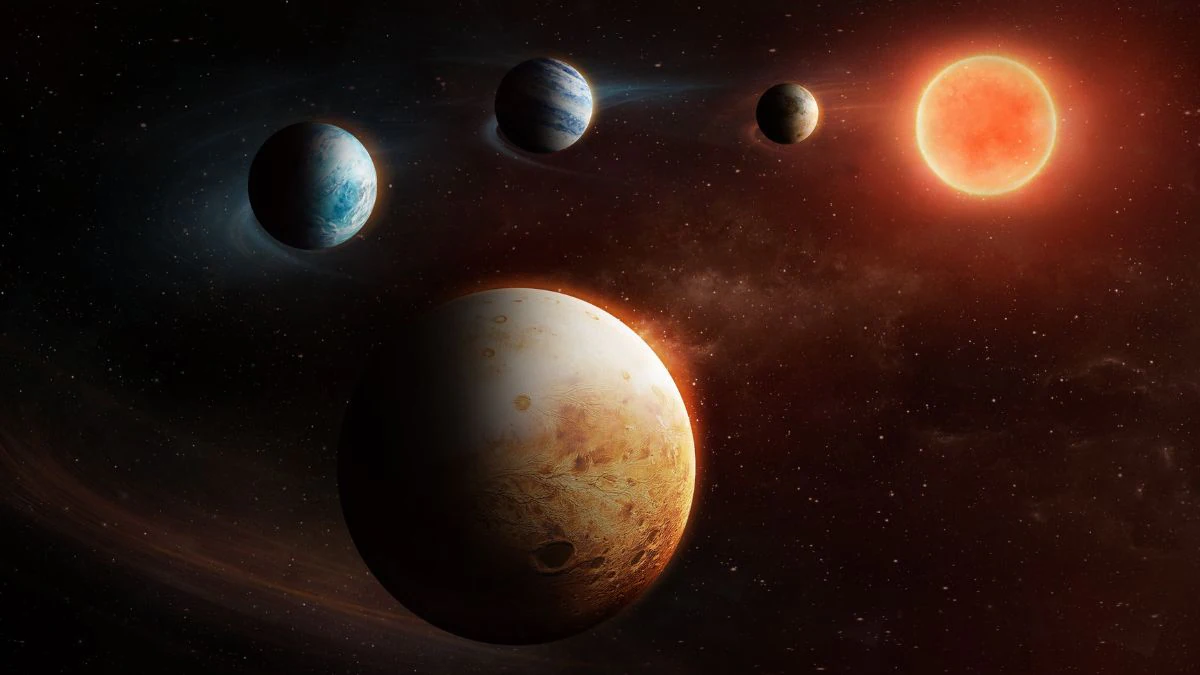
A rare “inside-out” planetary system has been found around a faint red dwarf star, with one known rocky planet on the distant outer edge rather than near the star. This unusual system, found with the European Space Agency’s telescope, defies the typical arrangement found in our solar system and most known systems of exoplanets. Rocky planets are usually formed close to stars, while gas giants form farther out. But this newly studied system around LHS 1903 is a rocky world farther out than gas planets, and it has scientists rethinking how planets form and evolve.
Discovery Led by University of Warwick Using ESA’s CHEOPS Reveals Unusual Four-Planet System With a Rocky Outer World
According to a Science report, the discovery was led by researchers at the University of Warwick using information from the European Space Agency’s CHEOPS mission. The system consists of four planets: a rocky inner planet, two gas planets, and an unexpected outer rocky planet that doesn’t match common formation models.
Scientists say planets are created from gas and dust discs, inner ones shedding gas to become rocky, while outer ones hold onto it to form gas giants. This distant rocky planet likely formed without gas.
Inside-Out Planet Formation May Explain Rare Rocky Outer Planet and Challenge Existing Theories
Researchers ruled out possibilities like planetary swapping or violent collisions. Instead, evidence suggests the planets are forming one after the other in a process of “inside-out” formation, where the innermost planet forms first, and subsequent planets follow outside in an evolving environment that contains less gas.
This conclusion indicates that planets can form without significant amounts of gas, and confirmation in other systems would potentially rewrite our theories and indicate more complicated planetary evolution.