


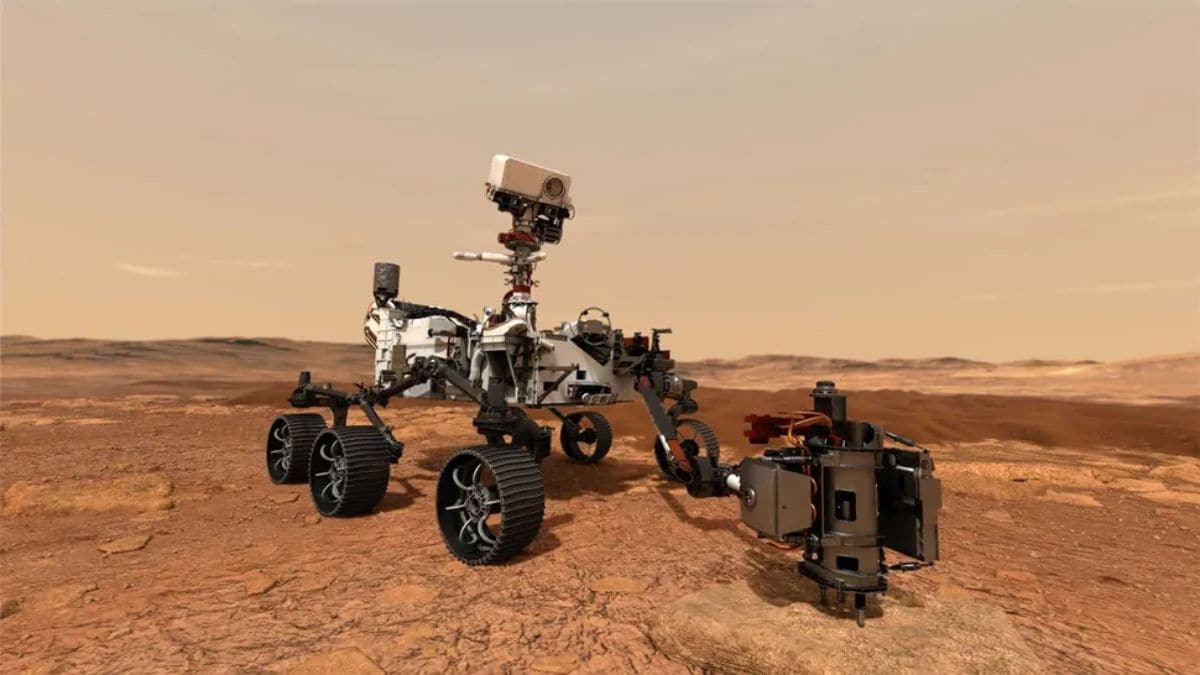
NASA’s Mars rover, Perseverance, recently completed its first drive using commands shared by Anthropic’s artificial intelligence (AI) chatbot, Claude. The milestone marks the first time a generative AI model has played a direct role in planning a rover’s movement on another planet. The drive took place on January 27, with Claude delivering high-level navigation instructions that were translated into precise waypoints before transmission to Mars. Typically, these complex instructions are shared manually after long calculations and planning.
Claude AI Commands NASA’s Perseverance Rover on Mars
In a newsroom post, NASA’s Jet Propulsion Laboratory (JPL) announced this milestone. The process began with a human mission planner providing a terrain map and scientific goals to Claude. The AI chatbot then generated a sequence of waypoints, or intermediate coordinates the rover should aim for, based on the desired route, slope constraints, and safety considerations. These waypoints were reviewed and refined by mission engineers before being uplinked to Perseverance across 362 million kilometres between Earth and Mars, Anthropic said in a post.
Perseverance drove approximately 23 metres (75 feet) on the Martian surface following the AI-generated plan, traversing rocky terrain inside Jezero Crater, where it is conducting geological and astrobiological investigations. The rover’s successful movement confirmed that the AI-assisted planning produced a safe route, NASA said. The drive was monitored by the mission’s navigation and engineering teams, who verified the rover’s status and telemetry after execution.
For this project, Anthropic equipped Claude with vision-language models to analyse existing data from JPL’s mission dataset. NASA said that the chatbot used the same imagery and data that human planners rely on to create these waypoints.
NASA highlighted that Claude did not control the rover directly or autonomously. Instead, the chatbot’s role was to assist with planning and suggest waypoints for engineers to evaluate. Before this experiment, Mars rover drives were typically planned by human teams who selected traverse paths based on orbital imagery, 3D terrain models and defined mission constraints.
“The fundamental elements of generative AI are showing a lot of promise in streamlining the pillars of autonomous navigation for off-planet driving. We are moving towards a day where generative AI and other smart tools will help our surface rovers handle kilometre-scale drives while minimising operator workload, and flag interesting surface features for our science team by scouring huge volumes of rover images,” said Vandi Verma, a space roboticist at JPL and a member of the Perseverance engineering team.