


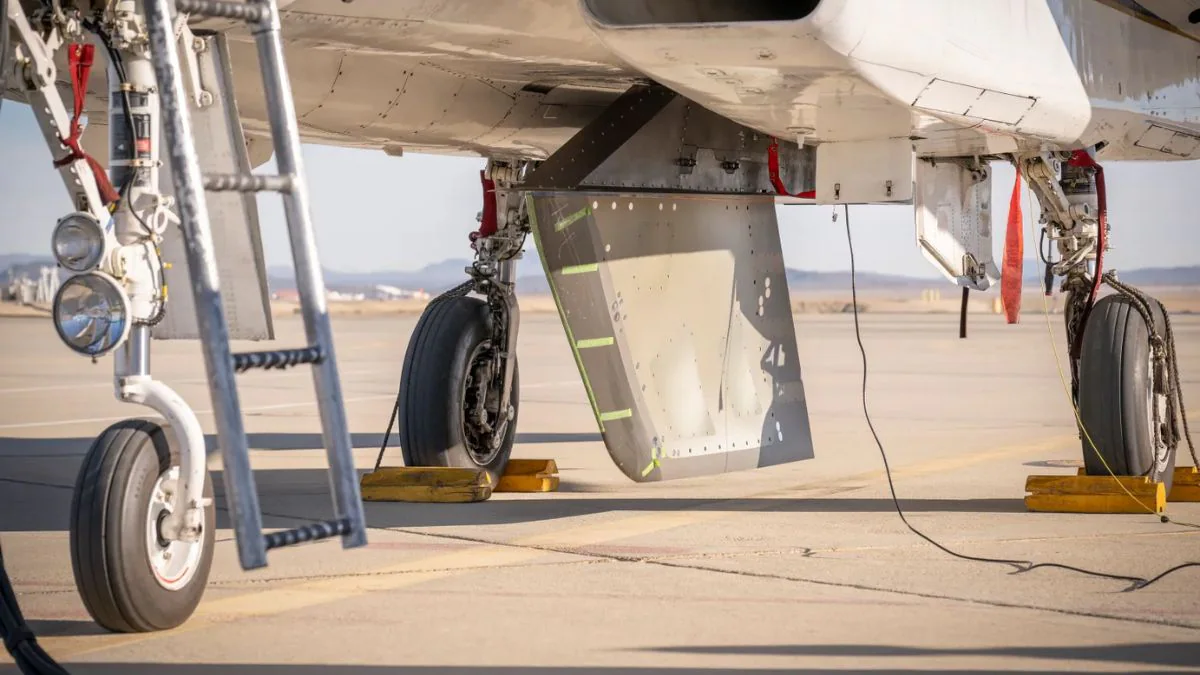
NASA scientists have been working on a new wing design at the Armstrong Flight Research Center in California. They tested a 3-foot (about 1 meter) scale model of the CATNLF wing, which was mounted under a NASA-F15B aircraft. During the high-speed taxi test, the plane reached about 144 mph (230 kilometers per hour). So far, the initial results from NASA indicate that this design could reduce drag by 10 percent for commercial airliners.
Laminar-flow wing design trialled
According to NASA, in January 2026, the 3-foot CATNLF model, slung underneath an F-15B research aircraft, achieved approximately 144 mph on the runway. The configuration enables engineers to test the concept in actual airflow conditions without installing a full-scale wing. The aim of the CATNLF device is to keep airflow over the wing’s surface laminar-smooth-for as long as possible, thereby delaying the onset of turbulence, which increases drag. Keeping the boundary layer air smooth longer means the design reduces friction on the wing and, correspondingly, cuts fuel burn.
Potential fuel savings
A study conducted by NASA revealed that the installation of the CATNLF in a significant aircraft, the Boeing 777, for example, would help trim fuel consumption by a total of 10 percent per annum. Not surprisingly, a few percent improvement in fuel efficiency translates into significant savings of millions of dollars per aircraft per year for the airlines. NASA claims that the real flight tests will begin shortly. When successful, the technology may be adapted in a wide range of aircraft, perhaps even supersonic aircraft.