


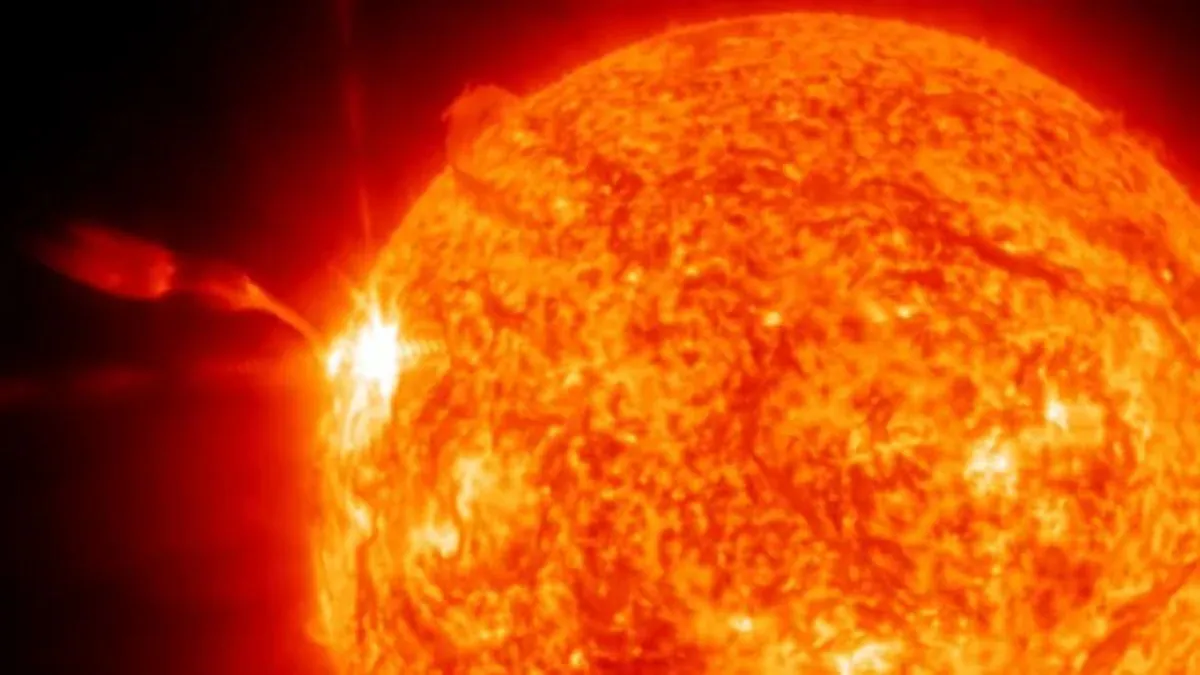
At the beginning of January 2026, space scientists are warning us of a potential geomagnetic storm. NOAA Space Weather Prediction Center has issued storm warnings on January 1-3, 2026, estimating that a cloud of solar material, a coronal mass ejection (CME) would impact Earth at the end of January 2, 2026. This may cause a G2-severity geomagnetic storm, which is classified as “moderate” on the five-tier NOAA scale. While this may result in beautiful auroras, there is also the potential for temporary disruptions to power grids and radio communications.
Solar Storm Forecast
According to official reports, NOAA’s Space Weather Prediction Center has issued G1–G2 geomagnetic storm watches for January 1–3, 2026. Forecast models indicate a large cloud of solar plasma (a coronal mass ejection) will arrive late on January 2, possibly sparking a G2-level storm by January 3.
By NOAA’s classification, G2 is “moderate”, and such storms can briefly disrupt power grids and high-latitude radio communications.
Potential Impacts
To put it in perspective, NOAA reports that the Sun is in the midst of its 11-year activity cycle and, as such, massive eruptions are typical. Even a moderate geomagnetic storm will temporarily affect satellite, navigation and radio communications. January 3 may be a bright full “Wolf Moon” and any auroras that occur may be obscured.
Scientists underline that these solar events help to focus on the fact that the Earth is exposed to solar activity and can get a first-hand experience to examine the Sun–Earth relationship.