


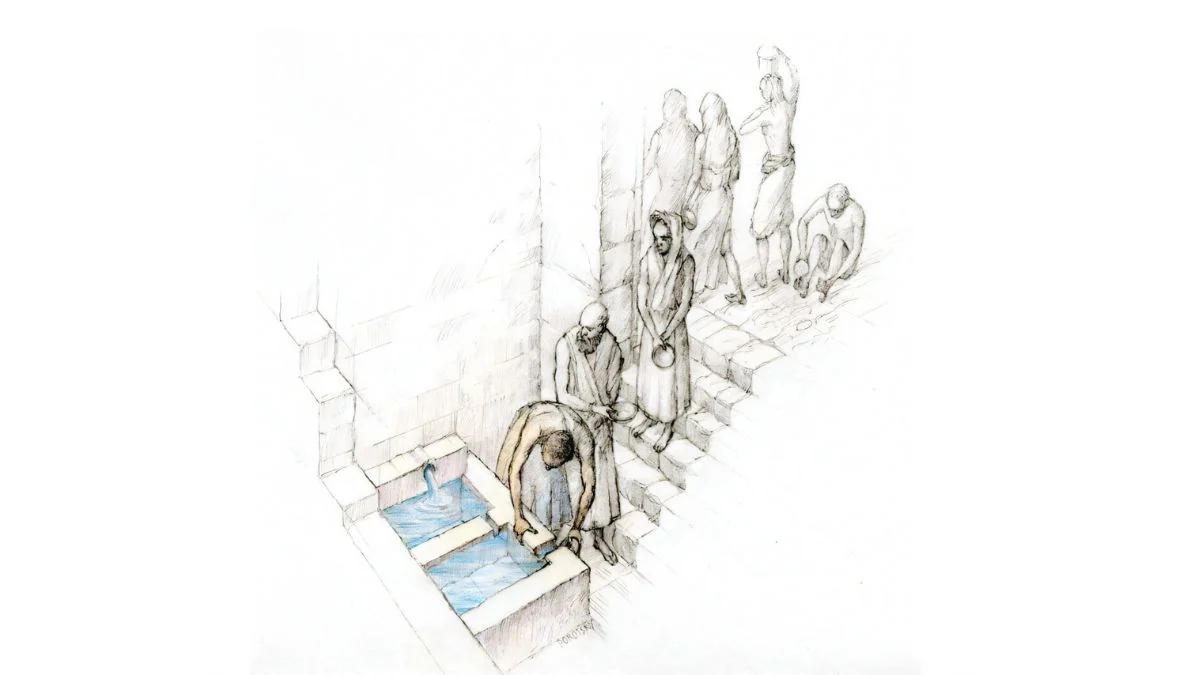
A new archaeological find proves that ritual cleansing was a component of religious practice at an ancient sanctuary in northern Israel in the time of the kingdom of Israel. The sanctuary was equipped with a unique bathhouse, thought to have been used by the priests for ritual bathing. There, the diggers discovered two spaces — one room with yellow plaster, which had a dressing area, and another with walls of blue plaster and a basin — that offer a rare glimpse into how water was used in rituals of sacred purification. The discovery adds new depth to understanding Near Eastern religious practices linked to city-based deity worship.
Ancient Tel Dan Sanctuary Reveals Ritual Bathing Traditions Linked to Mysterious Deity Worship
According to a report published in Levant by Dr. Levana Tsfania-Zias, the sanctuary included a modest two-part bathing unit—featuring a yellow-plastered dressing room and a blue-plastered basin—suggesting ritual use by the priestly class. Unlike full-immersion baths, and because it is not heated, the basin’s size means worshippers might have washed themselves while standing, with cold spring water that flows into the Jordan from outlets nearby.
The first temple, constructed on a Middle Bronze Age rampart, had a tripartite plan of porch, cella, and adyton. A limestone fragment with inscriptions in both Greek and Aramaic, discovered in 1976, names an obscure deity and was almost certainly invoked in the central sanctuary of Dan. Scholars believe the deity’s identity remains uncertain due to the regional naming customs of ancient Near Eastern cities.
Following the destruction of the first temple by the Seleucids, a new temple was erected in its place, which preserved the bathing. After a 2-century gap, the site re-emerged in the Middle–Late Roman period for new purposes. Pilgrims were cleansed in a Fountain House, using primitive clay vessels that were likely smashed after use — a process mirrored in biblical texts describing ritual purity.
As so much of the sanctuary at Tel Dan remains in question, the scholars emphasised the significance of the site for the region. Dr. Tsfania-Zias believes the site would have been an attraction for both locals and visitors, something reinforced by imported ceramics and multilingual inscriptions that hint at a wider spiritual attraction. Deeper excavations could yet reveal what other deity or practices characterised this sacred spot in ancient times.
Get your daily dose of tech news, reviews, and insights, in under 80 characters on Gadgets 360 Turbo. Connect with fellow tech lovers on our Forum. Follow us on X, Facebook, WhatsApp, Threads and Google News for instant updates. Catch all the action on our YouTube channel.